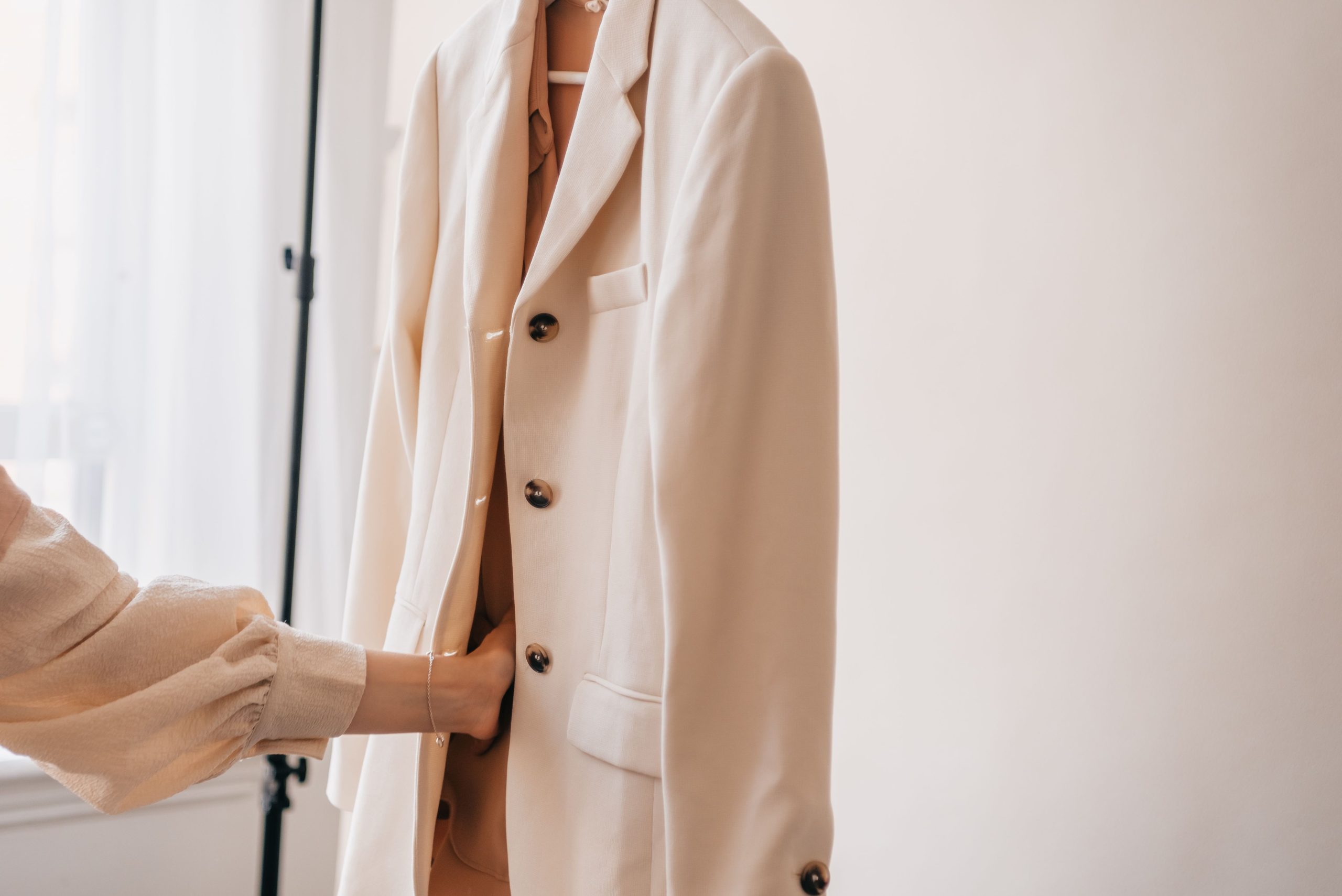
8 Simple Outfit Tricks for a More Polished Silhouette
Looking polished has surprisingly little to do with owning expensive clothes. Two people can wear almost the same pieces and create completely different impressions depending on how those pieces fit, where they end, how the proportions interact, and whether the outfit has a clear visual structure.
That is why some outfits feel instantly intentional even when they are simple. A pair of trousers, a knit top, and loafers can look beautifully refined when the trouser length is right, the waistband sits cleanly, the top balances the pants’ volume, and the outfit has one or two deliberate finishing details. The same pieces can feel less cohesive if everything is oversized at once, the hems compete, or the proportions make the outfit look visually heavy in one area without balance elsewhere.
A polished silhouette is not about trying to make every body look smaller, taller, thinner, curvier, or closer to one specific shape. It is about understanding how clothing creates lines around the body. Waist placement changes where the eye reads the center of an outfit. Hem length changes how the legs appear in relation to the torso. Shoulder structure can make a loose outfit look deliberate rather than shapeless. A partially tucked shirt can completely change the relationship between a top and trousers without changing either garment.
The strongest styling tricks are therefore not complicated fashion rules. They are small adjustments that make clothes communicate more clearly. Instead of letting every piece compete for attention, you decide where the structure should be, where volume should sit, and where the outfit should remain simple.
The eight ideas below are designed to work across different body types and personal styles. You do not need to use all of them at once. In fact, polished outfits usually look better when only one or two proportion decisions are doing the heavy lifting.
1. Define One Clear Waist Point Instead of Letting Every Layer Hang Straight
One of the easiest ways to give an outfit more structure is to create a clear visual waist point. This does not mean every outfit needs to be tightly fitted or cinched. The waist can be suggested subtly through a tuck, a cropped jacket, a belt, a waistband, or simply where one garment ends and another begins.
The reason this works is visual organization. When a loose top extends several inches over loose trousers, the outfit may create one uninterrupted vertical shape. That can be intentional in minimalist or oversized styling, but if the goal is a more polished silhouette, giving the eye one clear transition point often makes the outfit feel more composed.
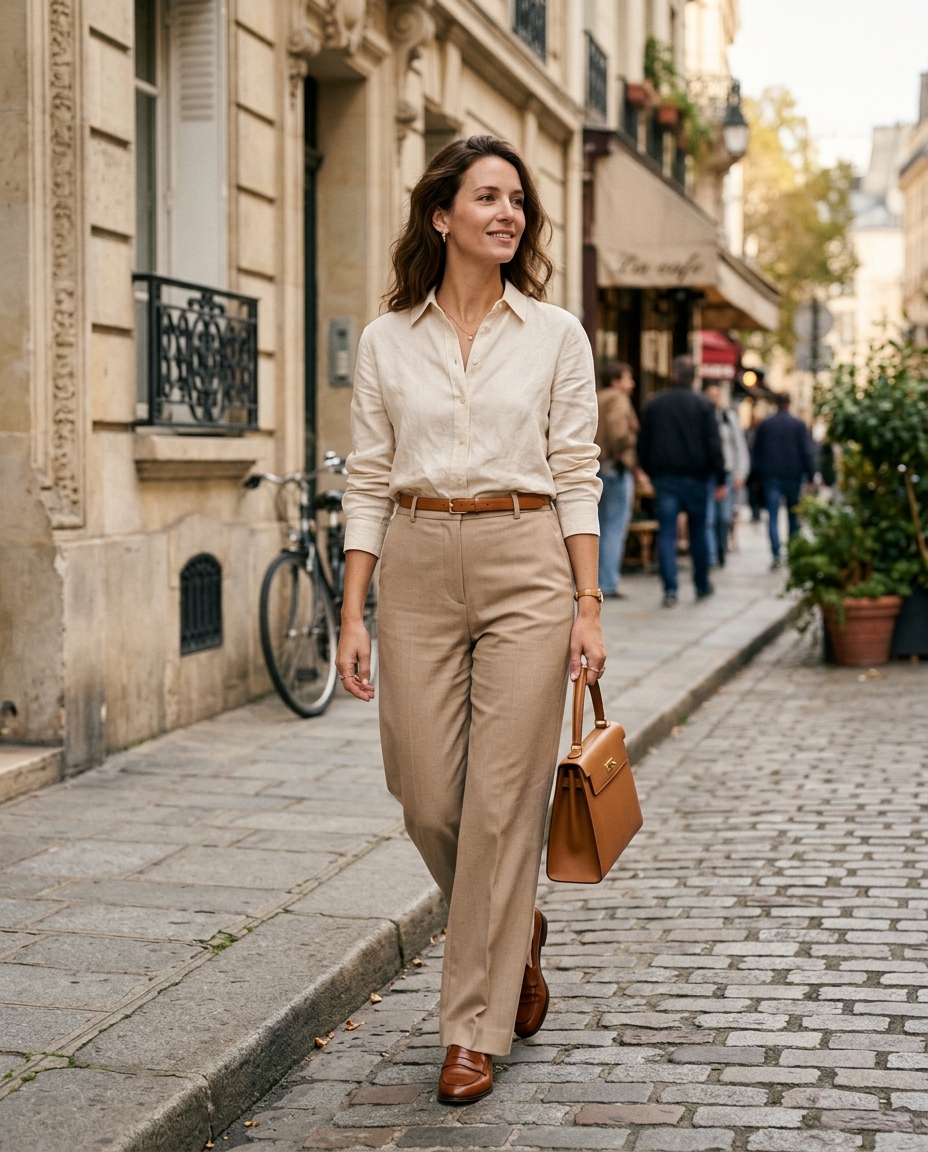
A full tuck works well with tailored trousers, high-waisted jeans, and skirts because it exposes the waistband and creates a deliberate upper-to-lower-body relationship. A half tuck or French tuck is softer and often works better with shirts, relaxed knits, and casual denim because it creates structure without making the outfit feel formal. Cropped jackets are another useful option. They create the illusion of waist definition without requiring the top underneath to be tucked at all. This can be especially effective when wearing wide-leg trousers or a fuller skirt because the shorter jacket balances the volume below.
Styling Note
Waist definition should feel comfortable rather than restrictive. If a tight belt changes how naturally you stand or sit, it is probably not improving the outfit.
2. Balance Volume Instead of Wearing Oversized Pieces Everywhere at Once
Oversized clothing can look extremely sophisticated, but the outfit usually needs some contrast in proportion. When the top, bottom, coat, and accessories are all extremely voluminous, the eye may lose a clear sense of structure.
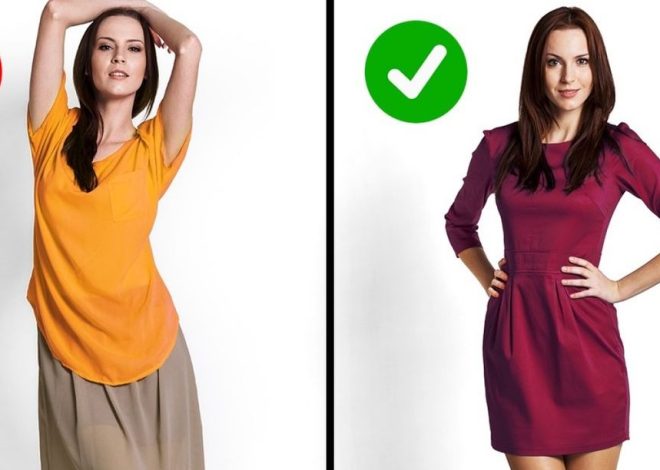
A useful approach is to choose where the volume should live. If the trousers are wide and fluid, a more fitted knit, tucked shirt, or cropped jacket can balance them. If the top is oversized, straight-leg jeans, slim trousers, or a more defined skirt can give the outfit a cleaner foundation. This is not a strict rule, but it is one of the easiest starting points when an outfit feels visually heavy.
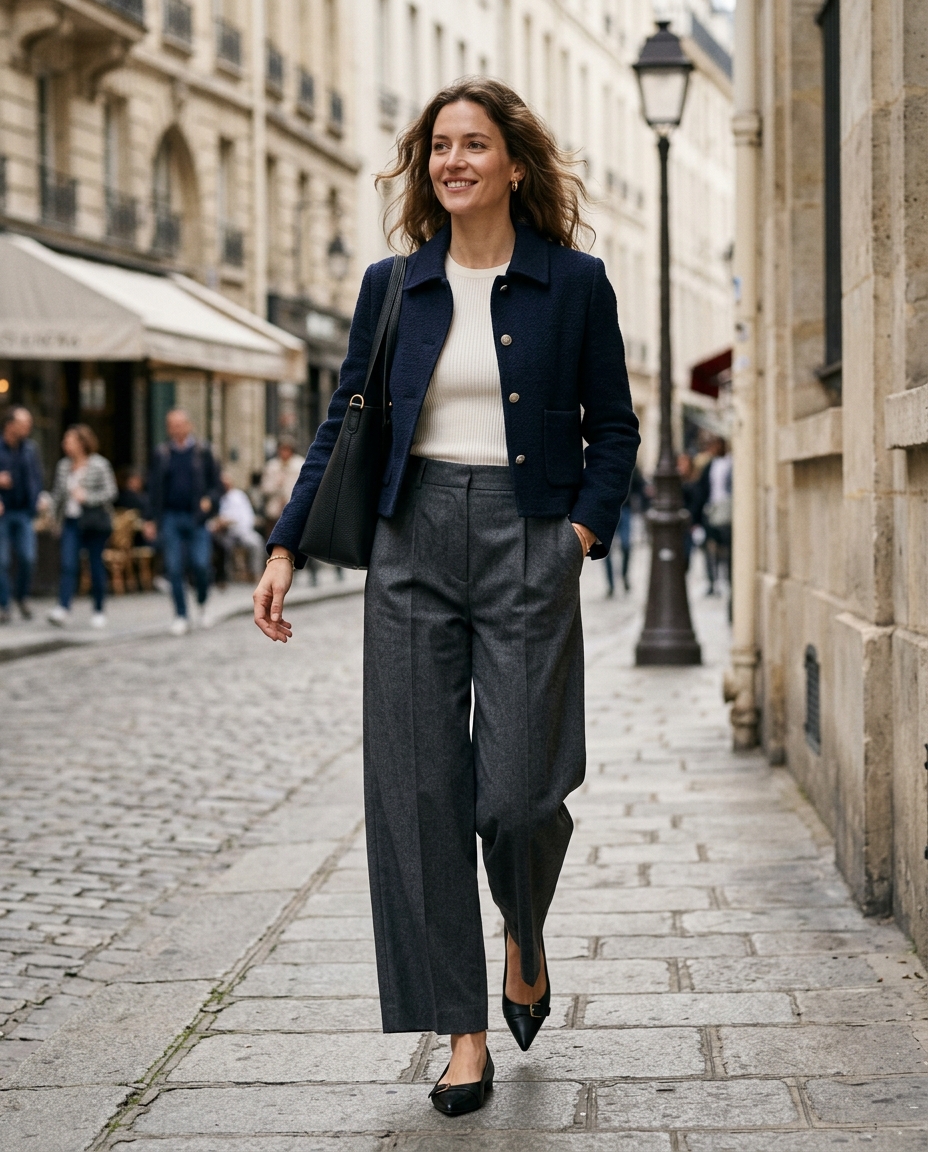
The same principle applies to outerwear. A long oversized coat can look elegant over a relatively streamlined outfit because the coat becomes the dominant silhouette. If every layer underneath is equally oversized, the result may feel more intentionally fashion-forward but less traditionally polished. Fabric matters too. Volume created by drapey wool or fluid tailoring behaves differently from stiff, bulky fabric. A wide-leg trouser with beautiful movement can look light even though it occupies more space, while a thick rigid trouser may feel heavier.
Volume Balance Guide
| Main Voluminous Piece | Easy Balancing Option |
|---|---|
| Wide-leg trousers | Fitted knit, tucked blouse, cropped jacket |
| Oversized shirt | Straight jeans, slim trousers, narrow skirt |
| Full midi skirt | Fine knit, fitted tee, structured short jacket |
| Oversized blazer | Clean straight trousers or fitted base layer |
| Long oversized coat | Streamlined monochrome outfit underneath |
3. Pay Attention to Where Your Tops and Jackets End
Hem placement changes the silhouette more than many people realize. A jacket ending at the natural waist creates a very different proportion from one ending at the widest part of the hip, and a tunic-length top creates a completely different line from a tucked shirt even when both are the same color.
When an outfit feels slightly off, look at where the top ends before changing anything else. A cropped or waist-length jacket can visually lengthen the lower half of the outfit, especially when paired with high-rise trousers or skirts. Hip-length jackets tend to create a more relaxed, classic look but may need a little more attention to trouser shape because the garment ends lower on the body.
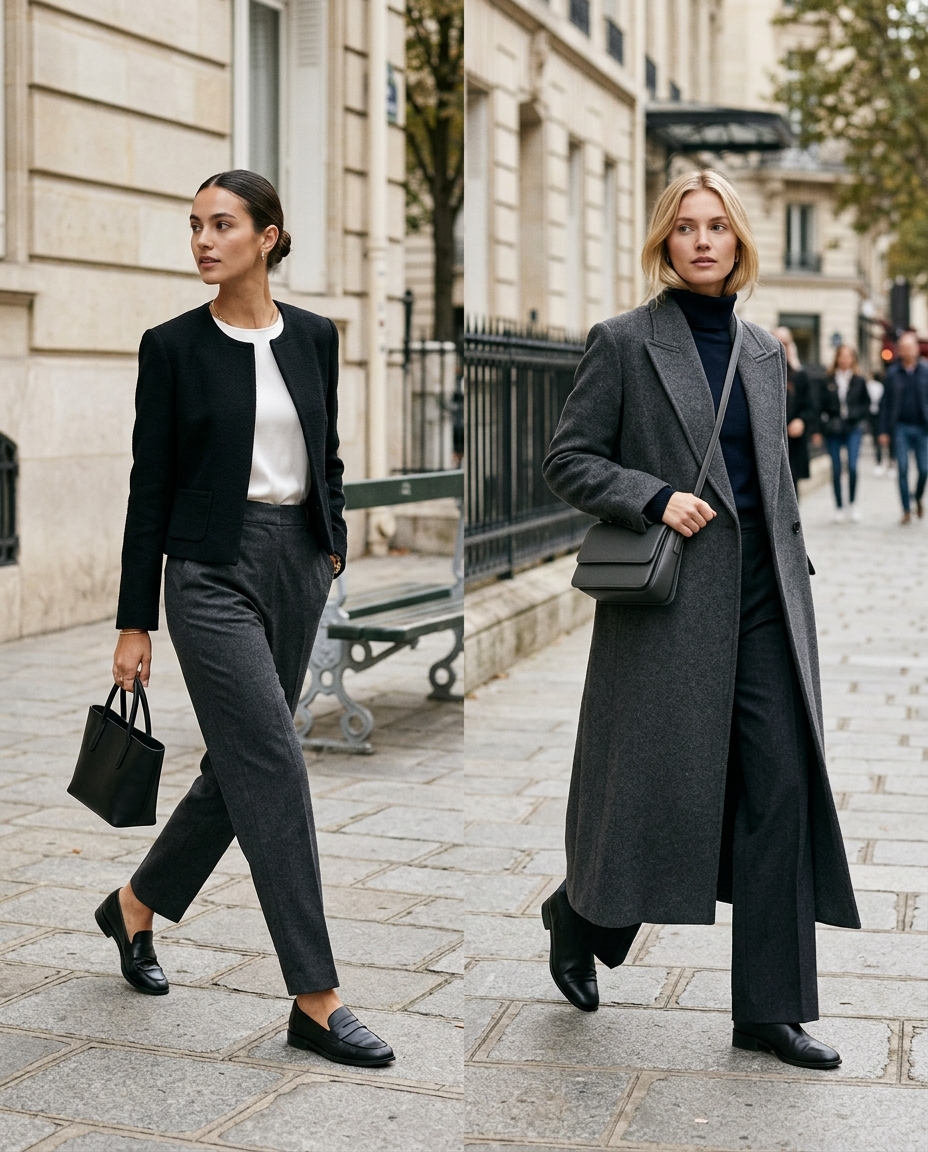
Longline coats and blazers create a strong vertical line, which can make an outfit feel sleek when the layer underneath remains simple. The key is intentionality. A coat ending around mid-calf looks deliberate; a cardigan ending at an awkward point only a few inches below a top underneath can create several competing horizontal lines. The same principle applies to sweaters and shirts. If a knit ends exactly where the trousers become widest, the combined silhouette may look visually heavy. Tucking the front slightly or choosing a shorter hem can change the balance immediately.
4. Use Trouser Length to Clean Up the Entire Outfit
Trouser length is one of the most overlooked reasons an outfit looks polished or unfinished. Even excellent tailoring can lose its effect when fabric bunches heavily over shoes or ends at an awkward point that was not clearly intended.
Different trouser cuts need different lengths. Wide-leg trousers often look most elegant when they almost meet the floor while still clearing it enough to walk comfortably. Straight trousers can sit cleanly over the shoe or finish slightly above it. Cropped trousers should look intentionally cropped rather than simply too short.
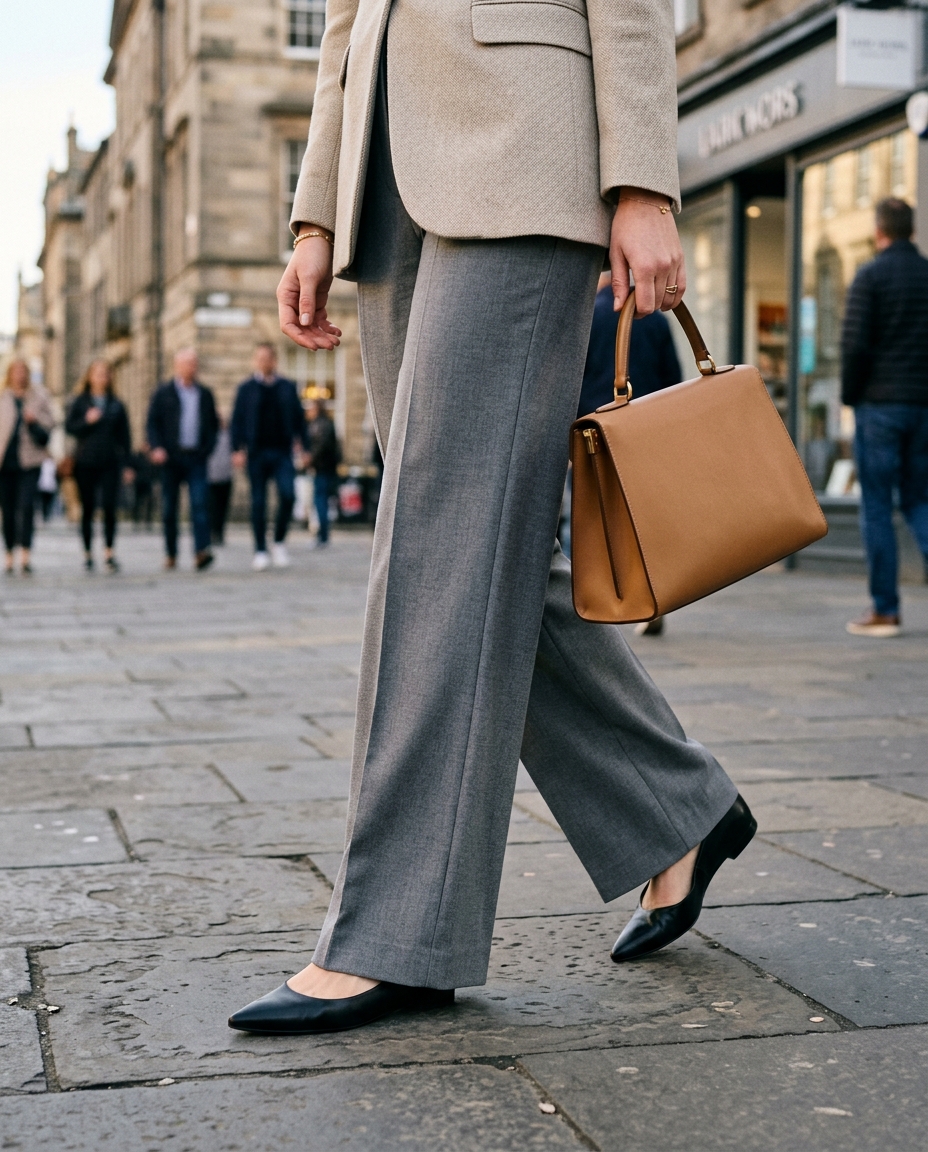
Shoes matter because the same trouser hem behaves differently with sneakers, loafers, ballet flats, and heels. If a pair of trousers is worn frequently with one particular shoe height, tailoring the hem around that combination can improve the entire wardrobe. The front crease and drape should also remain clean. Excess fabric around the ankle can make structured trousers appear less tailored, while trousers that are too short may interrupt the vertical line before it reaches the shoe.
Trouser Length Reference
| Trouser Style | Polished Length Approach |
|---|---|
| Wide-leg | Long, nearly skimming the floor |
| Straight-leg | Clean break or little to no break |
| Cigarette trouser | Around ankle or slightly above |
| Cropped wide-leg | Clearly intentional above ankle |
| Flared | Long enough to cover part of the shoe |
| Tailored ankle trouser | Clean finish around ankle bone |
5. Create a Vertical Line With Color, Layers, or Open Necklines
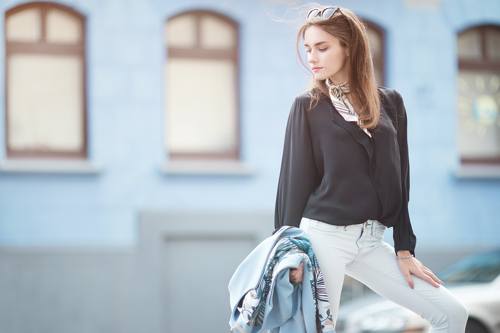
Vertical lines help the eye move through an outfit without stopping repeatedly at contrasting sections. This can make an outfit feel calmer, longer, and more cohesive even when the individual pieces are very simple. Monochrome dressing is the most obvious example. Wearing cream trousers with an ivory knit and beige coat does not mean every item must be identical in color. In fact, slightly different shades often look richer because texture and depth prevent the outfit from feeling flat.
An open blazer or cardigan creates another vertical line through the center of the outfit. The two edges of the outer layer draw the eye downward and frame the base outfit. This is one reason an open coat can instantly make jeans and a simple top look more refined.
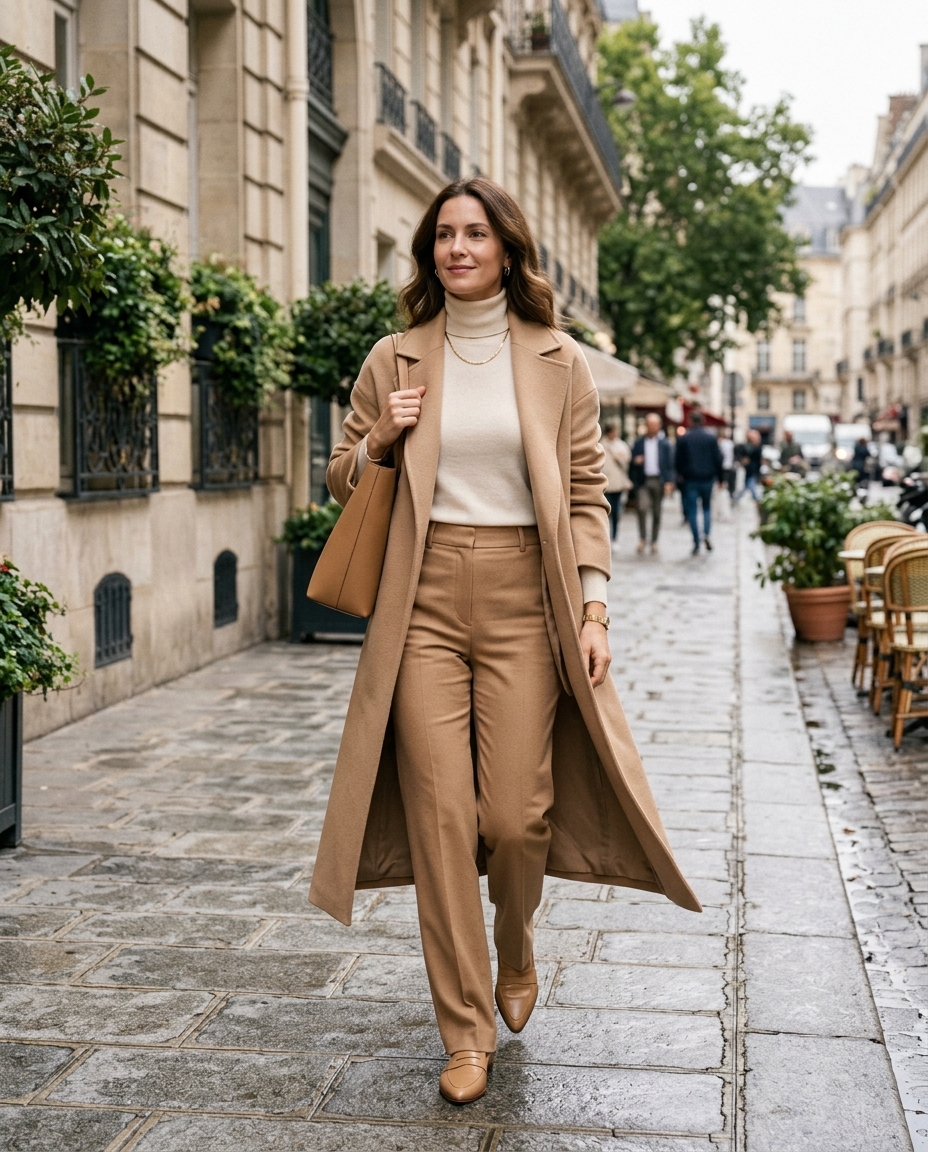
Necklines can create a similar effect. V-necks, open shirt collars, and softly unbuttoned blouses visually continue the line of the neck and torso. Higher necklines can still look polished, of course, but they create a more enclosed shape. The key is not trying to manipulate the body into looking a certain way. The purpose is visual flow. When the outfit has fewer abrupt horizontal interruptions, it often reads as more intentional.
6. Add Structure at the Shoulders When the Rest of the Outfit Is Soft
Soft fabrics and relaxed silhouettes can look beautiful, but sometimes an outfit needs one structured element to prevent everything from blending. The shoulders are one of the easiest places to introduce that structure.
A blazer with a clean shoulder line can instantly organize an outfit made from fluid trousers, a silk blouse, or a simple T-shirt. The jacket does not need exaggerated padding. Even a subtle tailored shoulder can create enough definition to make the entire outfit feel more intentional. Structured coats work similarly. A clean shoulder seam and sharp lapel give shape to soft knitwear underneath. This contrast between structure and drape is one of the reasons classic tailoring remains useful even in very casual wardrobes.
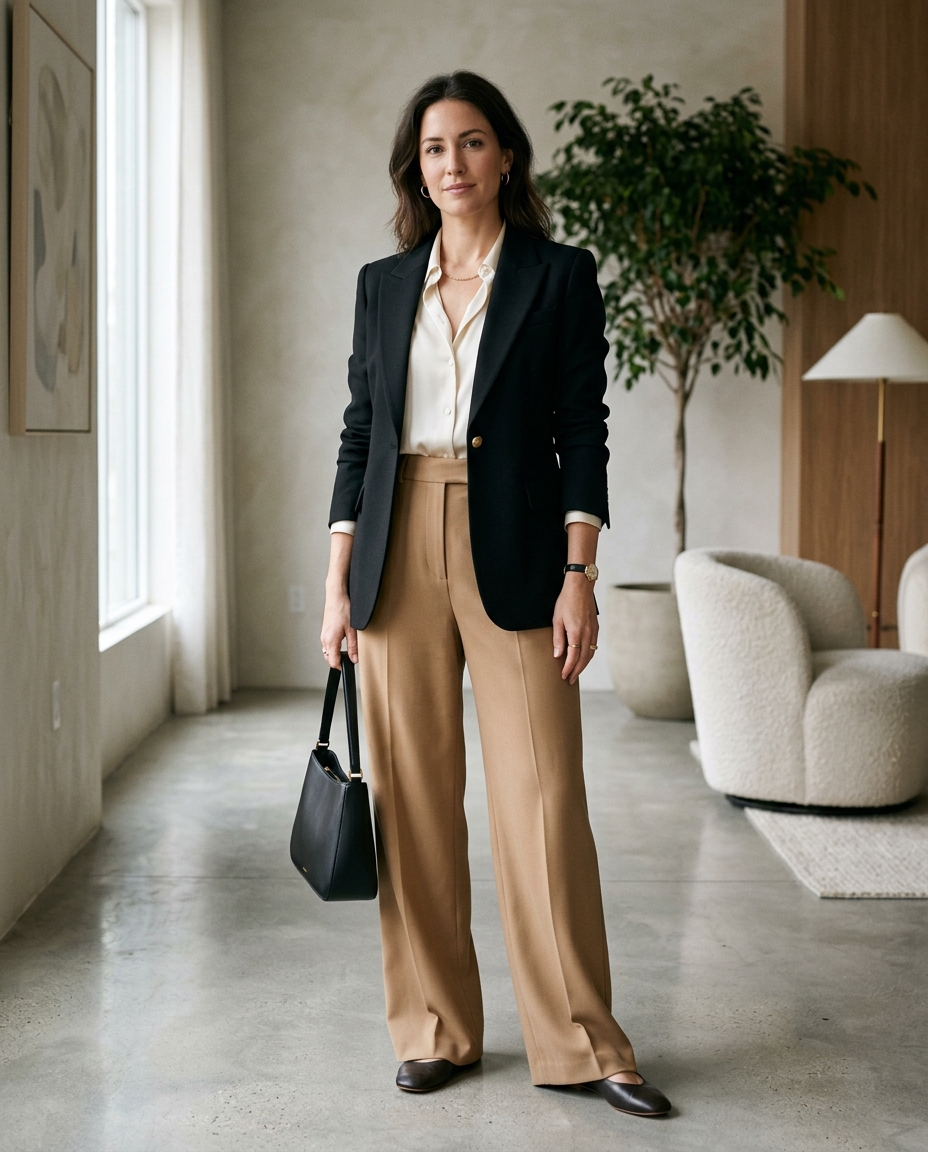
If jackets are not your style, a structured shirt can create some of the same effect. A crisp collar, defined shoulder seam, and controlled sleeve shape provide visual order without making the outfit formal. Fit is crucial. Shoulder seams should sit where the design intends them to sit. A traditional fitted blazer should not collapse several centimeters beyond the shoulder unless the garment is deliberately cut oversized.
7. Use One Structured Accessory to Finish a Simple Outfit
An outfit does not always need another layer. Sometimes the missing piece is simply one structured accessory. A clean leather handbag, belt, polished loafer, pointed flat, or structured tote can introduce definition to an otherwise relaxed outfit. This works especially well with knitwear, denim, linen, and simple monochrome combinations because the accessory adds a deliberate finishing point without making the clothes themselves more complicated.
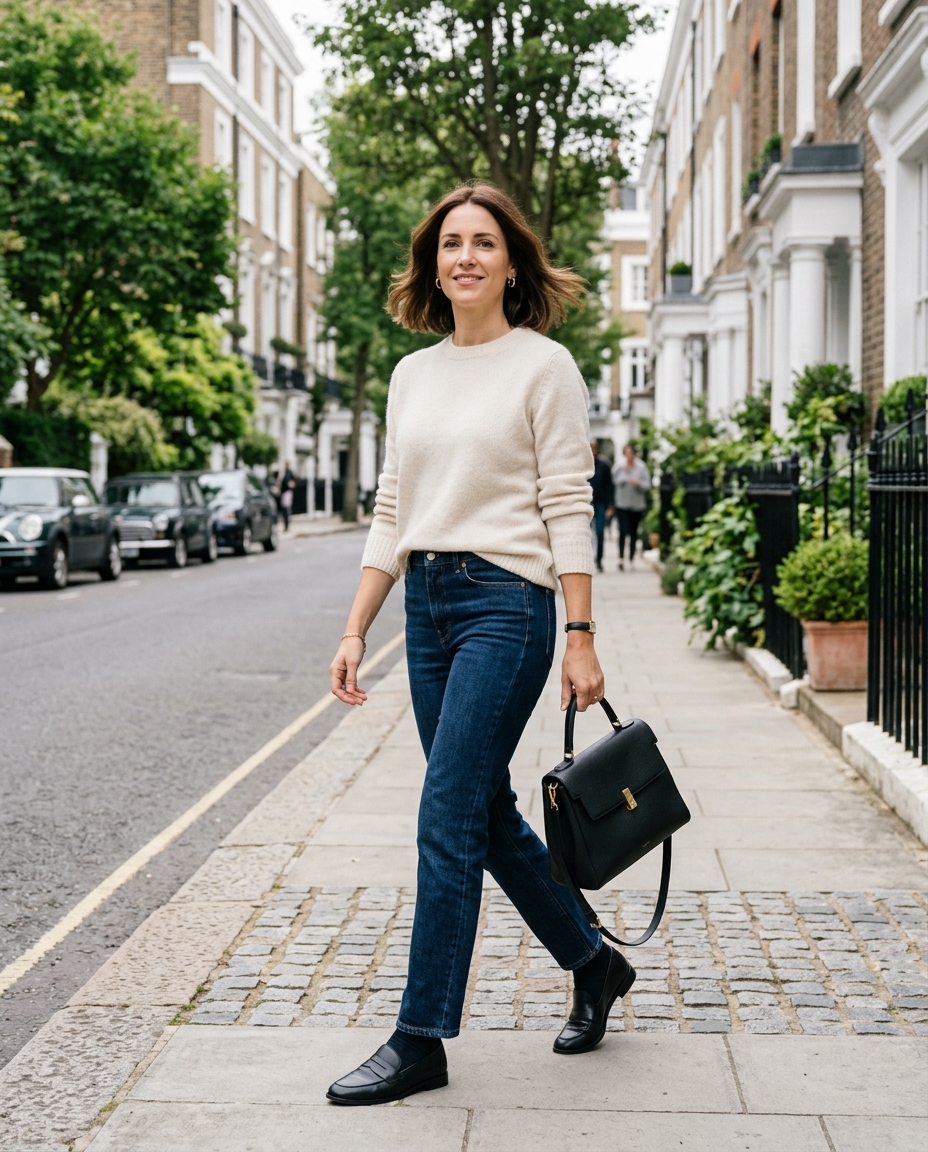
A handbag is particularly effective because shape communicates immediately. A soft slouchy bag feels casual, while a bag with clear edges and a stable form makes the same outfit feel more refined. Shoes have the same influence. White sneakers may make tailored trousers feel relaxed, while loafers immediately move the outfit toward classic styling. Neither is better; they simply change the final impression.
Belts can also help, but the goal is not always waist definition. A leather belt can visually connect trousers with shoes or a handbag, making the color story feel more coherent. The mistake is adding several statement accessories at once. If the bag, belt, shoes, necklace, sunglasses, and earrings all demand attention, the outfit loses the restraint that often creates a polished effect.
Best Finishing Pieces
| Accessory | Effect |
|---|---|
| Structured handbag | Adds clean geometry |
| Leather belt | Defines waist and connects colors |
| Loafers | Creates classic polish |
| Pointed flats | Adds a refined line |
| Simple watch | Gives subtle finishing detail |
| Small gold or silver earrings | Adds light without visual clutter |
8. Tailor the Clothes You Already Own Instead of Constantly Buying New Ones
Fit is often the biggest difference between an outfit that looks ordinary and one that feels polished. A jacket that fits beautifully through the shoulders but has sleeves two inches too long can look less refined than a much less expensive blazer that has been altered correctly. Trousers that fit through the waist but pool excessively on the floor can make the entire outfit appear unfinished.
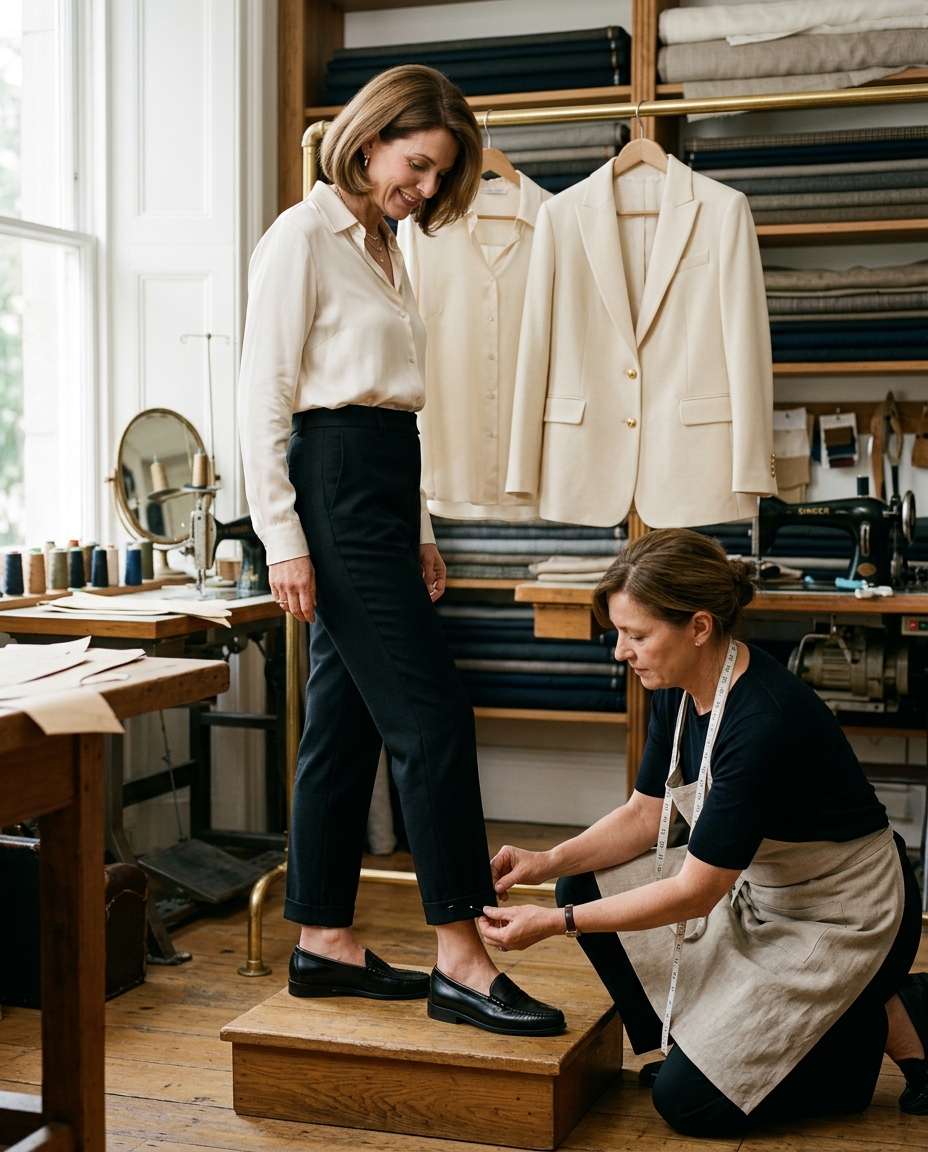
Simple tailoring can solve these problems without replacing the garment. Trouser hems, sleeve length, waistband adjustments, skirt hems, and modest shaping through the body are some of the most useful alterations because they change how a garment relates to your proportions while preserving the original design.
This is especially important when buying ready-to-wear clothing because garments are produced to standardized measurements. It is completely normal for a blazer to fit your shoulders but not your sleeve length, or for trousers to fit your hips but need waist adjustment.
A good tailor can also tell you when an alteration is not worth doing. Rebuilding complicated shoulders or dramatically changing the size of a structured jacket may cost more than replacing it, while shortening sleeves or hemming trousers may be relatively simple. A polished wardrobe does not need more clothes. In many cases, it needs the existing clothes to fit more intentionally.
High-Impact Alterations
| Alteration | Why It Helps |
|---|---|
| Trouser hemming | Cleans the leg line |
| Sleeve shortening | Makes jackets look custom-fit |
| Waist adjustment | Reduces pulling or excess fabric |
| Skirt/dress hemming | Places the hem deliberately |
| Taking in side seams | Refines loose fit when appropriate |
| Button repositioning | Can improve closure and drape |
How to Tell Why an Outfit Feels “Off”
When an outfit does not look the way you expected, changing every piece usually makes the problem harder to identify. Instead, look at the silhouette in stages. First, check proportion. Is one half of the outfit dramatically more voluminous than the other? Is the shirt ending at a visually awkward point? Are the trousers significantly longer than the shoes allow?
Next, look at the number of horizontal breaks. A contrasting belt, untucked shirt hem, cardigan hem, jacket hem, cropped trousers, and contrasting shoes can divide the body into several separate visual sections. None of those elements are inherently wrong, but several strong breaks together can make the outfit feel less cohesive.
Then inspect fit. Look for fabric pulling across buttons, waistbands folding over, shoulder seams sitting incorrectly, or excess material pooling around the ankles. These are often construction or sizing issues rather than styling problems. Finally, look at the finishing details. An otherwise excellent outfit may simply need cleaner shoes, a better bag, a steamed shirt, or sleeves pushed neatly rather than left at an awkward length.
Quick Outfit Diagnostic
| Problem | First Thing to Check |
|---|---|
| Outfit feels shapeless | Waist placement and volume balance |
| Legs look visually shortened | Trouser length and top hem |
| Outfit looks too busy | Number of color and proportion breaks |
| Oversized outfit feels messy | One structured element |
| Basic outfit feels unfinished | Shoes, bag, belt, or jewelry |
| Expensive clothes still look off | Fit and tailoring |
| Layers feel bulky | Fabric weight and hem placement |
The Rule of Proportion: Thirds Often Look More Intentional Than Halves
One useful styling concept is the visual rule of thirds. Instead of dividing an outfit directly in half at the midpoint of the body, styling often feels more dynamic when the visible proportions are closer to one-third and two-thirds. High-waisted trousers with a tucked top are a classic example. The top occupies a smaller visible section while the trousers create a longer lower section. A cropped jacket over a midi dress can create a similar relationship.
This is not a mathematical requirement. Nobody needs to measure clothing before getting dressed. It is simply a way to understand why some combinations feel more visually interesting than a top and bottom that divide the outfit into two nearly equal blocks.
Longline dressing can create the opposite effect intentionally. A long coat over a tonal outfit may establish one continuous vertical shape rather than obvious thirds. Both approaches work because both create a clear visual strategy. The problem usually appears when the proportions look accidental rather than intentional.
Why Fabric Matters as Much as Fit
Two garments with identical measurements can create completely different silhouettes depending on the fabric. A fluid wide-leg trouser may fall close to the body while moving, creating a long, elegant line. A stiff trouser cut to the same width may hold away from the body and look much more voluminous.
Thin knits tend to tuck easily and work well beneath blazers. Thick sweaters create more bulk around the waistband, which may make a full tuck uncomfortable or distort the trouser shape. In that situation, a shorter sweater or small front tuck may create a cleaner result.
Structured cotton shirts produce defined lines, while silk and viscose blouses create movement. Denim provides rigidity. Linen sits somewhere between structure and drape depending on its weight. Understanding fabric allows you to balance clothing without relying only on size. An oversized silk shirt can look lighter than a fitted chunky knit because the materials behave differently.
How to Use Color Without Making an Outfit Look Busy
Polished outfits often have a controlled color story. That does not mean everything must be beige or black. A cobalt sweater can look extremely sophisticated when the trousers, coat, shoes, and bag around it remain restrained.
A useful approach is choosing one dominant neutral, one secondary tone, and optionally one accent. For example, navy trousers, an ivory top, a camel coat, and a burgundy bag create several colors without making the outfit feel random because the palette remains muted and coordinated.
Monochrome dressing is even easier. Different shades of the same color family can make inexpensive basics look more cohesive because the eye reads them as one continuous story. Texture prevents tonal outfits from becoming boring. Cream wool, ivory silk, beige leather, and off-white denim may all belong to one color family while looking completely different in the finished outfit.
Simple Color Formulas
| Formula | Example |
|---|---|
| Monochrome | Cream + ivory + beige |
| Neutral + accent | Black + grey + red |
| Warm neutrals | Camel + chocolate + cream |
| Cool neutrals | Navy + grey + white |
| Tonal earth shades | Olive + khaki + tan |
| Two-color minimalism | Black + ivory |
Small Details That Make Clothes Look More Polished
Sometimes the silhouette itself is already working, and the outfit only needs finishing. Steam or iron garments that crease easily. A wrinkled shirt can make even beautiful tailoring look casual. Check collars and lapels before leaving. They should lie in the position the garment was designed for rather than folding unpredictably.
Remove loose threads and inspect hems. Replace missing buttons rather than allowing the garment to remain slightly unfinished. Keep leather shoes and bags reasonably clean. They do not need to look brand new, but obvious scuffs or dirt can change the overall impression of an otherwise refined outfit.
Jewelry should support the outfit rather than rescue it. Small earrings, a watch, or one necklace may be enough. Polish usually comes from several quiet details working together rather than one expensive statement piece.
How to Polish a Jeans-and-T-Shirt Outfit
A simple jeans-and-T-shirt combination is a useful example because very little is happening stylistically, which means proportion becomes extremely visible. Start with the jeans. Make sure the hem works with the shoes and the rise sits comfortably without pulling or collapsing. Then look at the T-shirt. A slightly fitted tee can balance relaxed jeans, while an oversized T-shirt may work better with a straighter or narrower denim silhouette. Tucking the shirt fully or partially creates immediate waist definition.
Add one structured item. This could be a blazer, leather bag, belt, or loafer. The finished outfit might consist of straight jeans, a white T-shirt, a black belt, loafers, and a camel blazer. None of those pieces is unusual. The polish comes from how the proportions and finishes relate.
How to Make an Oversized Outfit Look Intentional
Oversized dressing works best when the looseness looks designed rather than accidental. Start with one piece that clearly has deliberate volume, such as a broad blazer, oversized shirt, or wide trouser. Then create a point of control. It might be a visible waistband, fitted tank underneath, rolled sleeve, structured shoulder, narrow shoe, or clean bag.
Show some skin strategically if it suits the look. An open neckline, visible wrist, ankle, or tucked waist prevents the fabric from swallowing the entire silhouette. Avoid oversized garments that are simply several sizes too large without the construction necessary to support the shape. Purpose-designed oversized clothing usually has altered shoulder placement, sleeve width, and length to create balance. There is a difference between relaxed tailoring and poor fit.
How to Build a More Polished Wardrobe Without Buying More Clothes
The easiest way to make a wardrobe more useful is to identify the pieces that nearly work. Maybe the black trousers would be perfect if they were shortened. Perhaps the blazer needs the sleeves altered. The white shirt might look better worn open over a fitted tank rather than buttoned traditionally.
Photograph outfits rather than evaluating each garment separately. A piece that feels boring on a hanger may become one of the most useful foundations in the wardrobe once it is styled correctly. Create several reliable combinations and repeat them. Personal style becomes stronger when you understand which proportions consistently work for you rather than starting from zero every morning.
A polished wardrobe is usually built around repetition. The same trousers may appear with a fitted knit, button-down, T-shirt, or blazer. The same loafers may finish five different outfits. The value comes from versatility, not constant novelty.
8 Outfit Tricks at a Glance
| Styling Trick | Main Effect | Easy Example |
|---|---|---|
| Define a waist point | Creates structure | Front-tuck a shirt |
| Balance volume | Clarifies proportions | Wide trousers + fitted top |
| Watch hem placement | Changes visual balance | Cropped jacket + high waist |
| Fix trouser length | Cleans lower silhouette | Hem wide legs correctly |
| Create vertical lines | Improves visual flow | Open blazer or tonal outfit |
| Structure the shoulders | Balances soft fabrics | Tailored blazer |
| Add one structured accessory | Finishes simple outfits | Leather handbag or loafers |
| Tailor existing clothes | Makes fit intentional | Shorten sleeves or trouser hems |
Final Thoughts
Looking polished rarely requires rebuilding your entire wardrobe. More often, it comes from making small styling decisions with greater intention. A shirt looks different when the waist is visible. Wide trousers feel more balanced when the top is cleaner and more controlled. A long coat becomes elegant when the layers underneath do not compete with it. A simple T-shirt and jeans can suddenly feel refined when the jeans are hemmed correctly, and the shoes and bag have structure.
The common thread is proportion. Think about where garments begin and end, where the outfit has volume, where it has structure, and whether the different pieces are working toward the same silhouette. Do not assume that polished means fitted everywhere. Oversized clothing can look exceptionally refined when the proportions are intentional. Likewise, fitted clothes do not automatically look elegant if the hems, fabric, and styling are fighting one another.
The strongest outfit is usually the one where the eye understands the hierarchy immediately. Maybe the coat is the statement, and everything else remains simple. Maybe the trousers create the shape, and the top quietly supports them. Maybe the outfit is almost entirely neutral, and the handbag provides the only contrast.
You do not need more elements. You need the elements you already have to work together. Once you start paying attention to waist placement, volume, hemlines, structure, fabric, and finishing details, dressing becomes less about finding the “perfect” item and more about understanding why certain combinations feel better. That is what makes a silhouette look polished: not perfection, but intention. Alter hemlines, fix trouser length, use vertical lines, add structure, and make everyday clothes look more intentional.