12 Long Layered Haircuts Built Specifically for Straight Hair
Straight hair shows every layer line with total clarity — there’s no natural wave or curl to soften a slightly uneven cut or blur where one layer ends and the next begins. That precision is actually an advantage once you know how to use it: straight hair can carry crisp, graphic layer work that would get lost in textured hair, and it holds a cutting technique’s exact shape rather than reinterpreting it through curl pattern. This roundup covers 12 long layered haircuts chosen specifically for how they read on straight hair, with an emphasis on what each cut is doing structurally to add movement that straight hair doesn’t generate on its own.
Layers That Add Volume Where Straight Hair Falls Flat
Straight hair — especially fine straight hair — tends to lie close to the head, so several of these cuts are built around lifting hair at the root rather than adding shape lower down.
1. Crown-Lifted Layers
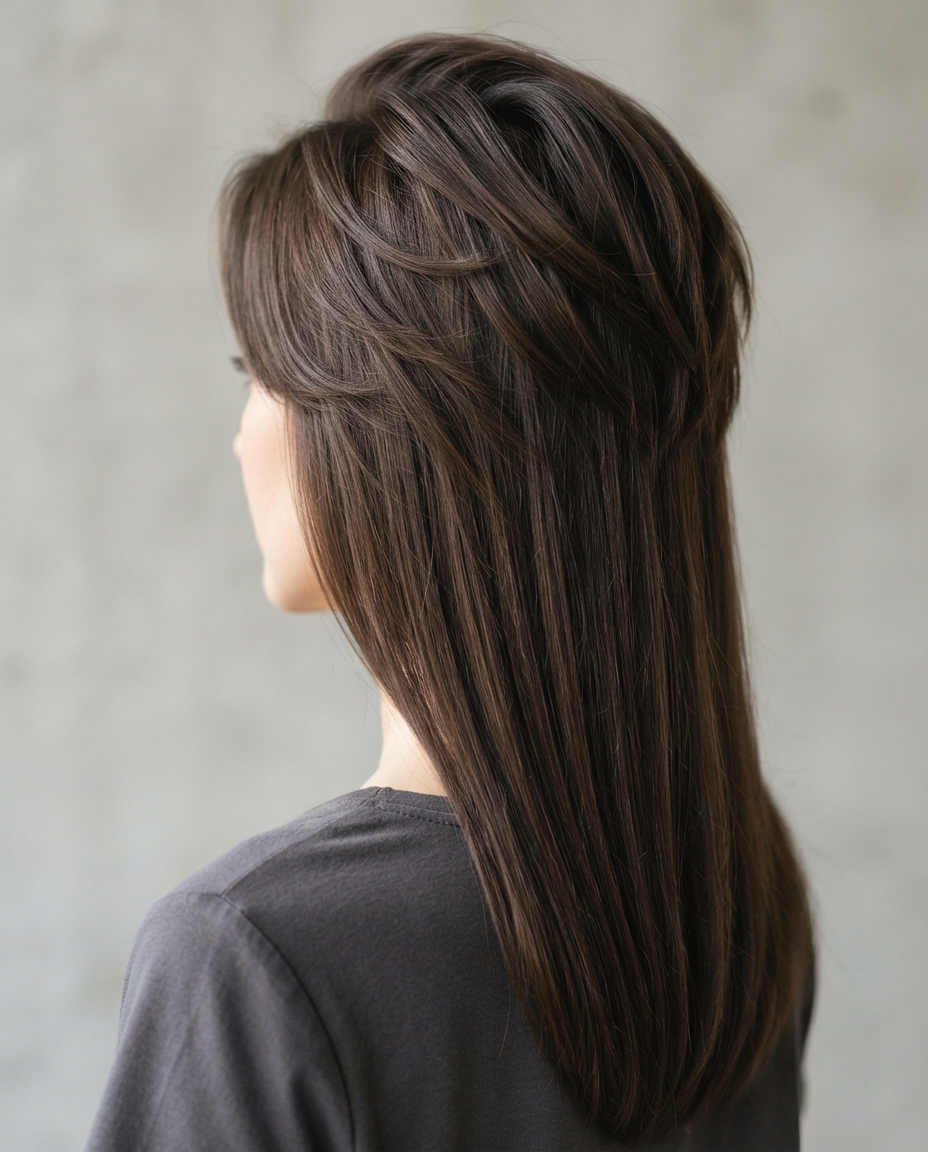
Short layers concentrated at the crown lift hair away from the scalp where straight hair typically lies flattest first, and because straight hair has no natural texture to hold that lift on its own, the cut has to do the work through weight removal at the root. This suits fine-to-medium straight hair especially well and is one of the most reliable fixes for hair that looks voluminous first thing in the morning and flat within a few hours.
2. Long Layers with a Dramatic V-Shape
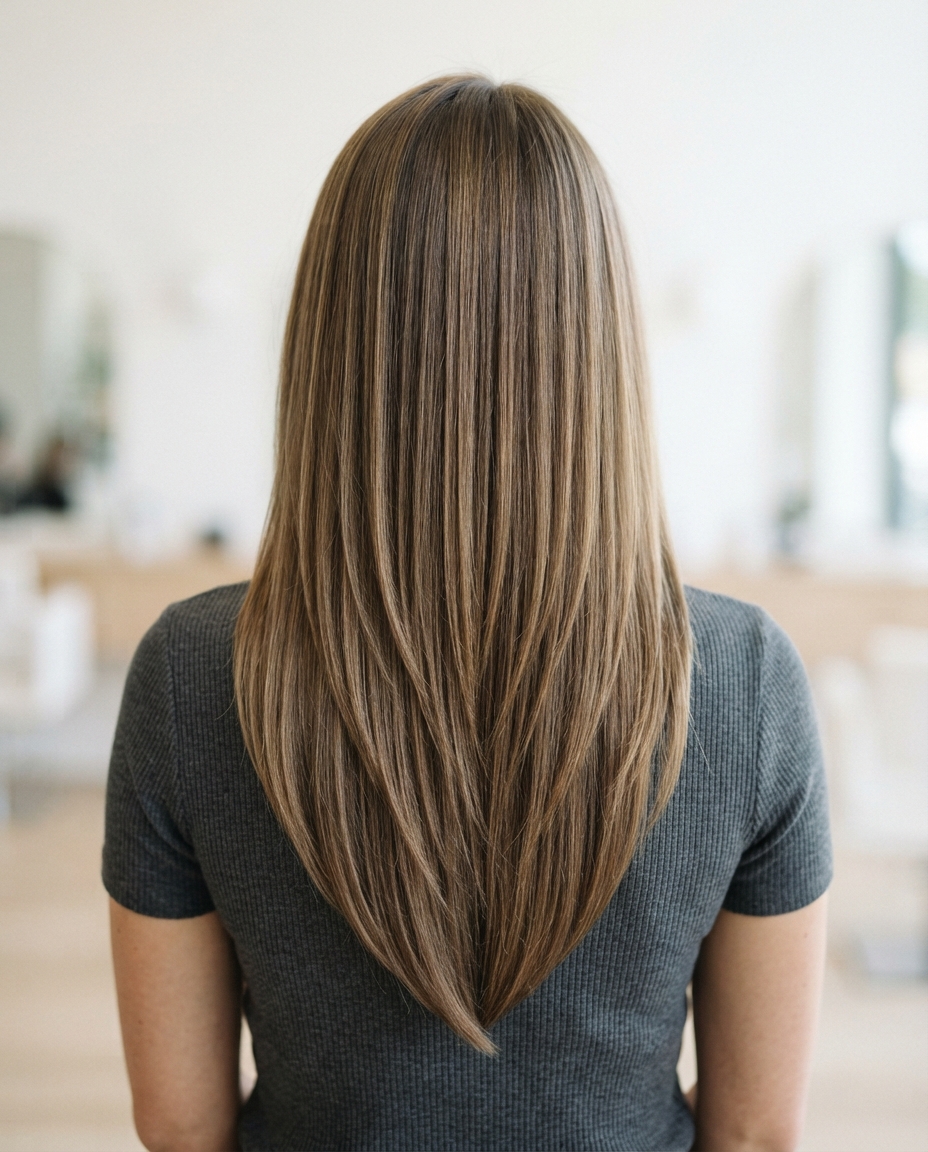
On straight hair, a sharp V-shape layer cut reads with total clarity since there’s no texture to blur the tiers of length — the shortest layers sit visibly higher at the crown, tapering to a distinct point at the center back. This is one of the most effective ways to give straight hair visible movement, since the different layer lengths swing at different rates when the head turns, creating motion that a single-length straight cut simply can’t produce.
3. Wide-Spaced Layers for Thick Straight Hair
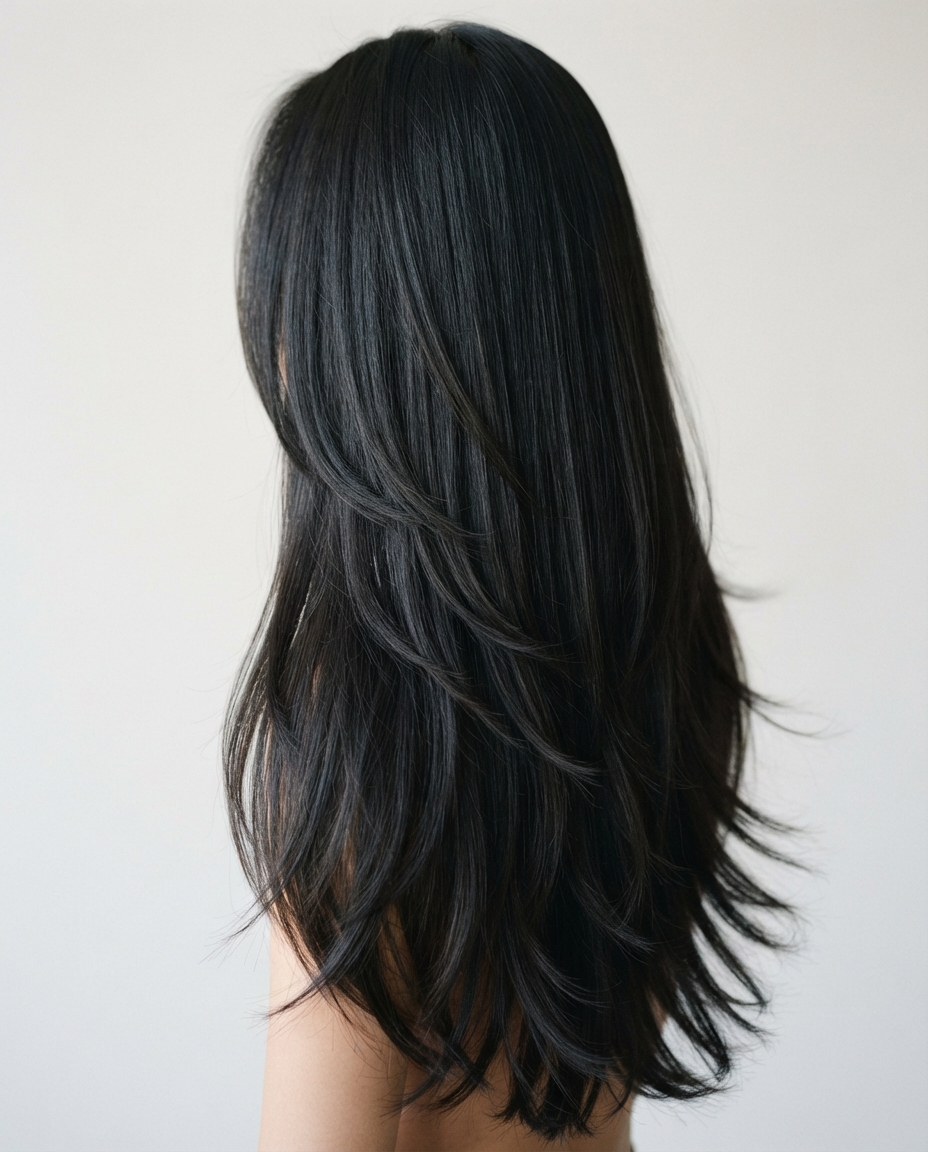
For thick straight hair, which usually has plenty of natural volume already, layers spaced generously apart remove bulk and weight rather than adding lift, which keeps the hair moving instead of sitting as one heavy, solid mass. This suits anyone whose straight hair feels stiff or triangular in shape at one length, and it requires less frequent maintenance than fine-hair volumizing cuts since thick hair holds its layered shape well between trims.
Layers That Create Movement Through Cutting Technique
Since straight hair has no texture of its own to generate movement, the cutting technique itself becomes the primary tool for making the hair move and separate.
4. Razor-Cut Ends
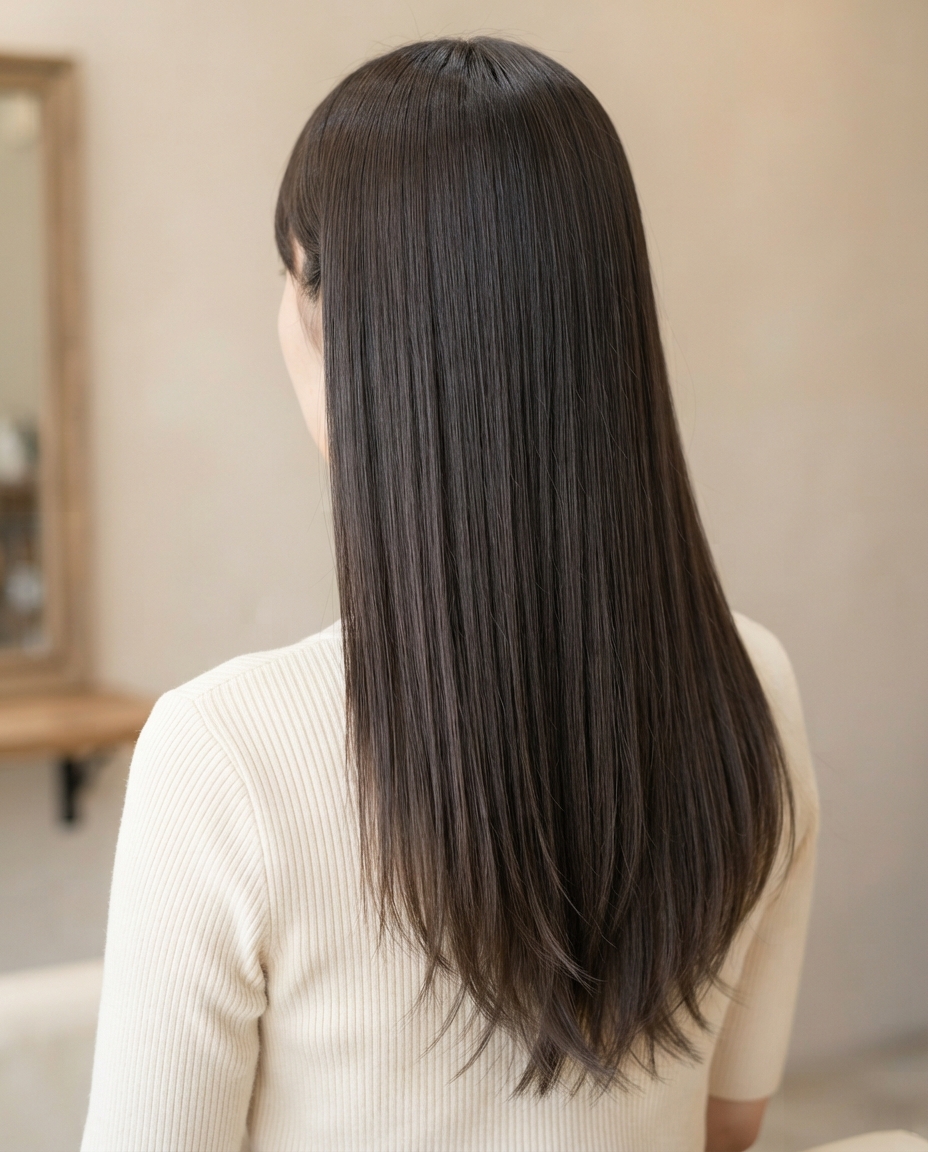
Razor cutting tapers each strand to a fine point instead of the blunt edge a scissor cut leaves behind, and on straight hair specifically, that fine taper allows the ends to move more freely and catch air rather than falling as one stiff, uniform edge. This suits any length or thickness of straight hair and is one of the most versatile technique-based options here, since it can be applied subtly or dramatically depending on how much taper is removed.
5. Point-Cut Textured Layers
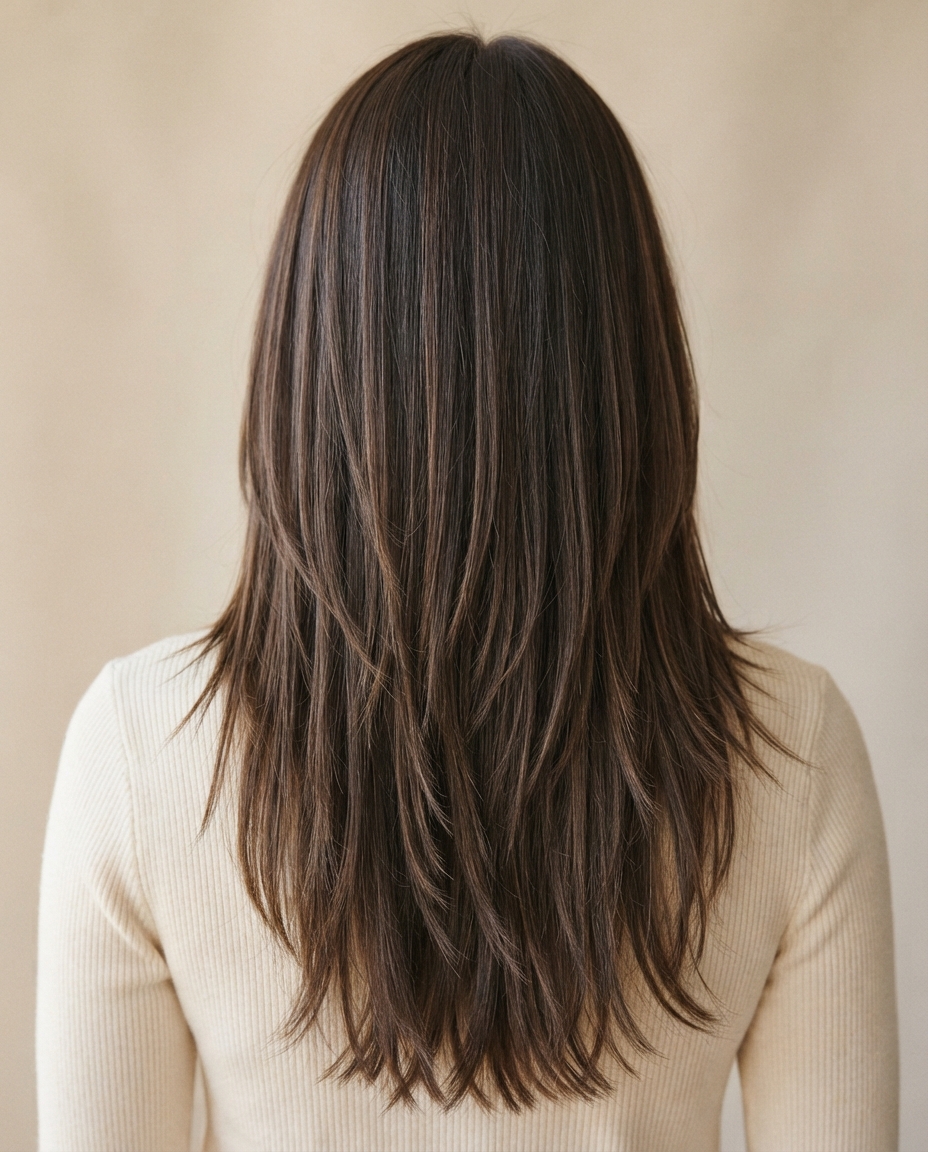
Point-cutting removes small triangular sections along the ends of each layer, creating slightly irregular, textured edges rather than one smooth line. On straight hair, this texture reads very clearly and distinctly, giving the ends a piecey, separated quality that breaks up the otherwise uniform flatness straight hair can have when cut with simple blunt layers.
6. Slide-Cut Seamless Layers
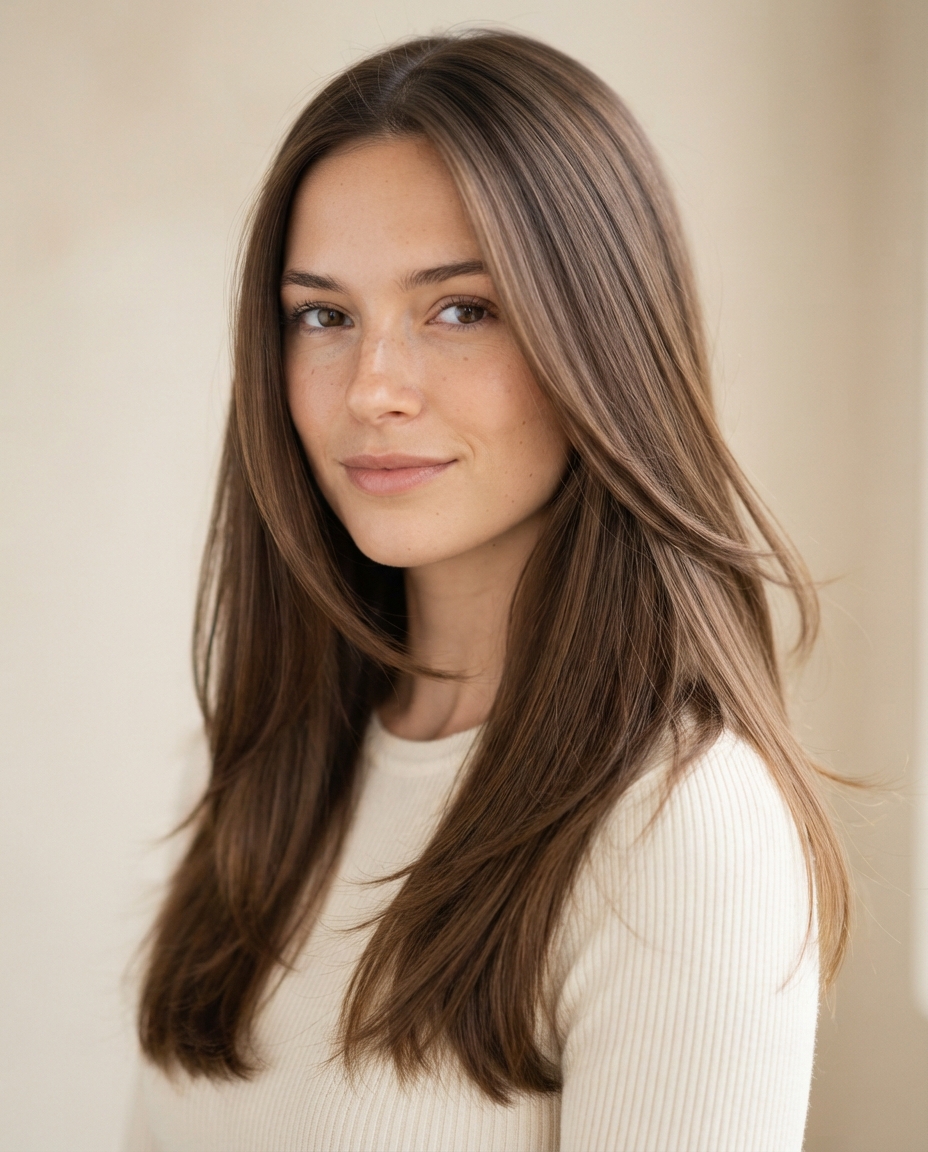
Slide-cutting removes weight gradually along the length of a section rather than at one defined point, producing layers that blend into each other so smoothly on straight hair that they read as one fluid, unbroken line even in motion. This suits anyone who wants the movement benefit of layering without any visible “steps” between layer lengths — a strong option for people who love the sleekness of straight hair and don’t want layering to disrupt that.
Face-Framing Layers on Straight Hair
Because straight hair falls exactly where it’s cut with no texture to reposition it, face-framing placement on straight hair has an especially direct, predictable effect.
7. Cheekbone-Length Face-Framing Layers
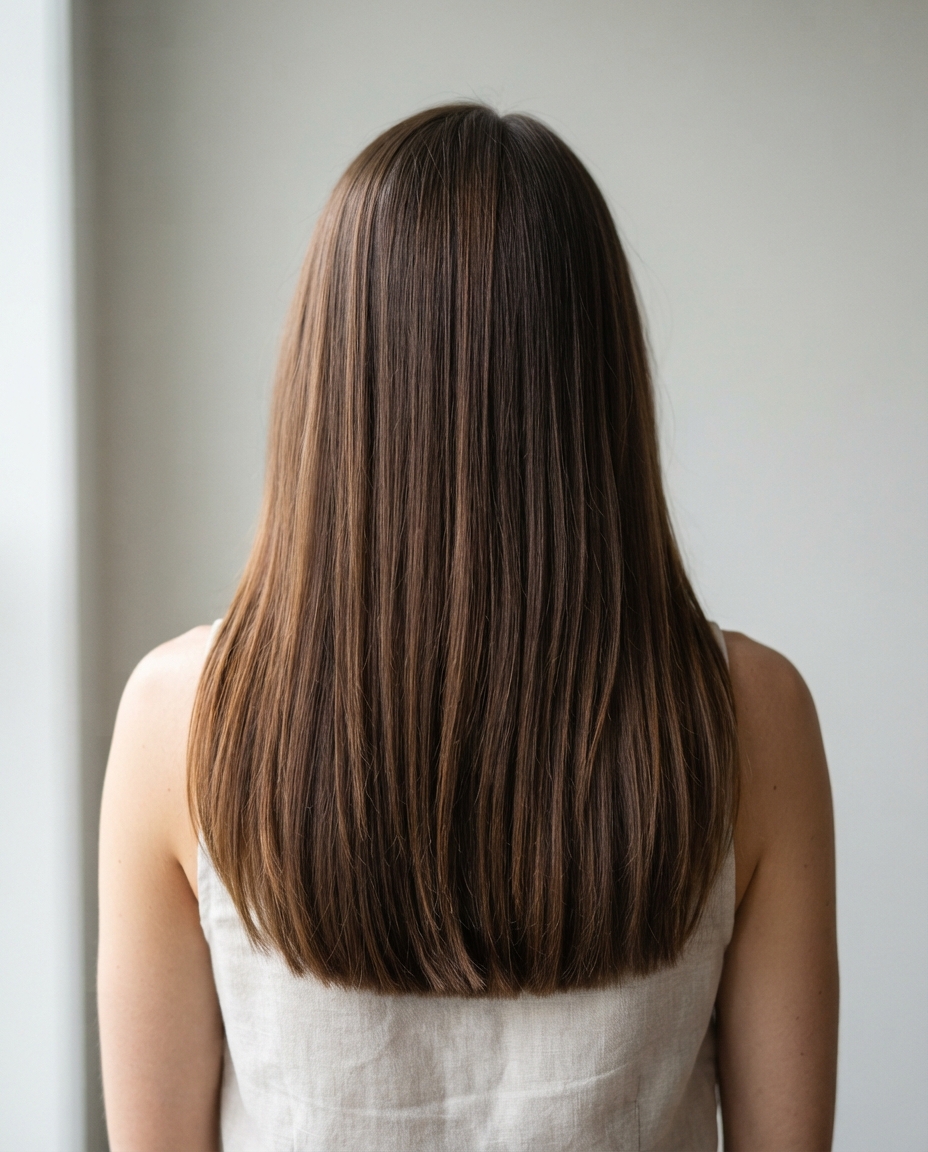
On straight hair, layers starting at cheekbone height fall in a precise, clean line that frames the face with immediate clarity — there’s no curl or wave to make the framing piece sit slightly differently than expected, so what you ask for is very close to exactly what you’ll see. This suits anyone wanting a clearly defined framing effect and works particularly well with straight hair’s natural tendency to fall smoothly into place without much styling effort.
8. Curtain Layers on Sleek Straight Hair
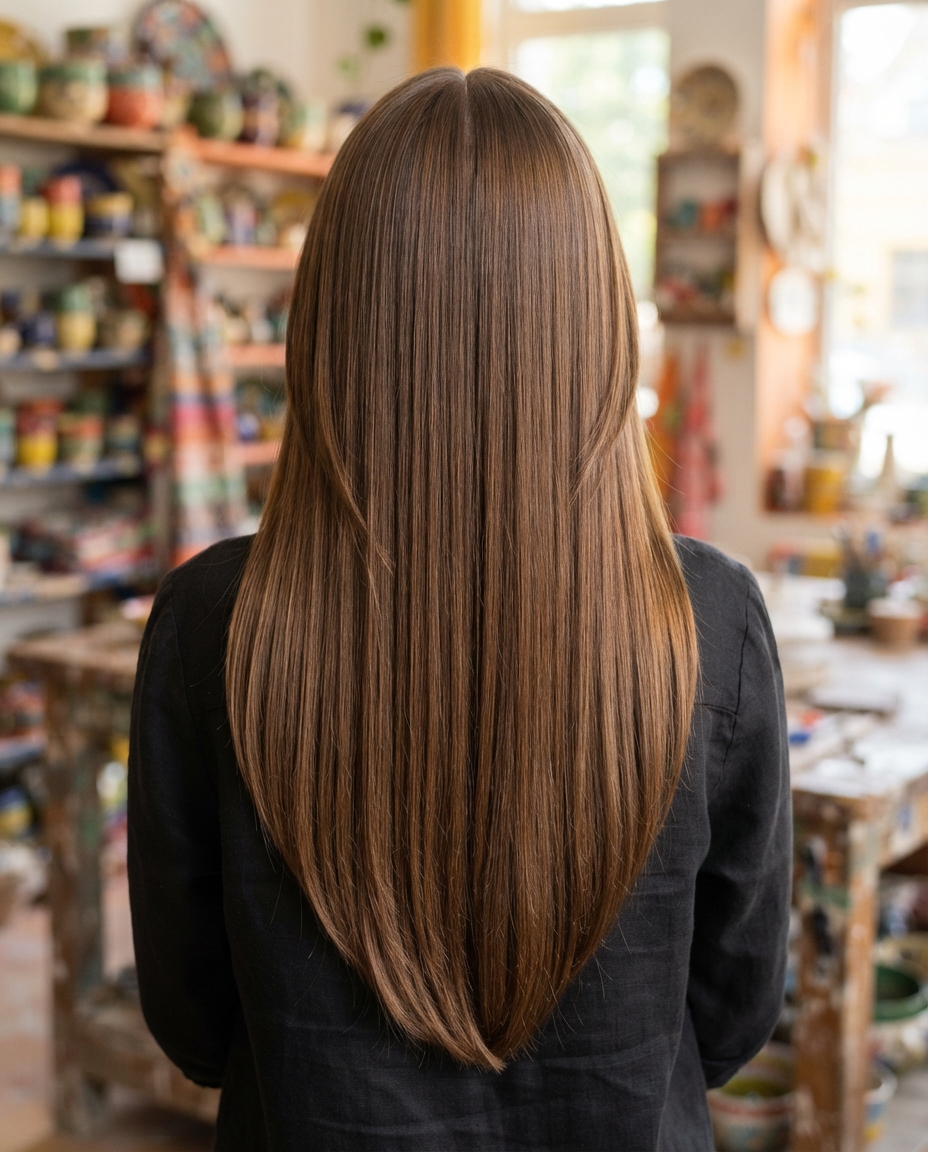
Curtain-length front layers, reaching roughly chin-to-collarbone length and parted in the center, look especially sleek and intentional on straight hair since the pieces sweep back cleanly without any texture fighting the direction of the style. This is one of the most popular long-hair requests specifically because straight hair holds the curtain shape with minimal daily styling — a quick pass with a round brush is usually enough to set it for the day.
Sleek, Minimal-Layer Options for Straight Hair
Not every straight-hair layer cut needs to be dramatic — these options keep most of the length’s sleekness intact while adding just enough layering to introduce movement.
9. Long Layers with a Blunt Perimeter
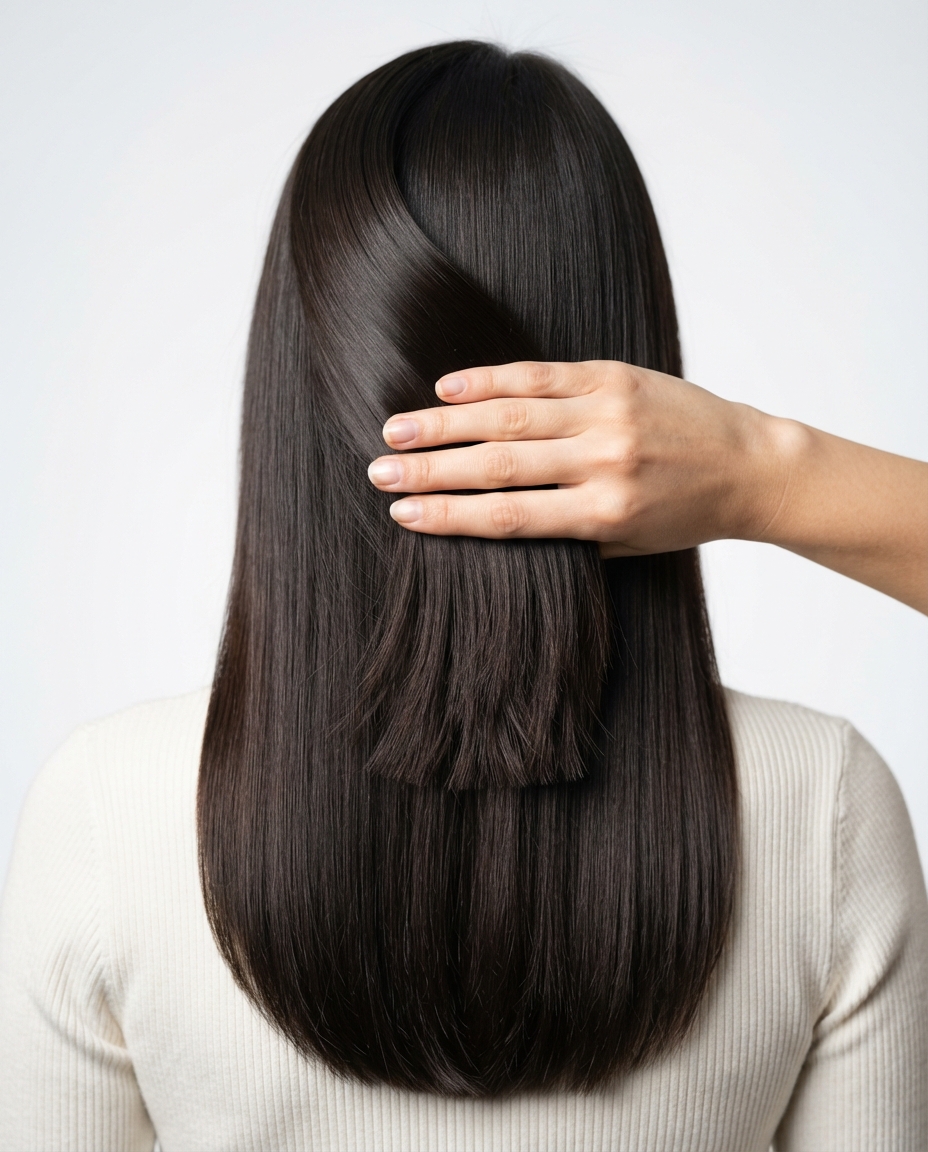
The outer edge stays cut blunt, while internal layers underneath reduce bulk and add movement that isn’t visible from the outside. On straight hair, this technique is especially effective because the blunt outer line stays crisp and glossy-looking — a hallmark of well-maintained straight hair — while the hidden internal layers keep the hair from feeling stiff or overly heavy.
10. Barely-There Layers
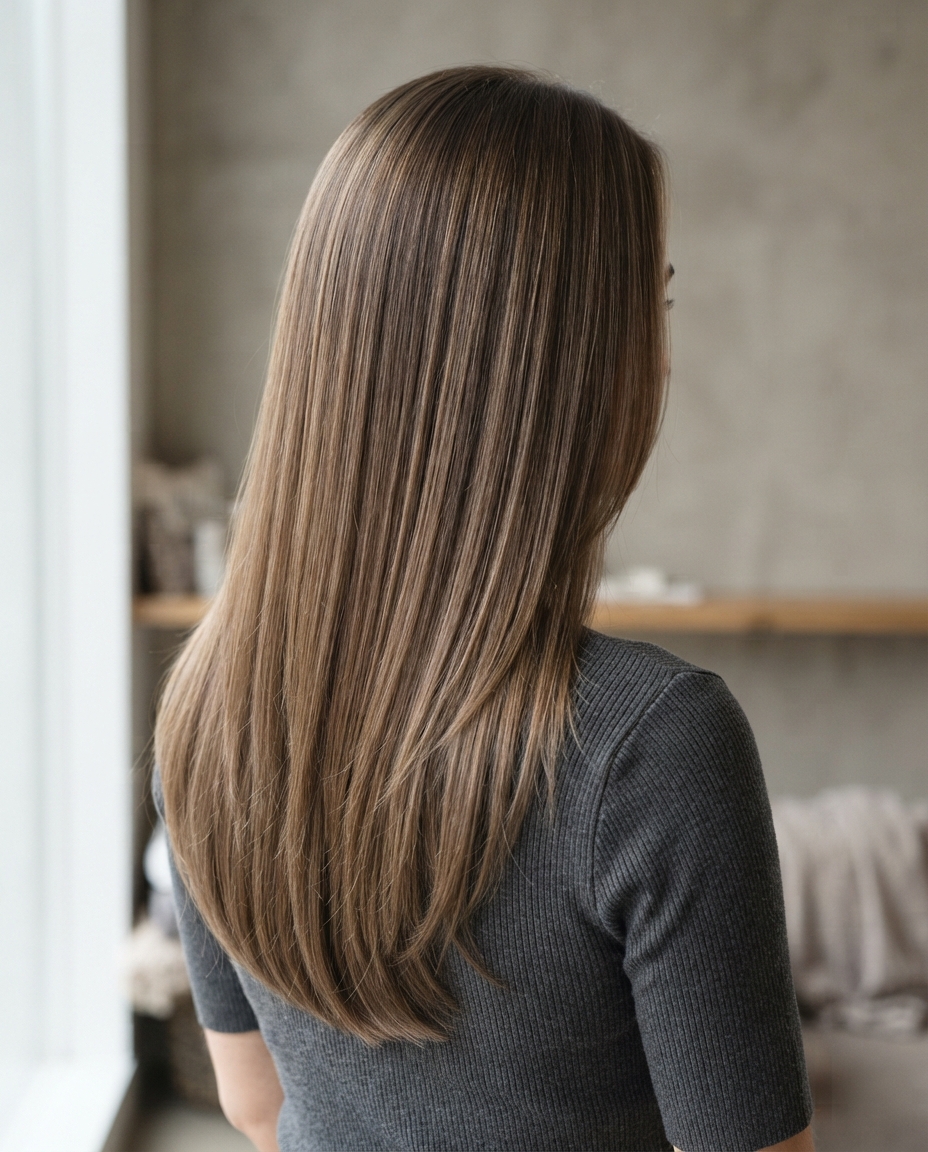
For straight hair specifically, a very subtle amount of layering — just a few inches of variation between the shortest and longest layer — is often the safest entry point into layered cutting, since even a small amount of layering shows clearly on straight hair and can always be built up into something more dramatic later. This suits anyone hesitant about committing to visible layers who still wants some movement at the ends.
11. Long Layers with a Center Part
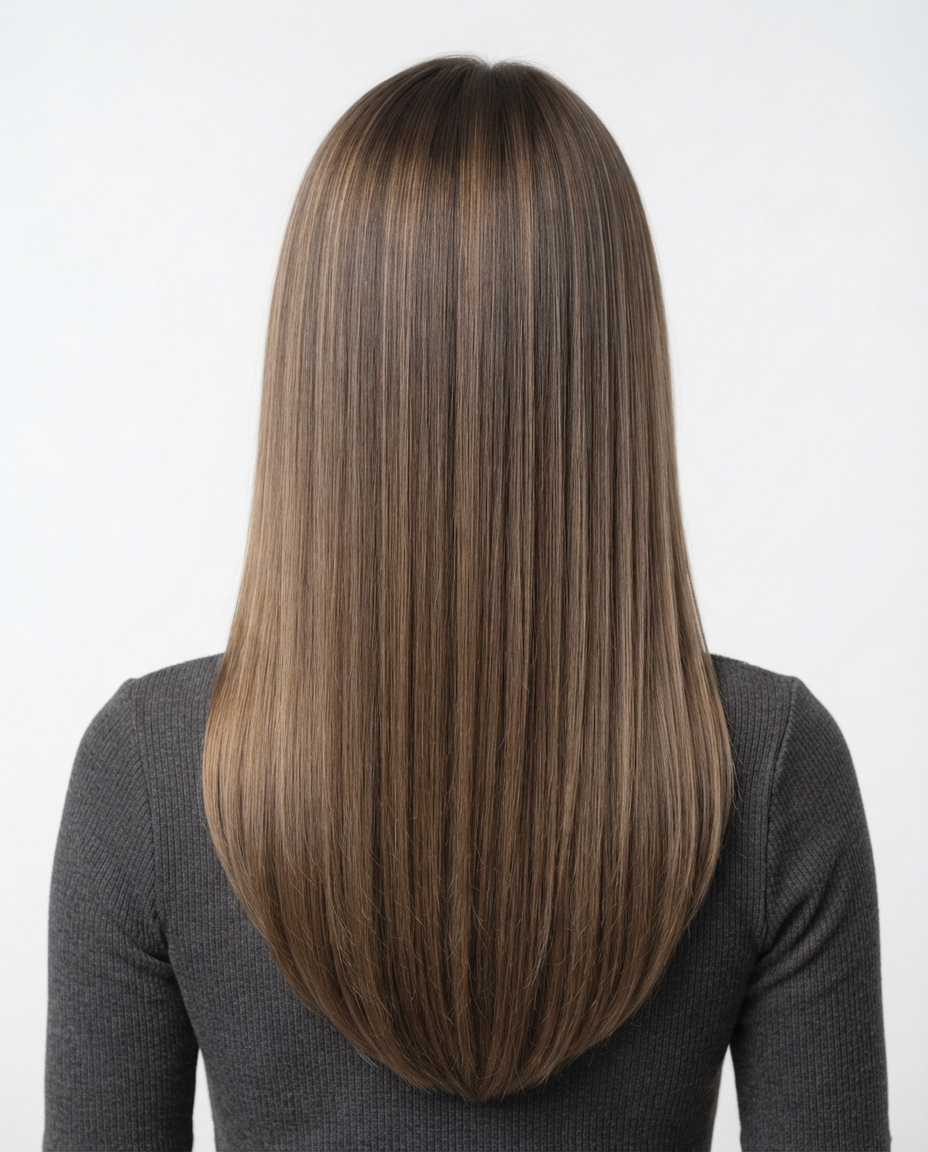
Minimal, wide-spaced layering paired with a precise center part keeps straight hair’s clean, symmetrical silhouette largely intact while still introducing subtle shape and preventing the flat, triangular look that fully blunt long hair can develop. This combination requires very little daily styling, since straight hair naturally falls into place along a center part with minimal effort.
Styling Long Layered Straight Hair for Maximum Movement
12. Round-Brush Blowout on Layered Ends
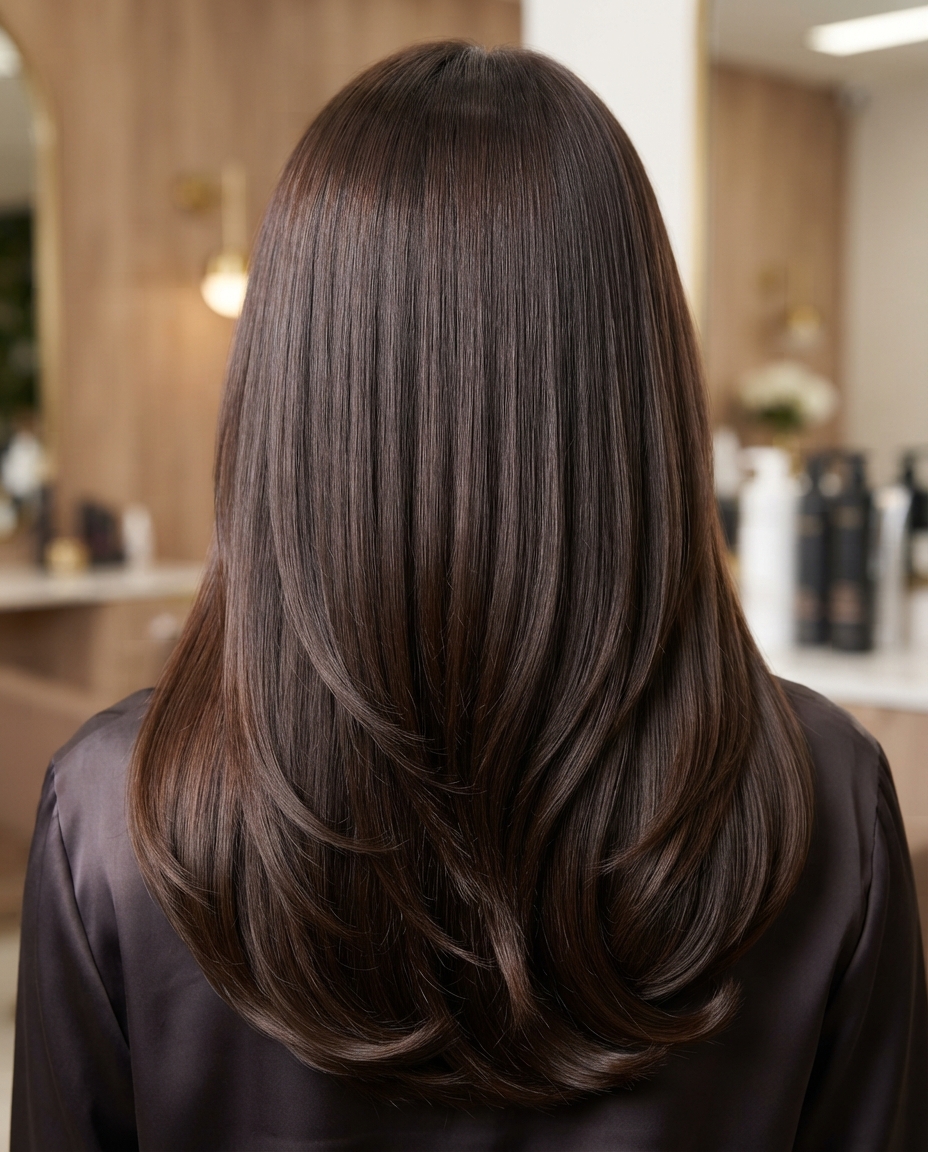
Rolling layered ends under or out with a round brush gives straight hair a slight curve it wouldn’t otherwise have on its own, and because straight hair holds a blow-dried shape particularly well compared to textured hair, this styling approach can last a full day or more without touch-ups. This is less a distinct haircut than a styling method, but it’s worth including because the same layered cut can look noticeably different depending on whether it’s air-dried flat or blown out with intentional shape — and straight hair shows that difference more clearly than any other texture.
Choosing the Right Layered Cut for Your Straight Hair
If your hair is fine and tends to go flat, prioritize crown-lifted layers (#1) or a round-brush styling routine (#12) over subtler cutting techniques — fine straight hair generally needs help at the root more than it needs texture removed at the ends. If your hair is thick and already holds plenty of natural volume, wide-spaced layers (#3) or a blunt perimeter with internal layers (#9) will do more for you than a dramatic V-shape, since your hair doesn’t need extra lift so much as reduced weight. And if you’re still deciding how much change you want, start with barely-there layers (#10) or a center-part minimal cut (#11) — both are easy to build on at a future appointment without any regret about cutting too much too soon.
What to Say to Your Stylist
Mention specifically that your hair is straight and ask how the layer technique they’re recommending will read without any natural texture to soften it — a stylist experienced with straight hair will often adjust spacing or technique differently than they would for wavy or curly clients. If movement is your main goal, ask directly for razor-cutting or point-cutting rather than a standard scissor-cut layer, since technique matters more for straight hair’s movement than length alone does.