

13 Makeup Tips for Mature Skin That Make a Beautiful Difference
Good makeup does not stop working at a certain age. What often changes is the way particular textures, finishes, and techniques behave on the skin. A foundation that once looked beautifully matte may suddenly make the complexion appear flatter or emphasize areas you never noticed before. Heavy concealer can settle around the eyes instead of making them look fresher. Powder that used to feel essential may start drawing attention to texture, while the blush placement you have used for years may no longer create the effect you want.
None of this means mature skin needs dramatically more makeup. In many cases, the most flattering adjustments involve using a little less product and becoming more intentional about where it goes. The goal is not to erase every line, make the face look twenty years younger, or follow rigid rules about what women of a certain age should and should not wear. Mature skin can carry bold lipstick, smoky eyes, shimmer, eyeliner, and virtually every other makeup style when those choices suit the person wearing them.
What often makes the biggest difference is understanding texture. Skin changes over time, and makeup sits on that changing surface. Hydration, product consistency, placement, and the amount of makeup applied can therefore matter just as much as color.
A thin layer of foundation may look considerably smoother than full coverage. A softly reflective cream blush can bring dimension back to the complexion without adding obvious shine. A carefully placed concealer can brighten the eyes more effectively than covering the entire under-eye area. These thirteen makeup tips focus on those small adjustments — the techniques that can help makeup look softer, fresher, and more harmonious with mature skin while still leaving plenty of room for personal style.
1. Prepare the Skin Before Trying to Perfect It With Makeup
One of the most useful changes you can make to mature-skin makeup happens before foundation ever touches the face. Makeup generally sits more smoothly on skin that feels comfortable and well moisturized, while applying foundation directly over dry or tight areas can make those areas appear more noticeable.
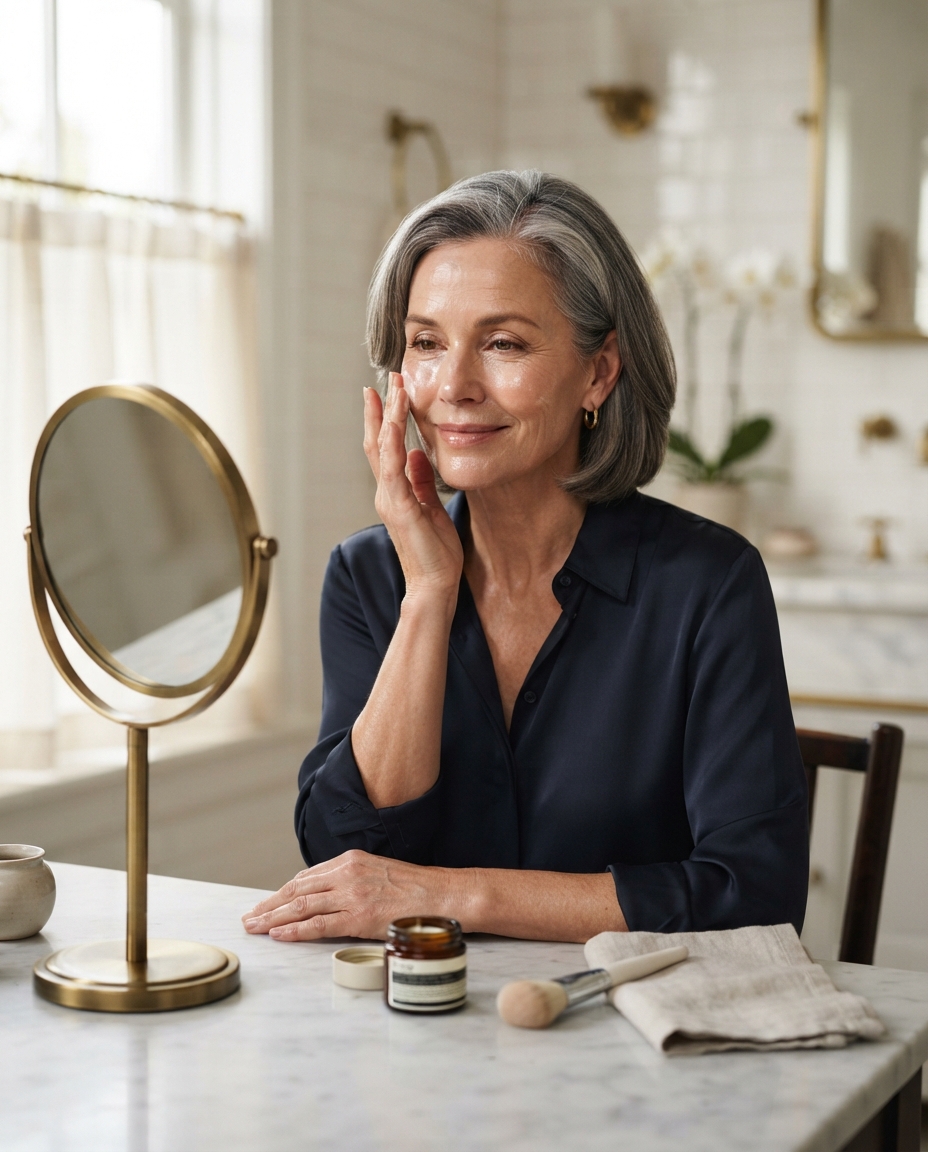
Begin with your normal skincare and allow moisturizing products enough time to settle. The objective is not to create an extremely slippery surface but to reduce dryness so that foundation can spread in a thin, even layer rather than catching on individual areas of texture.
If your moisturizer leaves the face very wet or tacky, give it several minutes before beginning makeup. Applying complexion products immediately on top of a thick layer of skincare can sometimes cause pilling or uneven blending, particularly when formulas do not work well together.
A hydrating primer can be useful, but it is not mandatory. If moisturizer already gives you a smooth base, another layer may simply add unnecessary product. The best preparation is whatever leaves your skin feeling comfortable without creating heaviness.
Why it matters: The smoother the starting surface, the less foundation has to do later.
2. Use Less Foundation Than You Think You Need
Full-coverage foundation can be useful when significant coverage is genuinely wanted, but adding more product does not automatically make mature skin look smoother. In fact, a thick layer can sometimes emphasize texture because the product sits across every contour of the face.
A lighter approach often creates a more natural result.
Begin with a small amount of foundation placed mainly where you want the complexion to look more even. Blend outward rather than coating the entire face with the same amount of product. You may discover that the center of the face needs more coverage than the outer cheeks, forehead, or jaw.
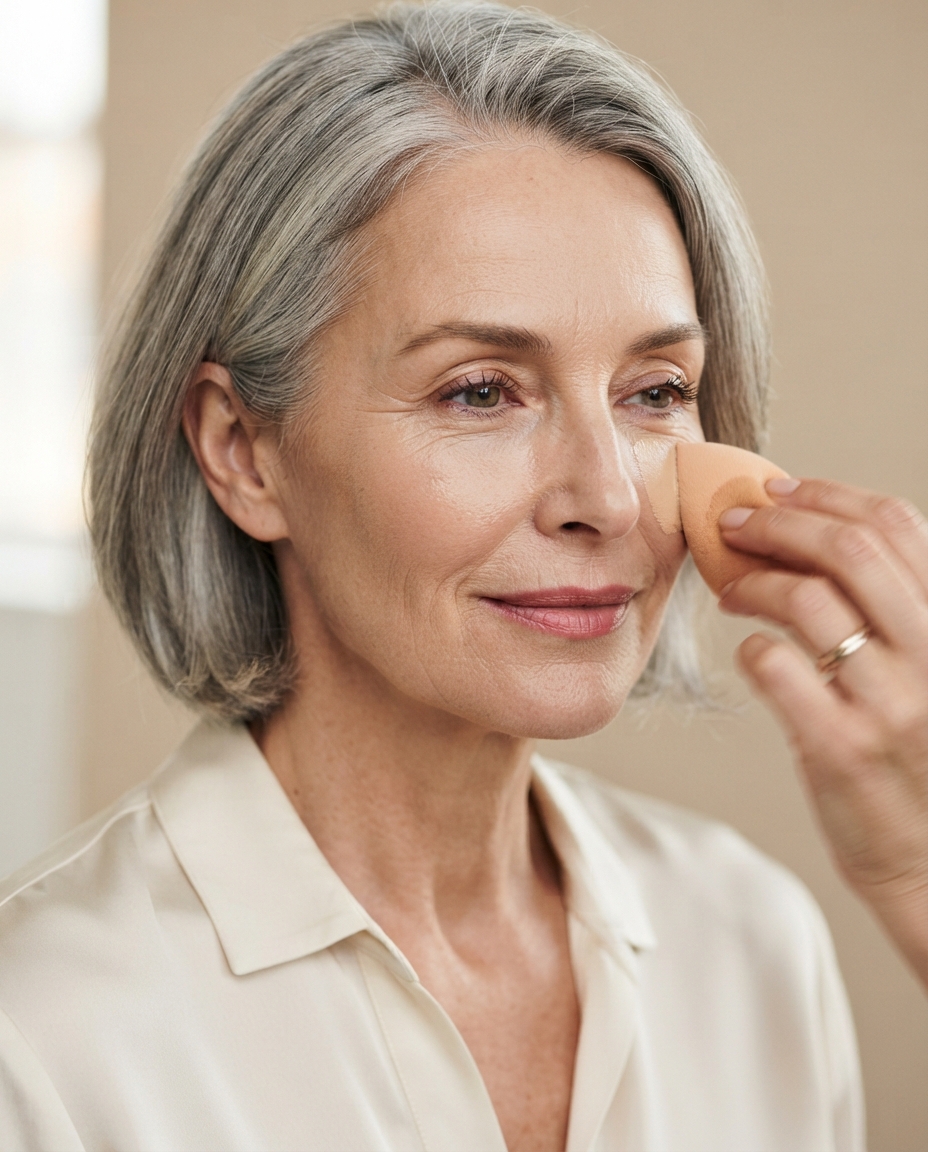
This selective application allows more natural skin to remain visible, which can make the finished complexion look fresher.
The finish matters too. Satin and natural-finish foundations are often easier to work with than formulas at either extreme. Very matte products may emphasize dryness on some skin, while extremely dewy foundations can move around more easily or accentuate texture depending on the formula.
The goal is not necessarily to find a product labeled specifically for mature skin. It is to find a foundation that remains flexible, blends thinly, and looks good on your individual skin after several hours.
Application tip: Start with one thin layer and add coverage only where needed rather than beginning with a full layer everywhere.
3. Place Concealer Strategically Instead of Covering the Entire Under-Eye
Under-eye concealer is often treated as though more coverage automatically creates a brighter eye area, but covering the entire space beneath the eye with a thick opaque layer can make the product more likely to gather in fine lines. A more targeted approach can accomplish the same visual brightening with considerably less makeup.
Instead of drawing a large triangle below the eye, place a small amount of concealer near the inner corner, where darkness is often most noticeable, and another small amount toward the outer portion if you want additional lift or brightness. Blend the product gently into the surrounding skin rather than spreading it all the way down the cheek.
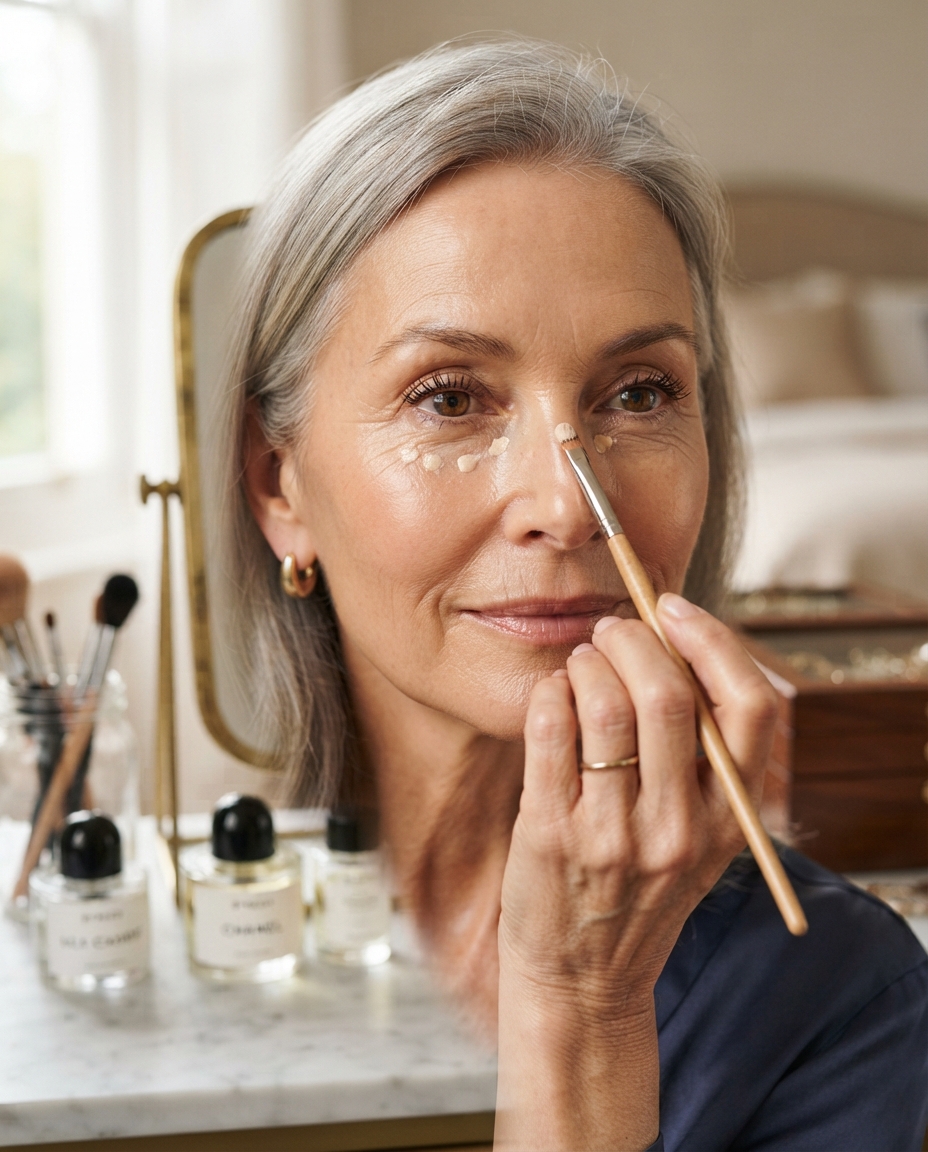
The concealer should be flexible enough to move with the eye area rather than drying into a rigid layer. A natural or lightly luminous finish often works beautifully here because it reflects a small amount of light without appearing glittery.
If you have visible darkness, color correction can sometimes reduce how much concealer you need. A very thin peach, apricot, or similarly appropriate corrector beneath concealer can neutralize discoloration more effectively than repeatedly layering beige product over it.
The useful principle: Correct first if necessary, then conceal only as much as the area actually needs.
4. Be Selective With Powder
Powder remains useful on mature skin. The problem is usually not powder itself but applying too much of it everywhere. A light amount can set concealer, reduce excessive shine, and improve makeup longevity. A heavy layer across the entire face, however, can remove the natural dimension from the complexion and make drier areas look more textured.
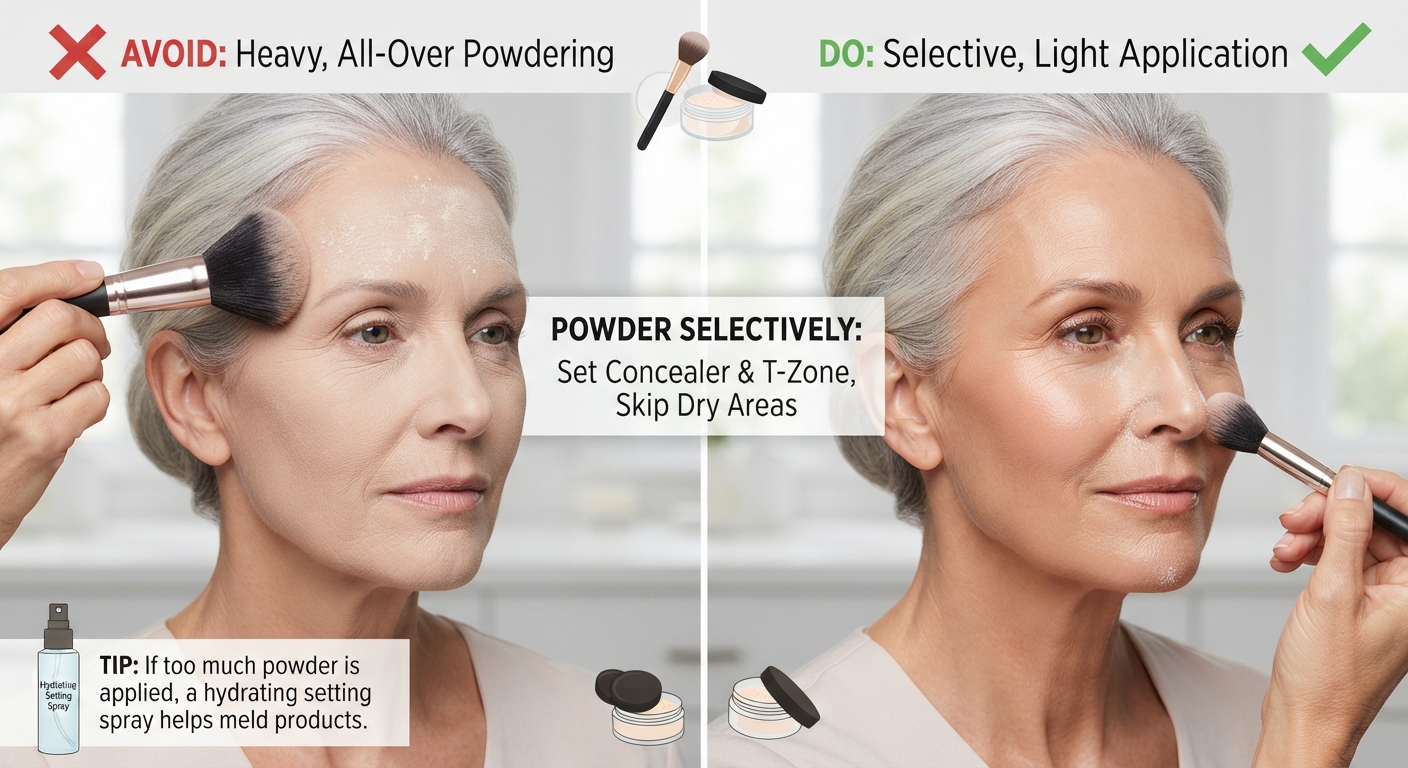
Use a small fluffy brush and concentrate powder where makeup actually tends to move. This might include the sides of the nose, center of the forehead, chin, or a very light amount beneath the eyes if your concealer needs setting.
Areas that stay naturally dry may not need powder at all. Finely milled formulas are generally easier to apply in thin layers than powders that immediately create a very opaque matte finish. The goal is to take away unwanted shine without taking away every trace of natural light from the face.
If the finished makeup looks slightly too powdered, a small amount of hydrating setting spray can help the different complexion products visually settle together.
5. Try Cream Blush for Soft, Natural-Looking Color
Blush can make an enormous difference to the overall freshness of a makeup look because it restores color and dimension after foundation has evened out the complexion. Cream blush is particularly useful when you want the finish to remain soft and skin-like. Unlike very dry powder formulas, creams tend to blend into foundation rather than sitting visibly on top of it. The result can look more like natural color coming through the skin.
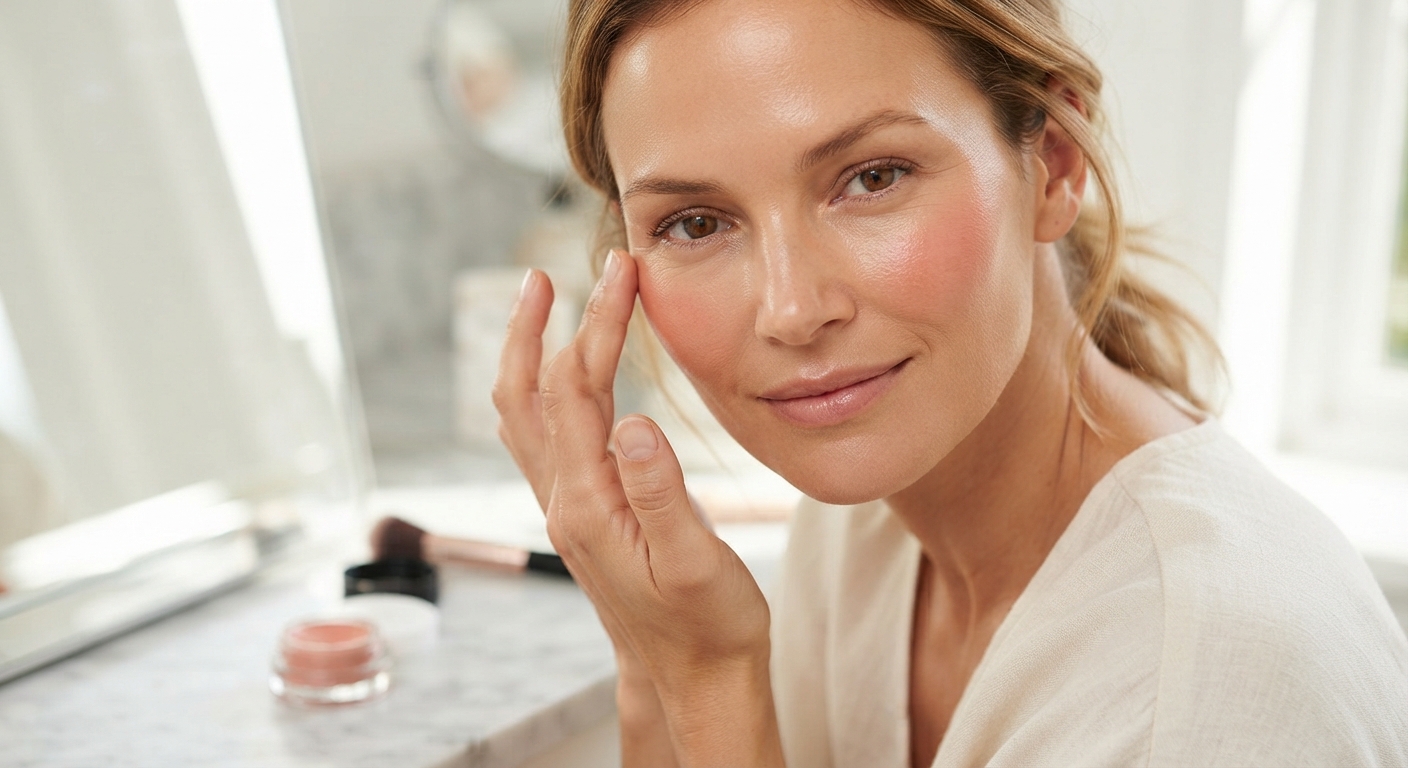
Placement can also change the effect. Rather than applying blush very low on the cheek, begin around the upper portion of the cheek and blend softly outward toward the temple. You do not need to force the product extremely high; the intention is simply to prevent the color from visually pulling the center of the face downward.
Rose, muted berry, peach, soft coral, and warm pink are all useful families, but the most flattering shade depends far more on undertone than age. Start with a small amount. Cream blush can be surprisingly pigmented, and building it gradually usually looks more natural than trying to soften an overly strong application later.
6. Keep Bronzer Soft and Diffused
Bronzer can bring warmth back to the complexion after foundation, but heavy stripes or very dark contouring can make mature makeup appear harsher than intended. A softer application usually looks more convincing. Choose a bronzer that is only moderately deeper than your natural complexion and blend it across areas where warmth would naturally appear, such as the outer forehead, upper cheek area, and lightly around the perimeter of the face.
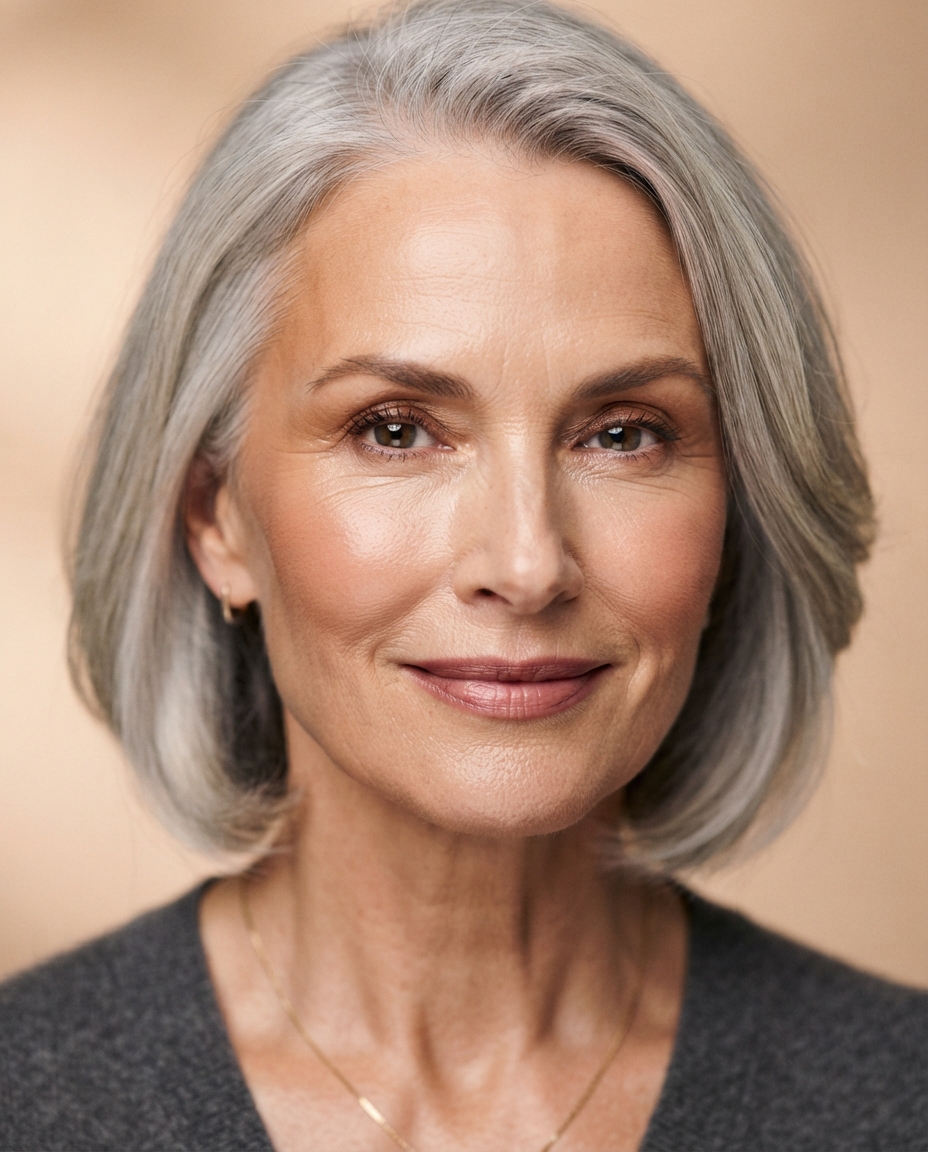
The product does not need to create a visible sculpting line. If contouring is part of your normal routine, keep the placement precise and blend thoroughly so that the shadow enhances facial structure without becoming the first thing someone notices.
Cream bronzer can be useful when you want a seamless finish, but powder bronzer is perfectly appropriate if the formula blends smoothly. Texture matters more than the product category. The finished result should make the complexion look warmer and more dimensional without making it obvious exactly where bronzer begins and ends.
7. Define the Brows Without Making Them Too Heavy
Brows naturally frame the face, but strong block-like brows can overpower softer mature makeup. The most flattering approach is usually to restore definition while preserving the appearance of individual hairs. If the brows have become sparser, begin by filling only the areas that actually need additional shape. Use small strokes rather than drawing one solid line from beginning to end. Concentrate definition through the body and tail while keeping the inner portion slightly softer.
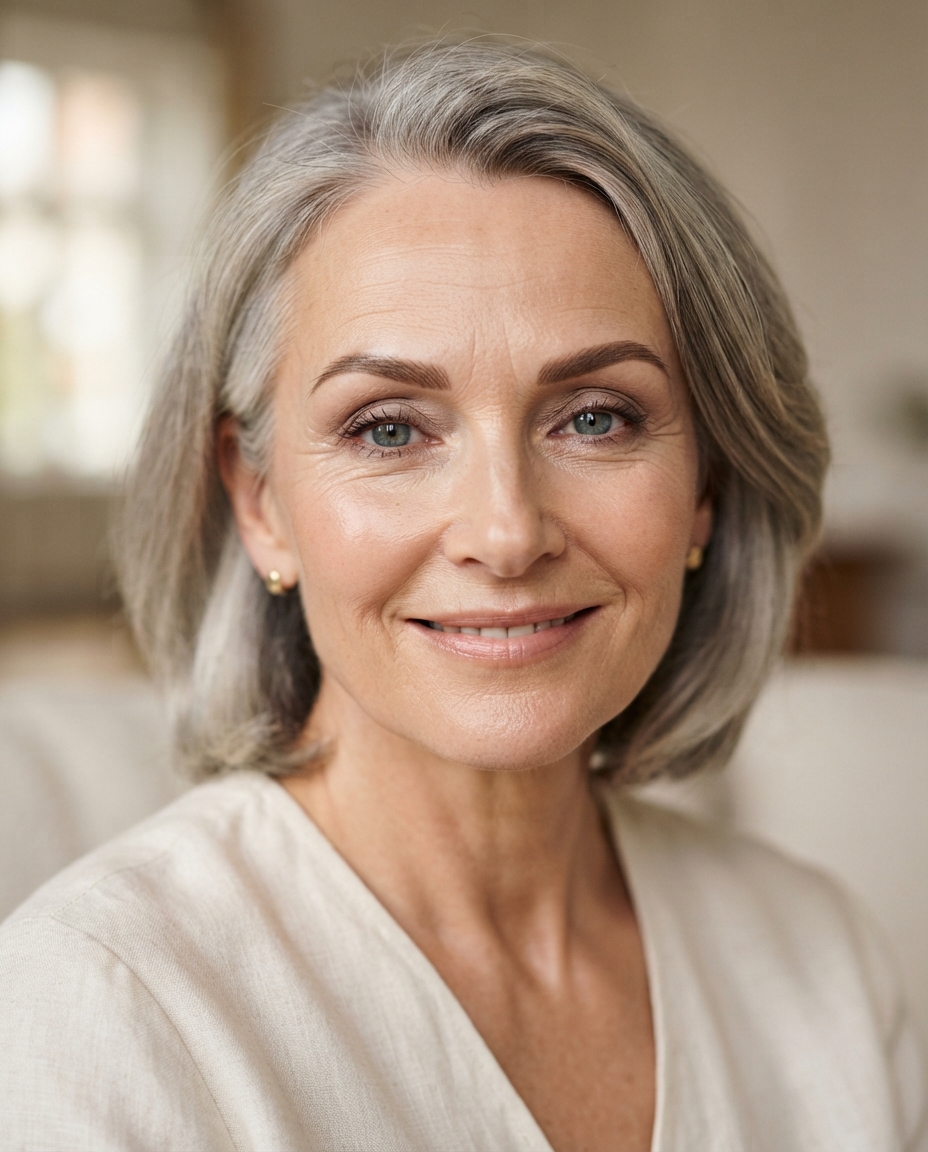
The color does not need to match your hair perfectly. In many cases, a shade slightly softer than the darkest hair creates a more natural effect. A tinted brow gel can also be useful if there are enough existing hairs to work with. It adds color and shape simultaneously without requiring a full pencil application.
The goal is not to recreate the exact brow shape you had decades ago or follow a dramatic current brow trend. It is simply to give the eye area enough structure that the rest of the makeup feels balanced.
8. Use Softer Eyeliner Placement for Definition
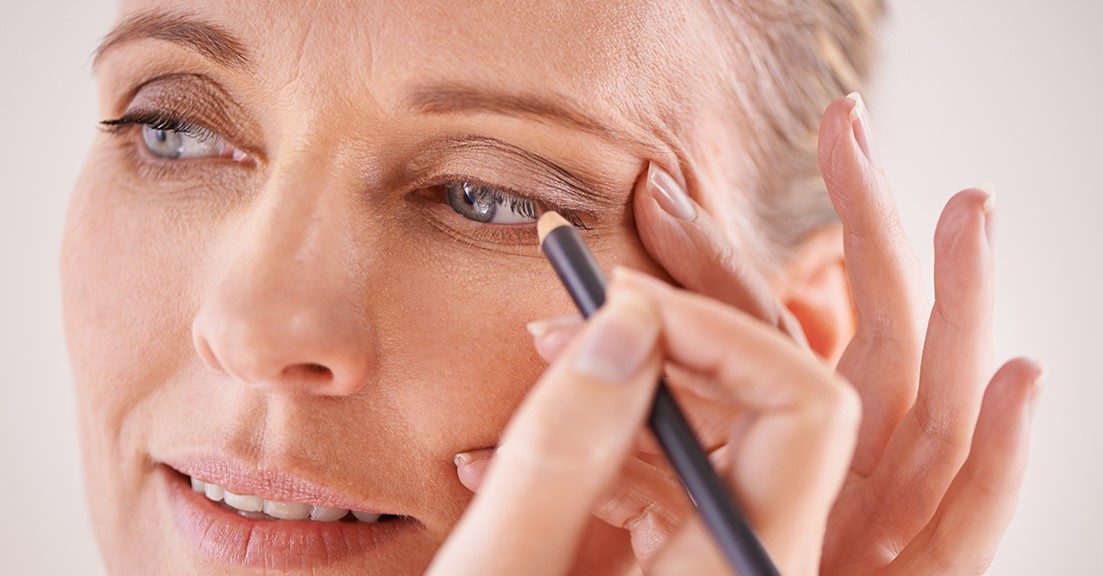
Eyeliner can still be beautiful on mature eyes, but the placement often matters more than whether you use eyeliner at all. A very thick dark line can visually reduce the visible lid area, particularly if the lid has become more hooded. Instead, concentrate definition close to the lash roots, where it makes the lashes look fuller without taking up much space.
Brown, charcoal, plum, navy, and deep olive can all provide definition while feeling slightly softer than pure black, although black remains completely wearable when that is your preference.
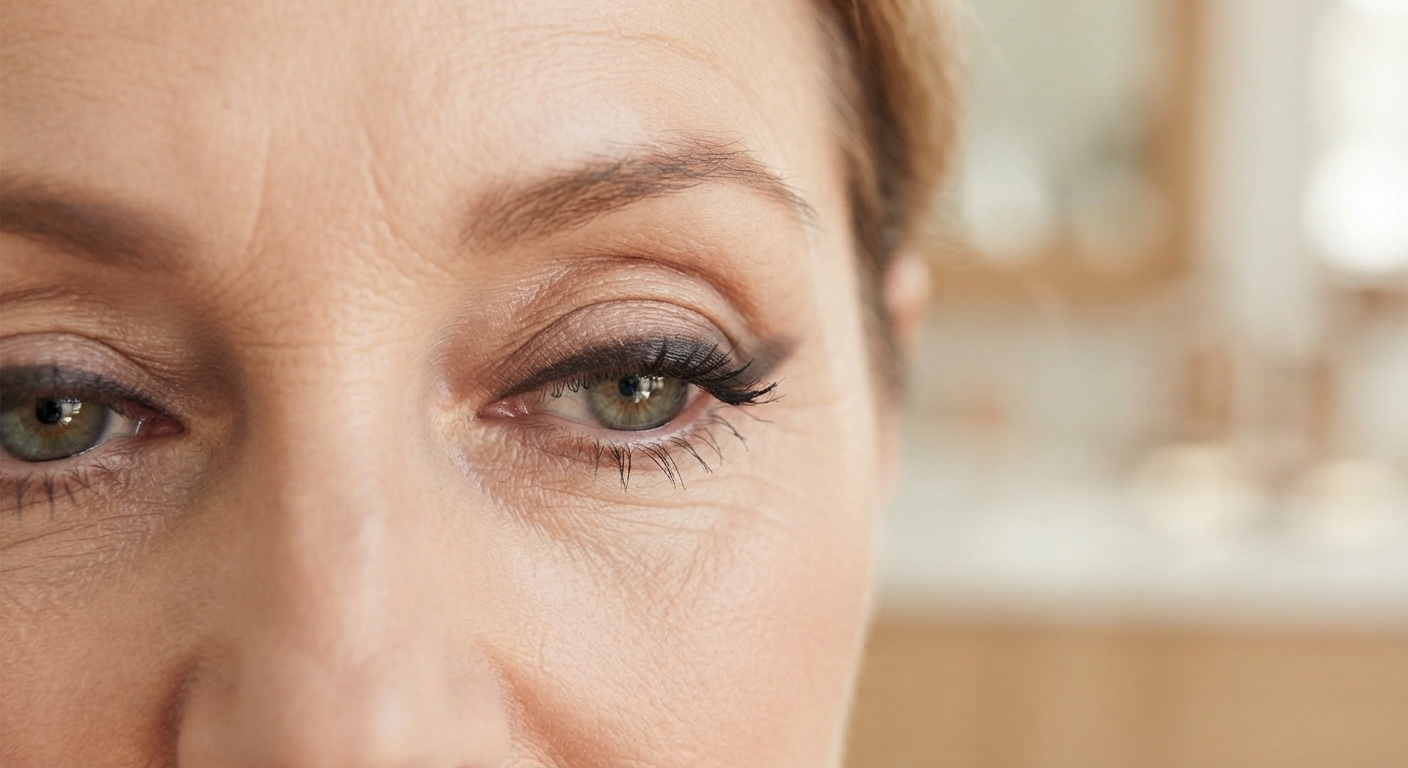
For a less graphic finish, gently smudge pencil liner before it sets. The softened edge creates definition without requiring a perfectly sharp line, which can also be easier to apply on skin that naturally moves as you work.
If you enjoy winged eyeliner, keep the wing aligned with the eye rather than forcing an exaggerated shape. Small adjustments usually look more harmonious than trying to recreate the exact liner technique that worked years earlier.
9. Choose Eyeshadows That Create Dimension Without Excess Weight
There is no reason mature eyes cannot wear shimmer, metallics, or deeper colors. The most useful adjustment is deciding where those finishes should go. Soft matte or satin shades through the crease can create dimension without drawing excessive attention to texture. Taupe, caramel, soft brown, muted mauve, plum, grey, and warm beige are all versatile options depending on skin tone and personal style.
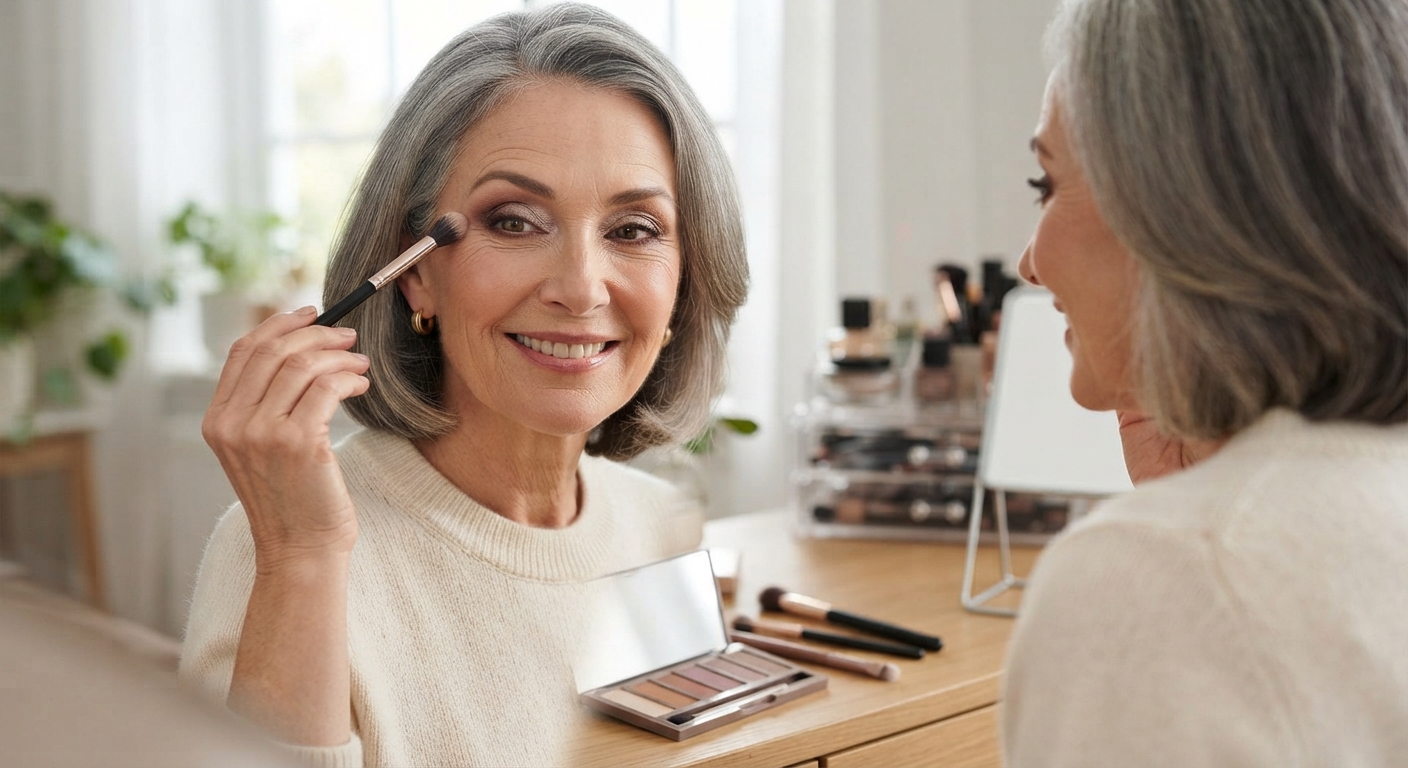
Shimmer can then be placed more deliberately. A finely milled sheen across the mobile lid or at the inner corner can brighten the eyes beautifully, while extremely chunky glitter may create a more textured effect than you want. If the lid is hooded, apply the crease shade while the eyes are open and looking forward. This helps you see where the color will actually remain visible rather than placing all of the depth inside a fold that disappears when the eye is open.
The best mature-eye makeup is not necessarily lighter. It is simply structured so that the color and depth remain visible in the places you want them.
10. Curl the Lashes and Focus Mascara at the Roots
Lashes can visually open the eye even when the rest of the eye makeup is minimal. Curling the lashes before mascara helps reveal more of the eye, particularly when the lashes naturally point downward. Follow with mascara concentrated near the roots and combed outward through the ends rather than repeatedly adding heavy layers to the tips.
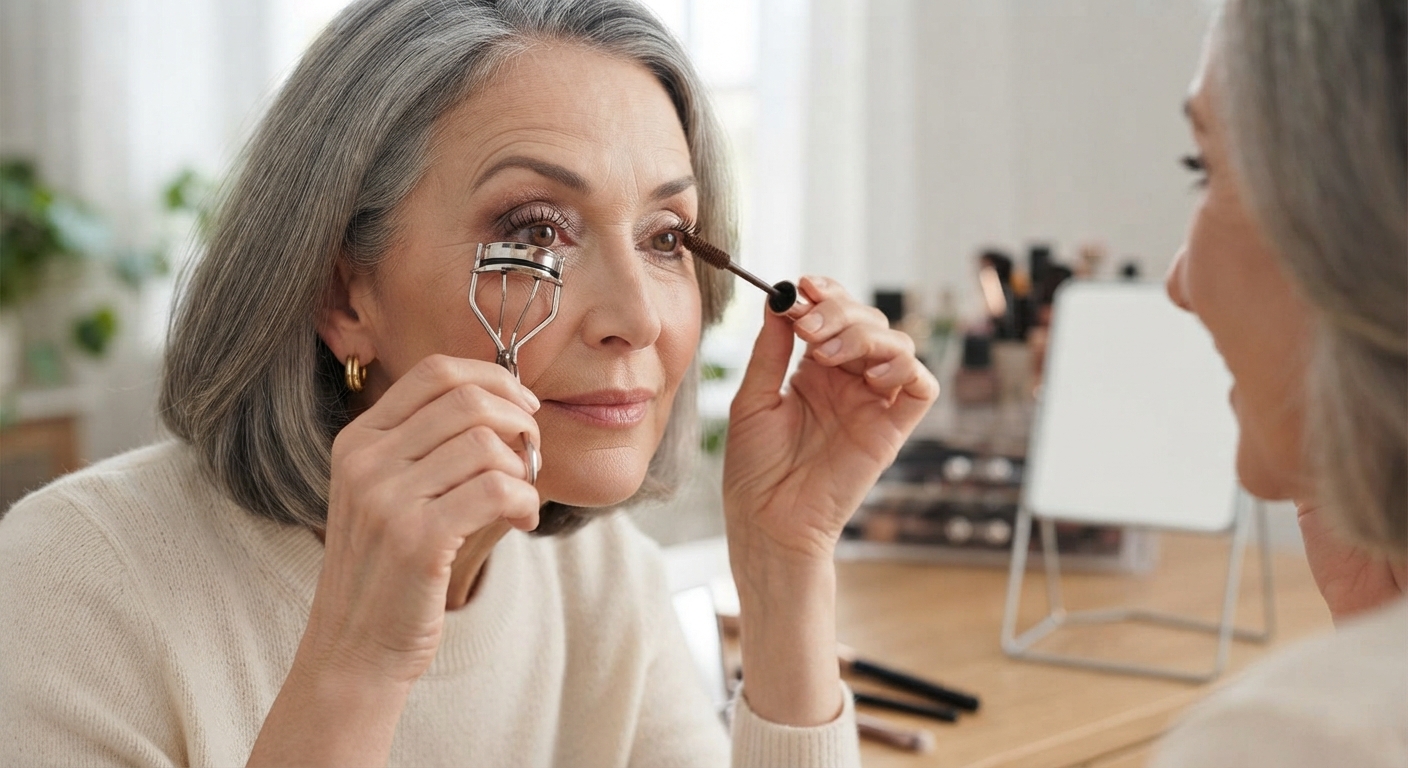
Too much mascara can make lashes clump together and create visual weight around the eye. One or two controlled coats often give cleaner definition. If the lower lashes are very fine, use a lighter hand there. Heavy black mascara beneath the eye can sometimes create more shadow than brightness. Brown mascara or a smaller amount of your usual formula may produce a softer result.
For special occasions, individual lashes placed selectively along the outer half of the upper lash line can add fullness without the heaviness of a dense strip lash. The goal is separation and lift rather than simply maximum product.
11. Use Lip Liner to Restore Definition Without Drawing a Hard Outline
Lip shape can become less sharply defined over time, which makes lip liner especially useful, but the most flattering result usually comes from creating a soft boundary rather than a visibly drawn outline. Choose a pencil close to your natural lip color or the lipstick you plan to wear. Trace the lip edge with short strokes and soften the line slightly inward so that there is no obvious border between liner and lipstick.
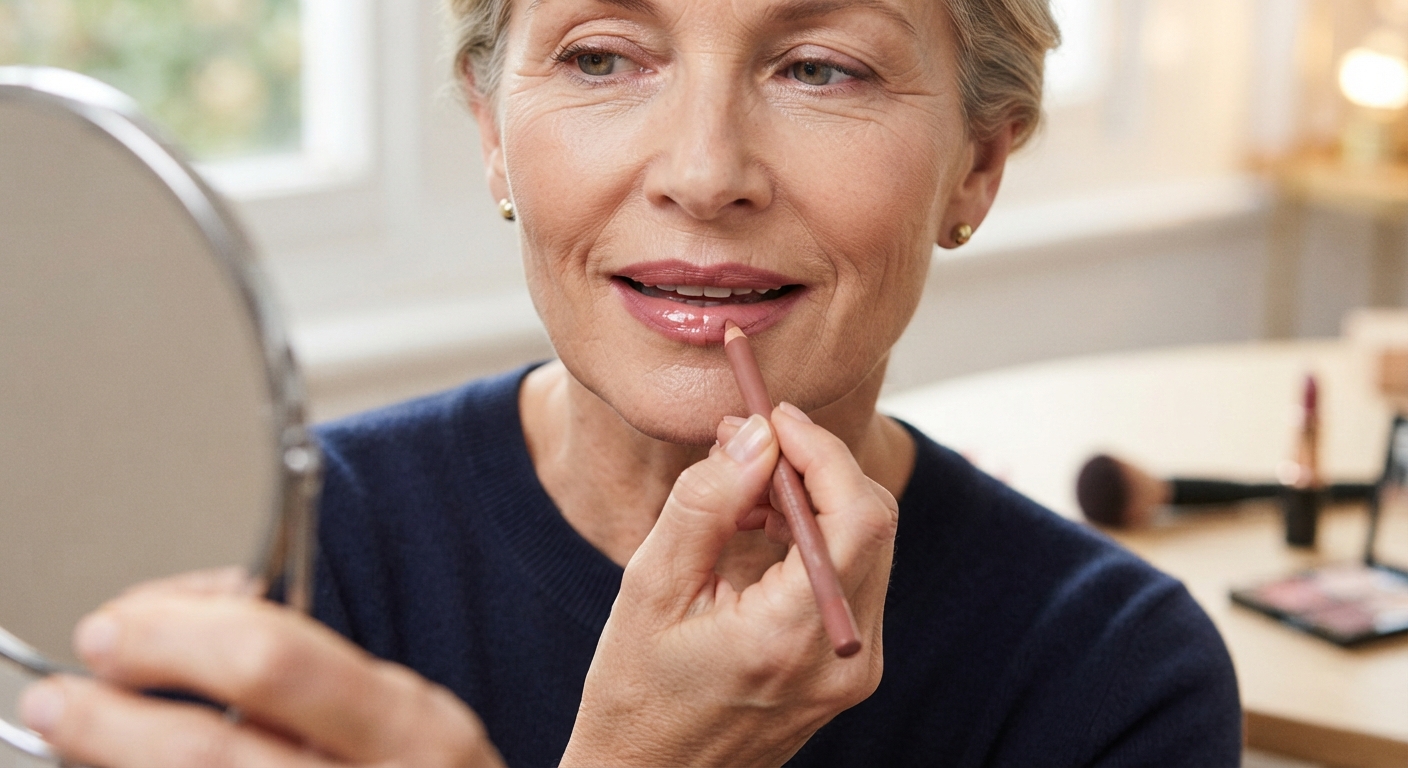
If you want to subtly correct asymmetry, make very small adjustments rather than dramatically overlining the entire mouth. Creamy satin lipsticks are often comfortable and flattering because they provide color without the dryness of some ultra-matte formulas. Gloss can also work beautifully, especially when placed mainly through the center of the lips rather than heavily across the outer edges.
Rose, berry, warm nude, soft coral, mauve, and classic red can all look sophisticated on mature lips. There is no requirement to switch exclusively to neutral shades with age.
12. Keep Highlighter Refined Rather Than Frosted
Highlighter can bring beautiful dimension to mature skin when it creates a gentle reflection rather than a visible stripe of shimmer. Finely milled cream or liquid formulas often integrate easily with the complexion, particularly when tapped onto the upper cheek area in a very small amount.
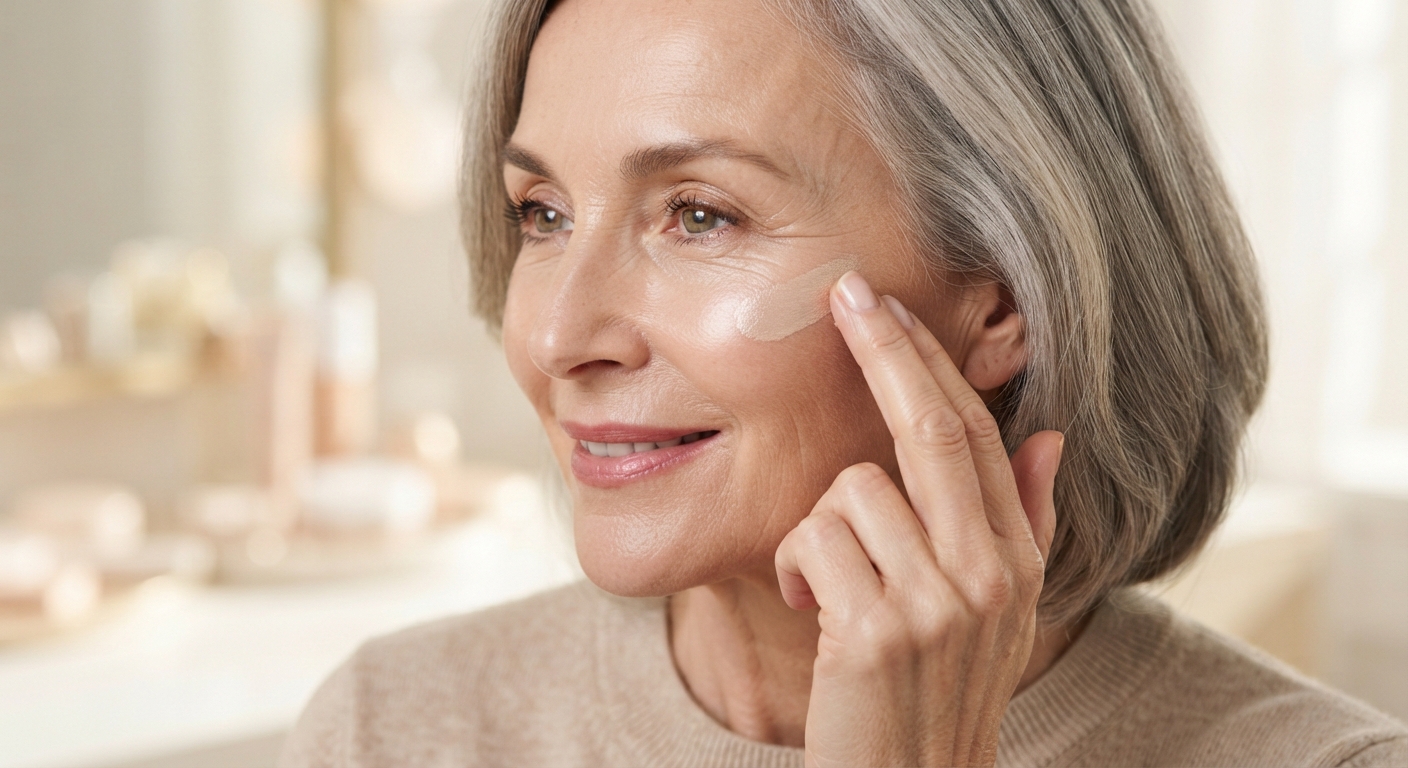
Avoid assuming that highlighter must be placed everywhere traditionally suggested. If you have texture in a particular area and do not want to emphasize it, simply move or reduce the highlight. The upper cheekbones, inner corners of the eyes, or a tiny amount beneath the brow can all work depending on the individual face.
The difference between luminous and metallic is important here. A subtle sheen changes as you move through the light, while a strongly frosted product remains obvious from nearly every angle. For everyday mature makeup, the first effect is often easier to wear.
13. Step Back From the Mirror Before Adding More
One of the simplest mature-makeup techniques requires no product at all. After applying your makeup, move away from the magnifying mirror and look at the entire face from a normal conversational distance.
Close-up mirrors are useful for precision, but they can make every pore, line, eyelash, and tiny variation feel far more significant than it appears in real life. This often leads to adding more concealer, more foundation, more powder, or more correction when the makeup already looks completely polished from a normal distance. The face should be evaluated as a whole.
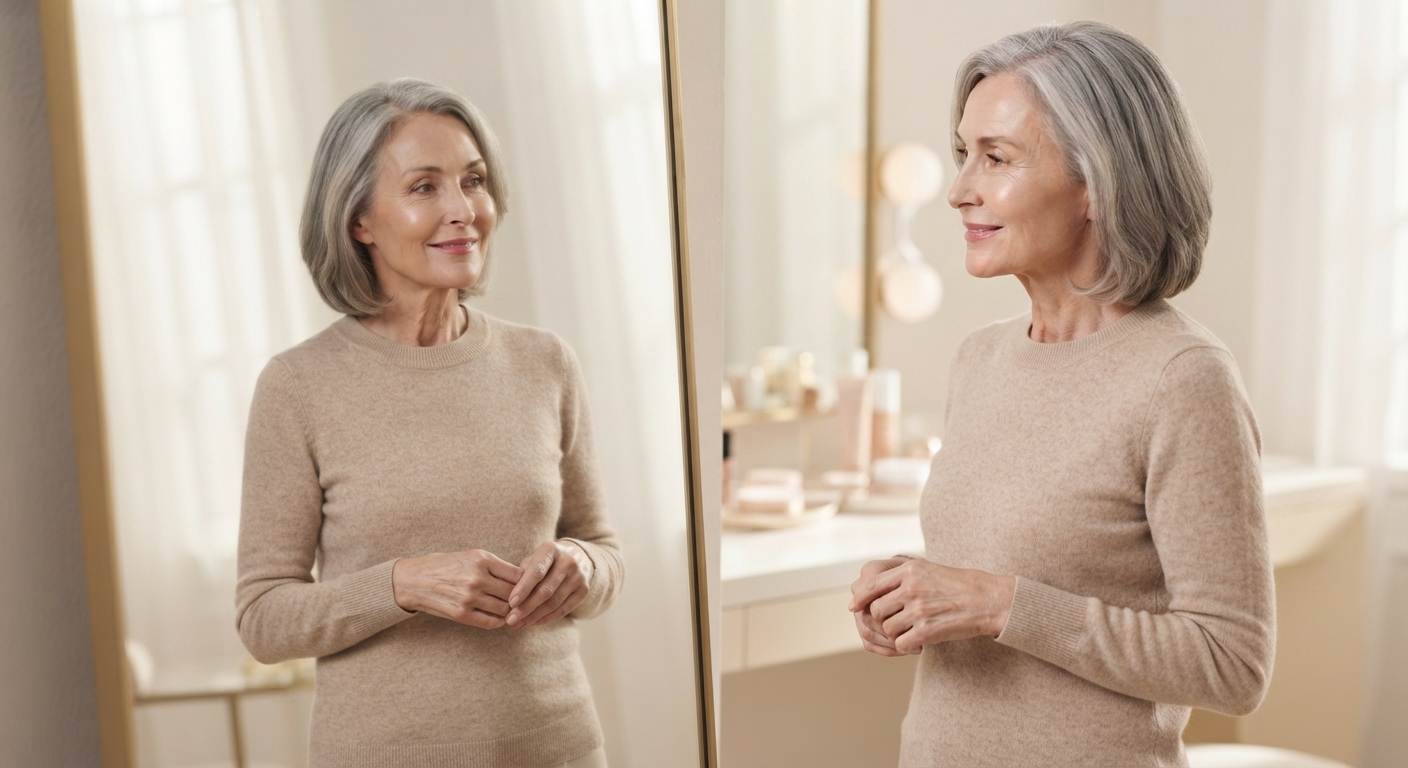
Does the complexion look balanced? Are the cheeks visible enough? Are the brows framing the eyes without dominating them? Is one area significantly heavier than everything else? Often, removing a little product produces more improvement than adding another layer.
This principle becomes especially useful with mature skin because natural texture should not be treated as a makeup mistake. Skin moves. Expressions create lines. Light changes the way texture appears from moment to moment. Makeup can enhance color, definition, and balance, but it does not need to turn real skin into a perfectly flat surface to be beautiful.
Why Mature Skin Often Looks Better With Thin Layers of Makeup
The idea that mature skin always needs lighter makeup is too simplistic. Someone can wear dramatic eyes, rich lipstick, or a full evening look beautifully at any age. What often makes the biggest difference is not how dramatic the final makeup is but how thickly individual complexion products are layered.
Foundation, concealer, powder, cream blush, bronzer, and highlighter all create physical layers on the skin. When several products are applied heavily in the same area, they can begin to compete with the natural movement of the face. Thin layers tend to move more naturally.
This does not mean sacrificing coverage. Instead of using one thick layer of foundation everywhere, use lighter coverage across most of the face and add concealer only to areas that need additional correction. Instead of heavily powdering the entire complexion, set only the places that tend to crease or become excessively shiny.
This targeted approach also makes touch-ups easier. When the makeup base is relatively thin, you can adjust one small area later without disturbing several heavy layers underneath it. A useful way to think about mature complexion makeup is to separate coverage from quantity. You can create a polished, even complexion while still using relatively little product if each layer has a clear purpose.
Cream vs. Powder Makeup on Mature Skin
Cream products are frequently recommended for mature skin because they can create a flexible, luminous finish, but there is no rule that powder makeup suddenly becomes unsuitable at a certain age. Both textures can work beautifully. Cream blush and bronzer are useful when you want products to melt visually into the foundation beneath them. They are also easy to blend with fingers, a sponge, or a soft brush and can create a particularly natural finish on drier skin.
Powder products offer their own advantages. A finely milled powder blush can last extremely well and may be easier to control if you prefer precise placement. Powder bronzer can blend beautifully over a lightly set complexion. Eyeshadow is predominantly powder-based and remains one of the easiest ways to create dimension around mature eyes.
The issue is usually texture and quantity rather than whether the formula is technically cream or powder. A finely milled powder applied sparingly may look much more flattering than a thick, sticky cream applied heavily. Likewise, a lightweight cream can create a more natural effect than a very dry matte powder. Choose products according to how they actually behave on your skin rather than treating the product category itself as a rule.
How to Make Mature Makeup Look Fresh Rather Than Heavy
Fresh-looking makeup generally contains a balance of definition and softness. If foundation is very opaque, eye makeup is very dark, brows are extremely defined, contour is strong, and lipstick is intense simultaneously, the individual elements can begin competing rather than working together. Decide what should lead the look.
If you are wearing a beautiful red lipstick, the eyes can remain softly defined with taupe shadow and mascara. If you love smoky eyes, keep the lips quieter and allow the complexion to remain more natural. If you prefer minimal makeup, blush and lip color may provide enough structure without requiring elaborate eye makeup at all. Another useful technique is preserving some variation in the skin.
A completely flat matte complexion can remove natural dimension. Allowing the high points of the face to retain a soft skin-like finish often makes the makeup feel more alive. Color matters too. A small amount of blush can sometimes make a greater difference than another layer of foundation because it restores warmth and dimension that complexion products may have reduced. Fresh makeup is not necessarily makeup that looks invisible. It is makeup where every element still feels connected to the skin underneath it.
Makeup Mistakes That Can Make Texture More Noticeable
Texture is normal at every age, but certain makeup habits can emphasize it more than necessary. One of the most common is trying to cover texture with additional foundation. Pigment can reduce discoloration, but it cannot physically remove a line or pore. Adding more makeup over texture often makes the surface more visible because there is now more product sitting across it.
Another common issue is excessive powder. Setting makeup is useful, but repeatedly adding powder throughout the day can gradually create a dry or heavy appearance. If shine develops, blotting gently before adding more powder may prevent unnecessary buildup. Using too much concealer beneath the eyes can create the same problem. The eye area moves constantly when you smile, speak, and blink. A thick layer has more product available to settle into those natural folds.
Finally, very strong shimmer applied directly over areas of pronounced texture can draw attention there because reflective particles catch light. This does not mean mature skin should avoid glow; it simply means placing reflective products strategically rather than automatically highlighting every traditional area. The objective is not to hide texture completely. It is to avoid adding product in ways that unnecessarily amplify it.
How to Build an Easy Everyday Routine for Mature Skin
An effective everyday routine does not need to contain every product in your makeup drawer. Begin with comfortable skincare, then apply a thin complexion product only where you want evening out. Add concealer selectively around the inner eye or individual areas of discoloration rather than automatically covering large sections of the face.
Next, bring dimension back with blush and, if you enjoy it, a small amount of bronzer. Define the brows lightly, add a neutral shadow or simply eyeliner close to the lashes, curl the lashes, and finish with mascara. For the lips, a tinted balm, creamy lipstick, soft gloss, or traditional lipstick can all work depending on the amount of polish you want.
This kind of routine works because every step has a clear purpose. Foundation evens. Concealer corrects. Blush restores color. Brows frame. Lashes define. Lip color finishes the face. You can then increase or decrease individual elements depending on the occasion rather than rebuilding the entire routine. For dinner, add a deeper lip. For an evening event, deepen the eyes. For a very casual day, skip foundation and use concealer only where needed. Once the base routine works, makeup becomes easier because you are adjusting a familiar structure rather than starting from scratch every morning.
Choosing Flattering Colors Without Following Age Rules
One of the least useful beauty rules is the idea that certain colors become inappropriate after a particular birthday. Color does not know your age. What matters is how the shade relates to your complexion, features, contrast level, clothing, and personal taste. Someone who has worn red lipstick confidently for decades does not suddenly need to replace it with beige. A woman who loves plum eyeshadow can continue wearing plum. Shimmer does not need to disappear completely, and bright blush is not automatically inappropriate.
What may change is placement, texture, or intensity. A favorite shimmer might look more refined when concentrated on the center of the lid instead of spread to the brow. A bold blush may look more balanced when applied in a thinner layer. A bright lipstick can be paired with softer eye makeup if you want the face to feel less visually busy.
This distinction is important because mature makeup should not be a list of things you are no longer allowed to wear. A better approach is to keep the colors you genuinely enjoy and adjust the technique when necessary. That produces makeup that still feels like you rather than a generic version of what someone else thinks mature beauty should look like.

2 thoughts on “13 Makeup Tips for Mature Skin That Make a Beautiful Difference”