25 Layered Hairstyles That Make Long Hair Look Amazing
Long hair with the right layers looks effortless, but “layers” means something different depending on who you ask. A stylist’s idea of subtle layering and a client’s idea of subtle layering are often two different haircuts entirely — which is part of why layered cuts are one of the most commonly miscommunicated requests in the salon chair.
This roundup organizes 25 long layered hairstyles into four practical categories: soft and face-framing, dramatic and heavily layered, textured and effortless, and sleek with minimal layering. Each entry explains what the layers actually do to the hair’s movement and shape, not just what the finished look is called, so you walk into your next appointment with a clear, specific reference instead of a vague idea.
Soft, Face-Framing Long Layers
These cuts keep most of the length intact while using layers strategically around the face and crown. They’re the lowest-commitment category — the kind of layering that reads as “healthy long hair” rather than “a new haircut.”
1. Subtle Face-Framing Layers
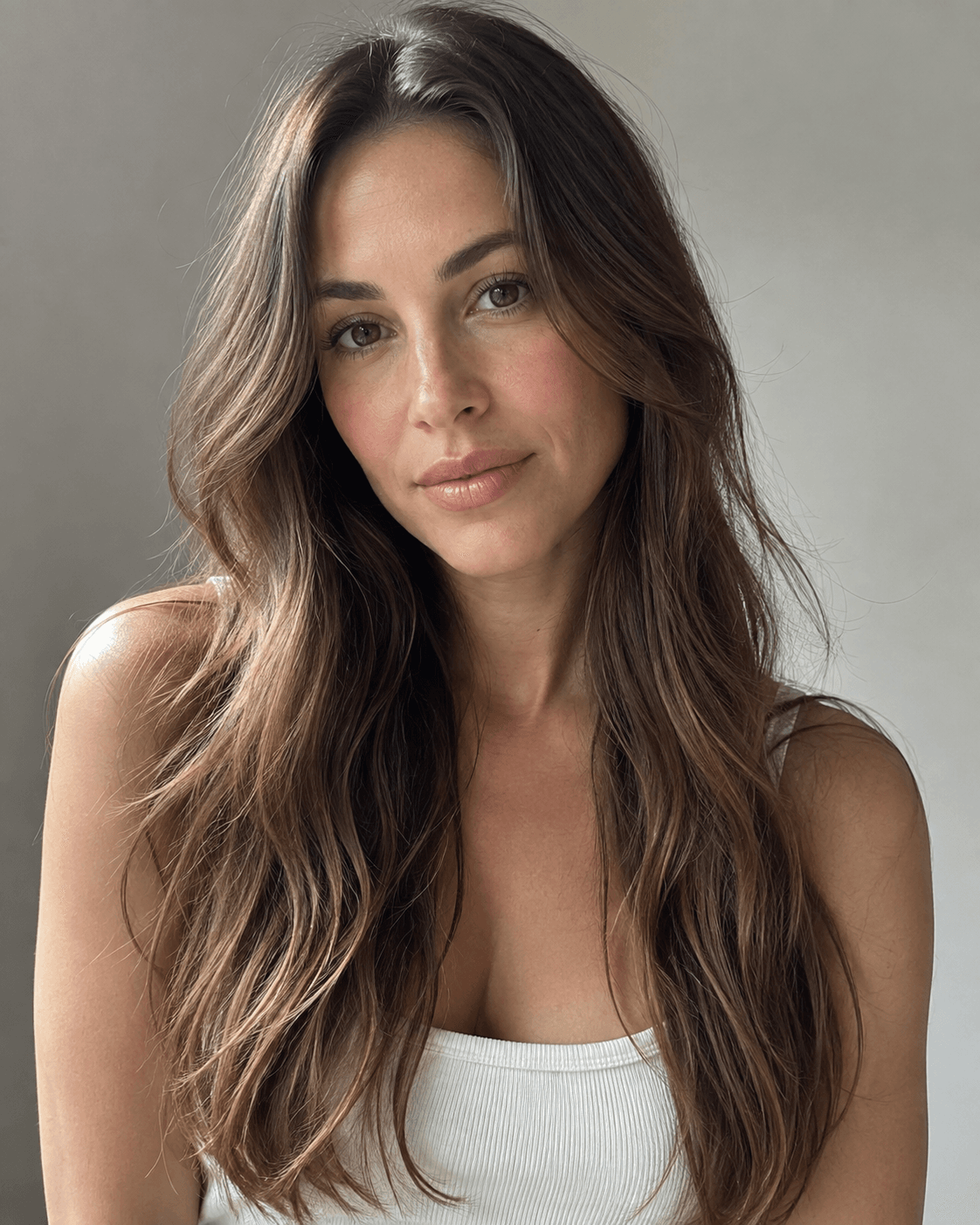
This cut leaves the bulk of the length untouched, with layering concentrated only around the face — typically starting at cheekbone or jaw level and blending upward toward the crown. The effect is soft movement near the face without any noticeable change to the overall silhouette from the back. It’s a strong option for anyone who wants layers primarily for the styling and brightening effect around the face rather than added volume throughout. Maintenance is minimal — trims every 10–12 weeks keep the face-framing pieces from growing out into the rest of the length. Ask your stylist for “face-framing layers only, starting at the cheekbone.”
2. Long Layers with a Deep Side Part
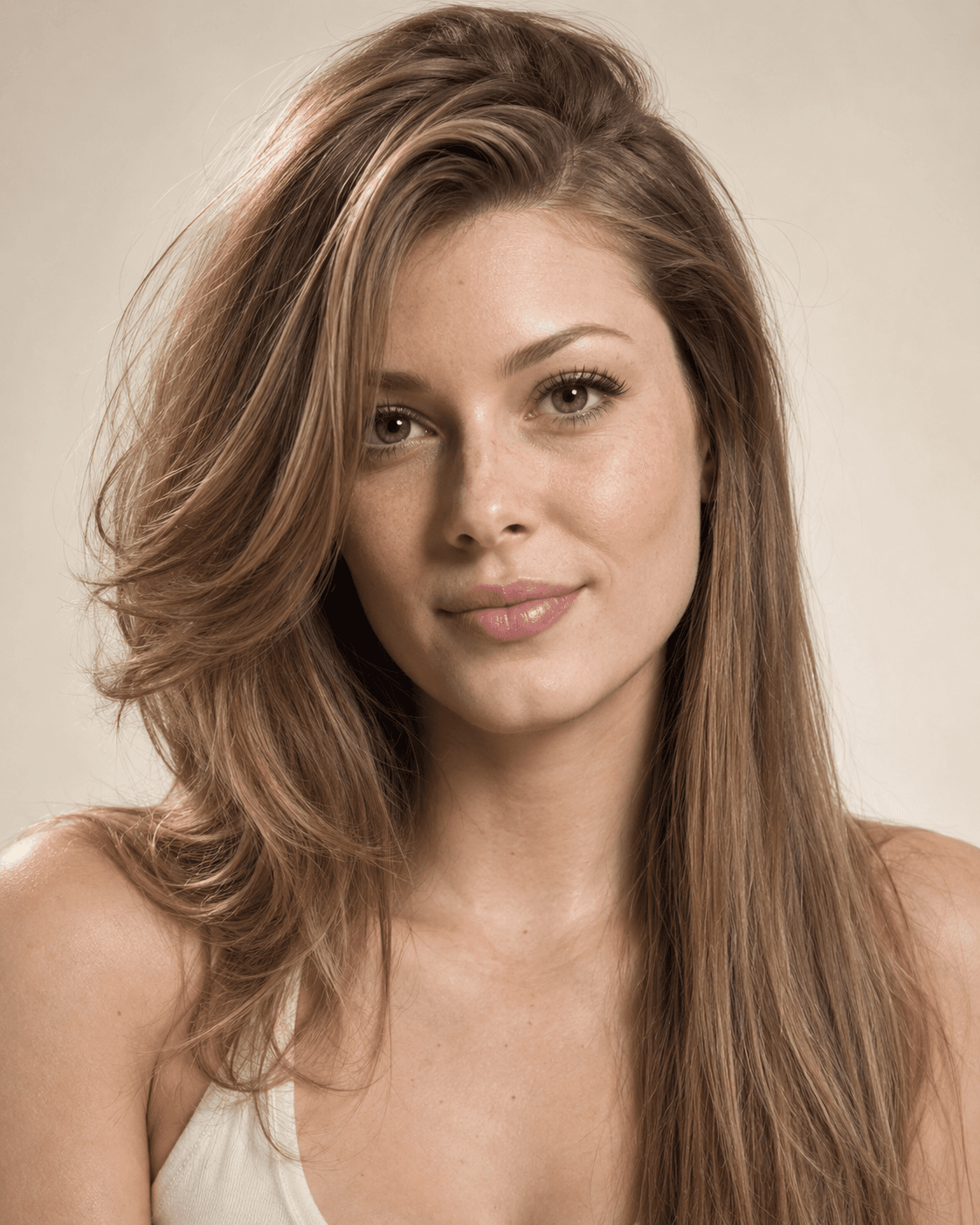
Layering here is designed to interact with a deep side part, so one side falls with more visible separation and movement than the other. It creates asymmetry without an asymmetrical cut, since the effect changes depending on which way you part your hair. This works particularly well for finer hair textures, where the deep part combined with layering adds the illusion of volume at the root. It requires slightly more upkeep than symmetrical layering since the shorter layers on the part-side need regular trims to keep their shape defined.
3. Curtain-Style Long Layers
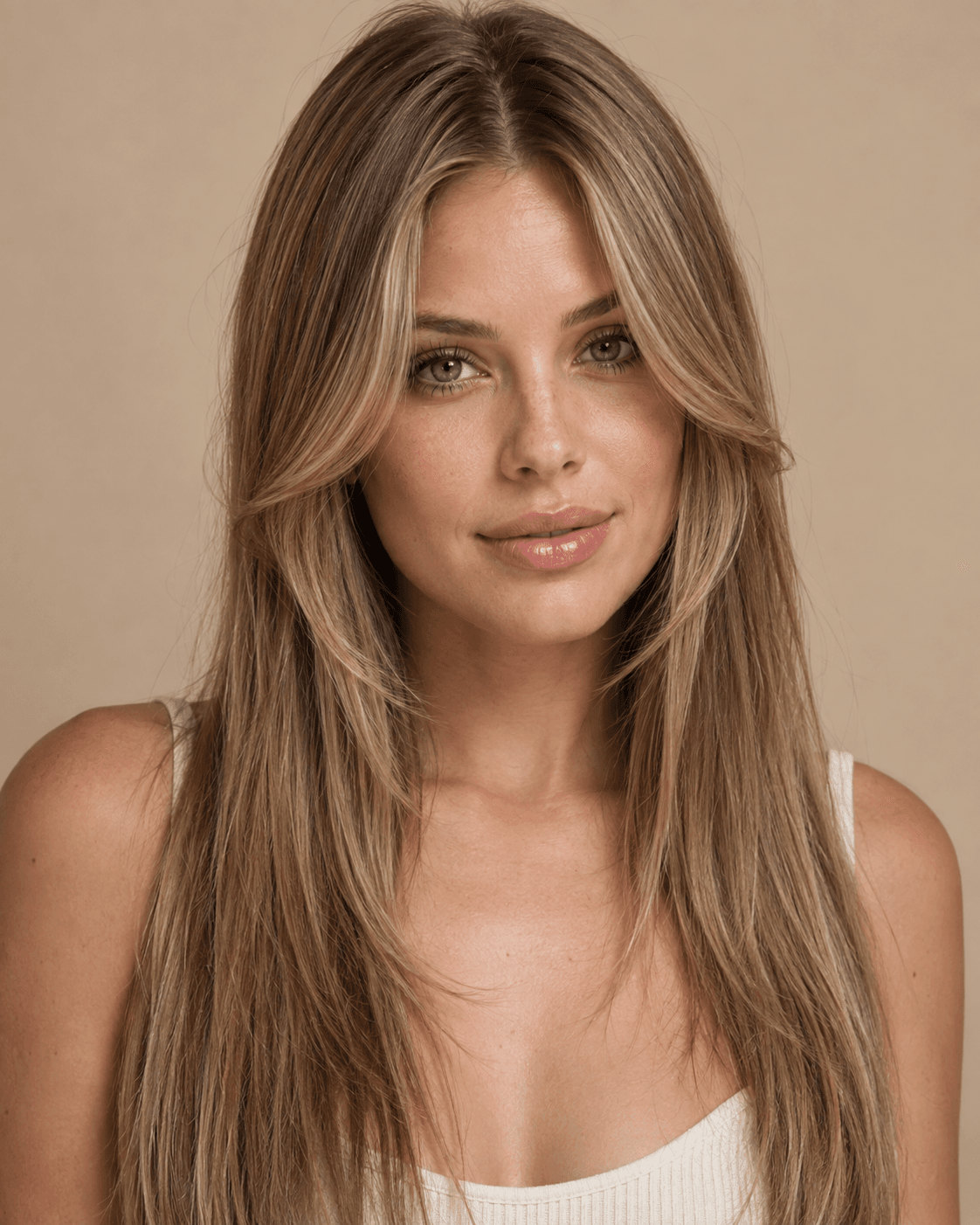
Distinct from curtain bangs, this style uses layering throughout the front sections to create a parted, curtain-like frame around the whole face rather than just a fringe. The layers are cut longer than traditional face-framing pieces, often reaching chin-to-collarbone length, and are styled to sweep back and away from the center part. It suits people who want the softening effect of face-framing layers but don’t want anything short enough to require separate styling attention. Blow-drying with a round brush, rotating the brush away from the face on each side, is typically how this look is maintained day to day.
4. Long Layers with Internal Movement Only
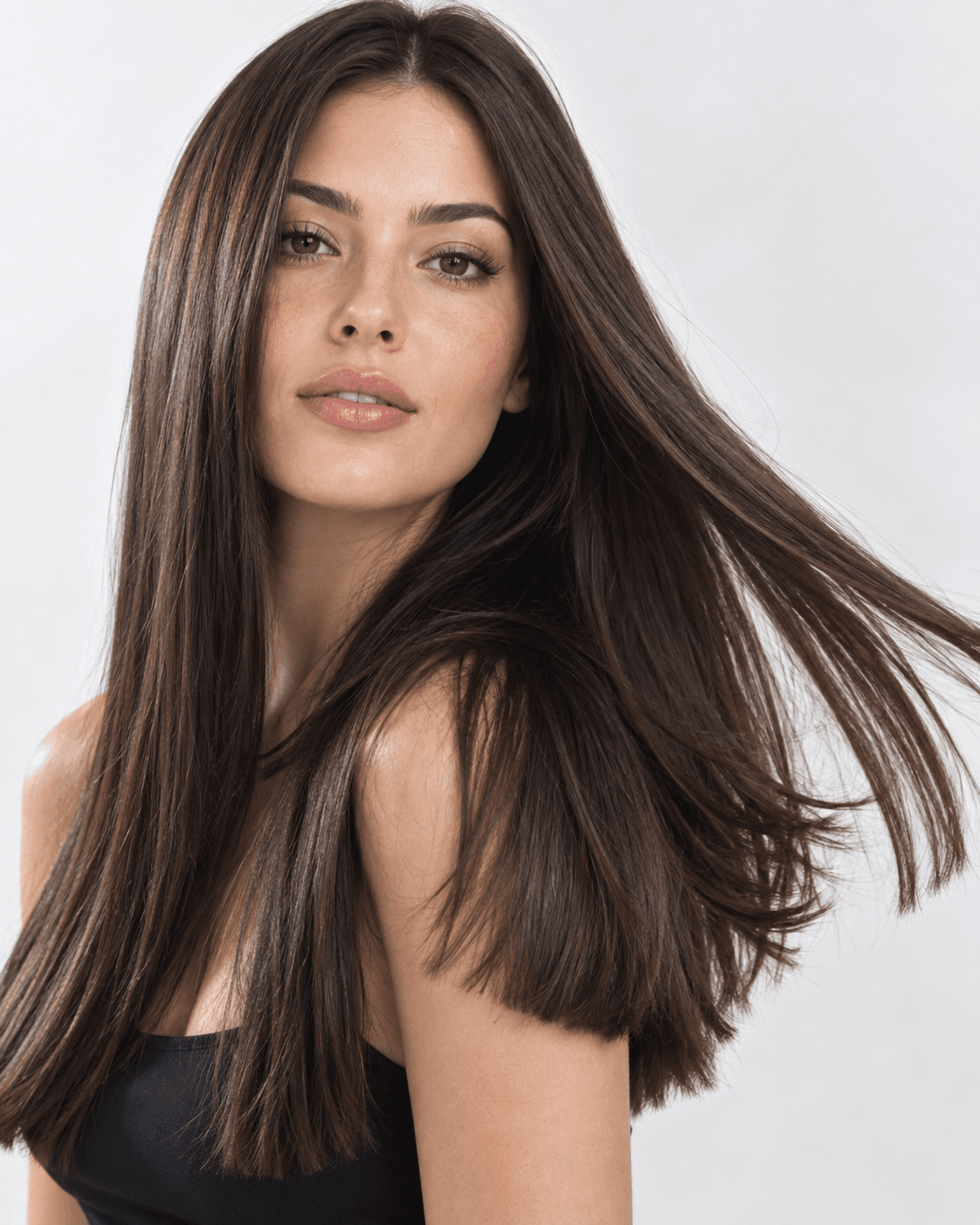
Sometimes called “invisible layers,” this technique layers the interior sections of the hair while keeping the outermost perimeter blunt. From the outside, the hair still reads as one solid length, but internally the layers reduce bulk and add movement when the hair moves or is styled with texture. This is a strong option for people who love the look of blunt long hair but find that uncut, one-length hair feels heavy or stiff. It’s genuinely low maintenance since there’s no visible perimeter shape to maintain — regular length trims are all that’s needed.
5. Soft U-Shaped Layers
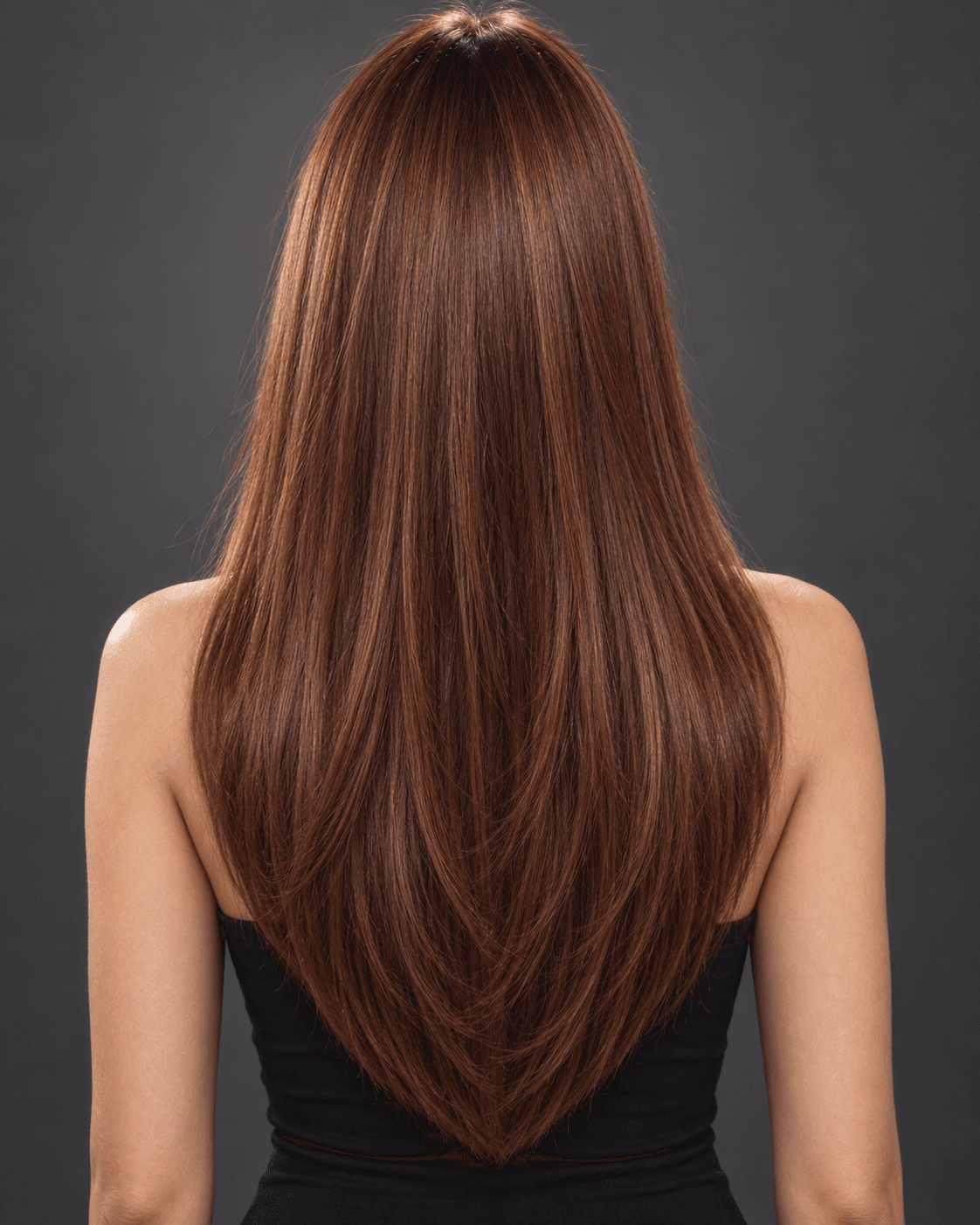
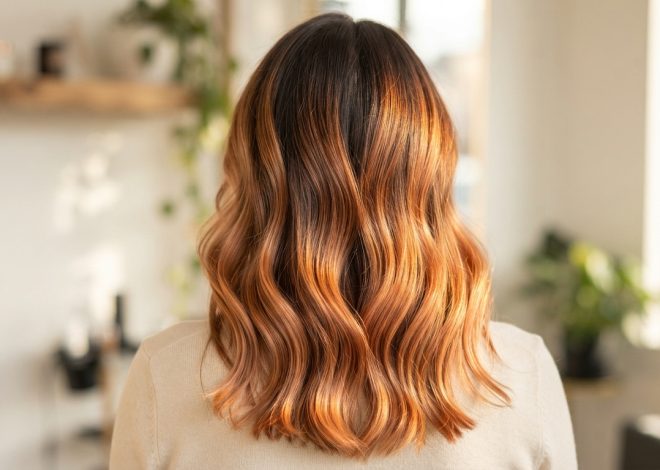
Cut in a gentle U-shape rather than a sharp V, the layers taper gradually from the sides toward a slightly longer center-back section. This shape avoids the more dramatic point of V-layers while still adding shape and preventing the flat, triangular silhouette that can happen with one-length hair. It photographs well from the back, which makes it a popular Pinterest save for people specifically researching how their layers will look when their hair is down and unstyled.
6. Long Layers Starting Below the Chin
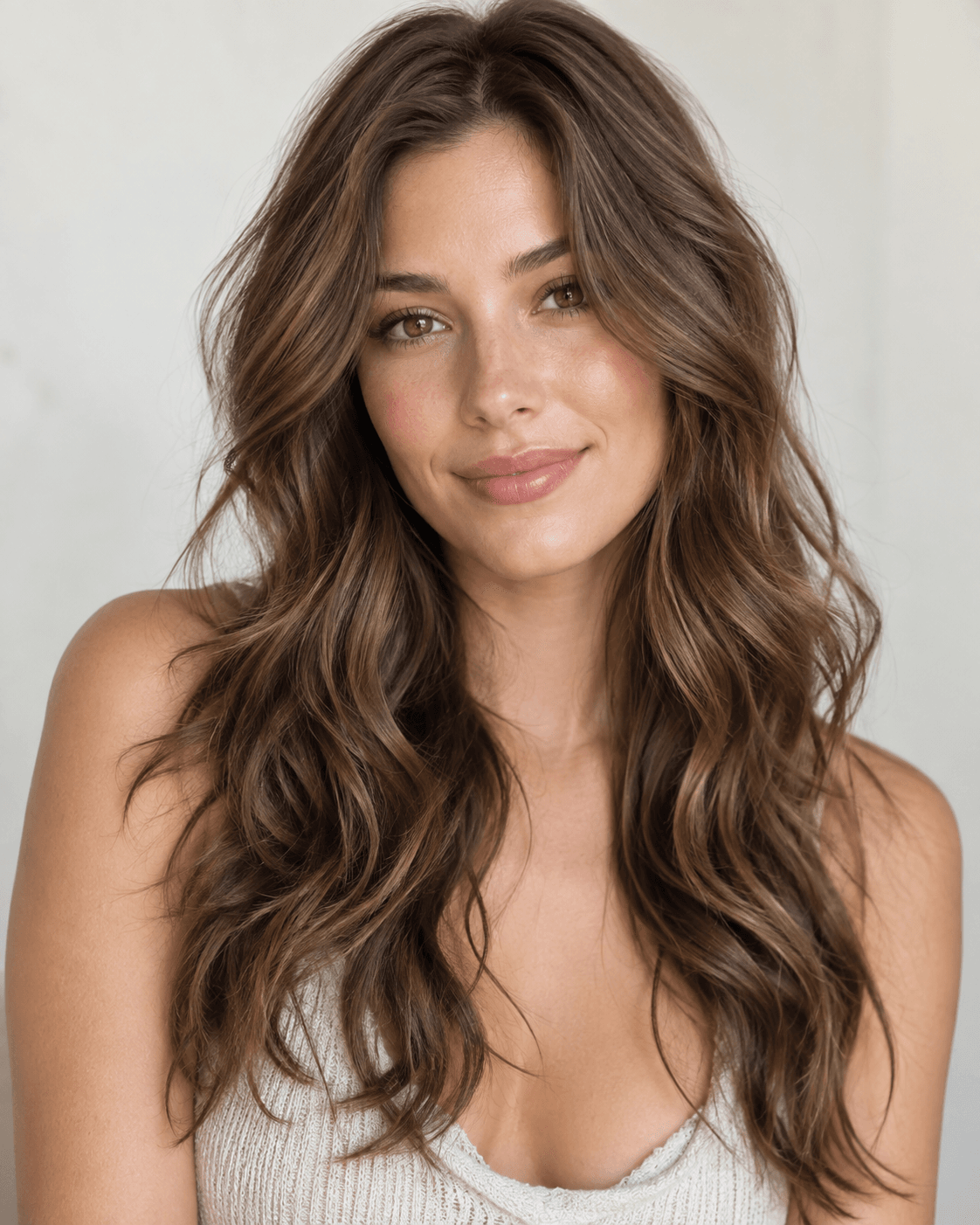
Layering that begins below chin length rather than at cheekbone level keeps more length near the face while still adding movement lower down the hair. This is a good middle-ground option for people who want layers but worry about losing face-framing length too quickly. It also tends to grow out more gracefully than higher face-framing layers, since there’s less contrast between the shortest and longest pieces.
Dramatic, Heavily Layered Long Hair
This category is for people who want visible shape change, maximum movement, and a noticeably lighter feel at the ends — often described by clients as “lots of layers.”
7. Long Layers with a Dramatic V-Shape
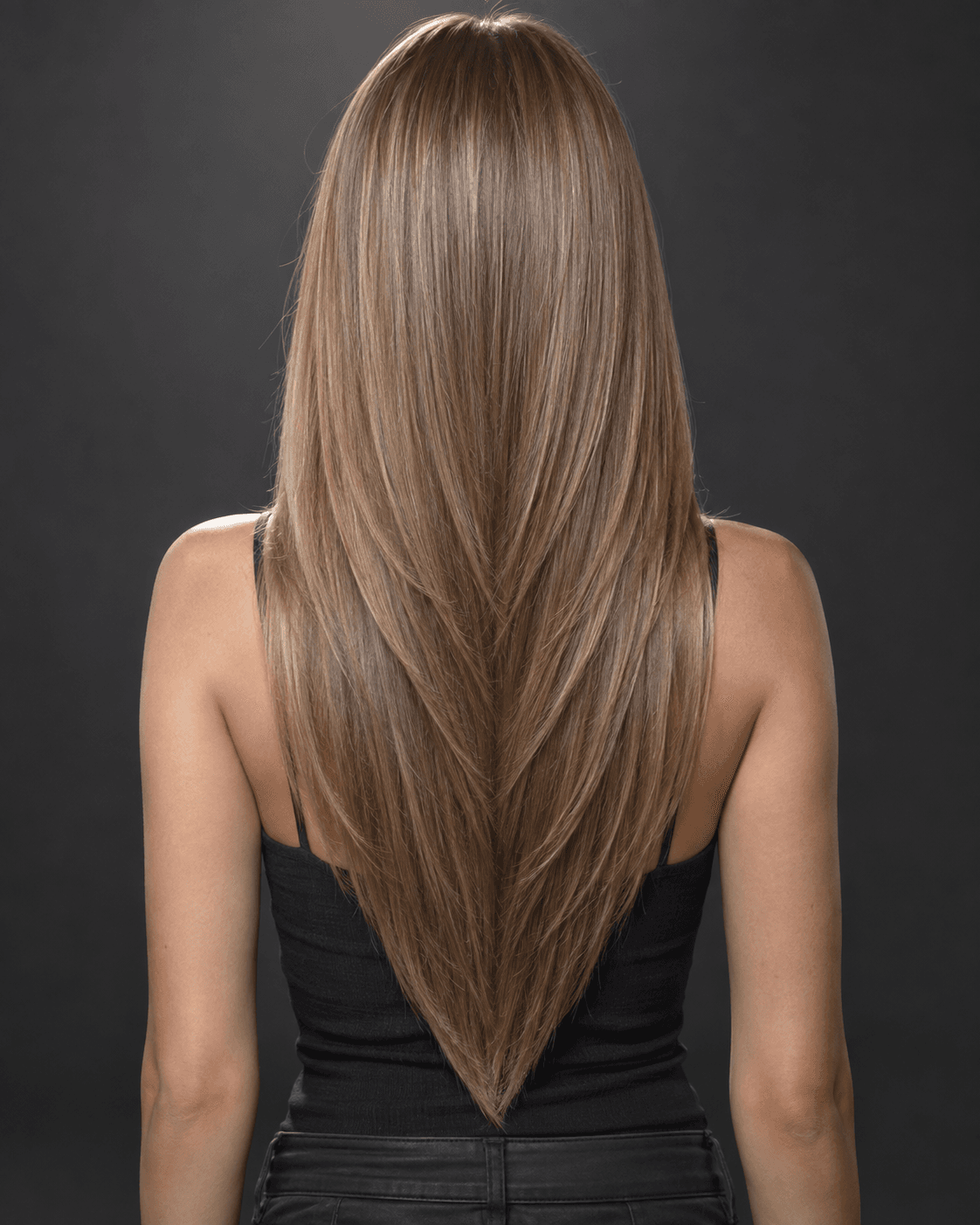
The signature heavy-layer cut: hair is layered throughout in a sharp V, with the shortest layers near the crown and progressively longer pieces cascading down to a point at the center back. This creates significant volume at the top and a distinct taper toward the ends, making straight hair appear to have natural movement even without styling tools. It’s one of the higher-maintenance options in this list, since the shape depends on regular trims to keep the V point crisp rather than letting it blur into an uneven shape.
8. Feathered Long Layers
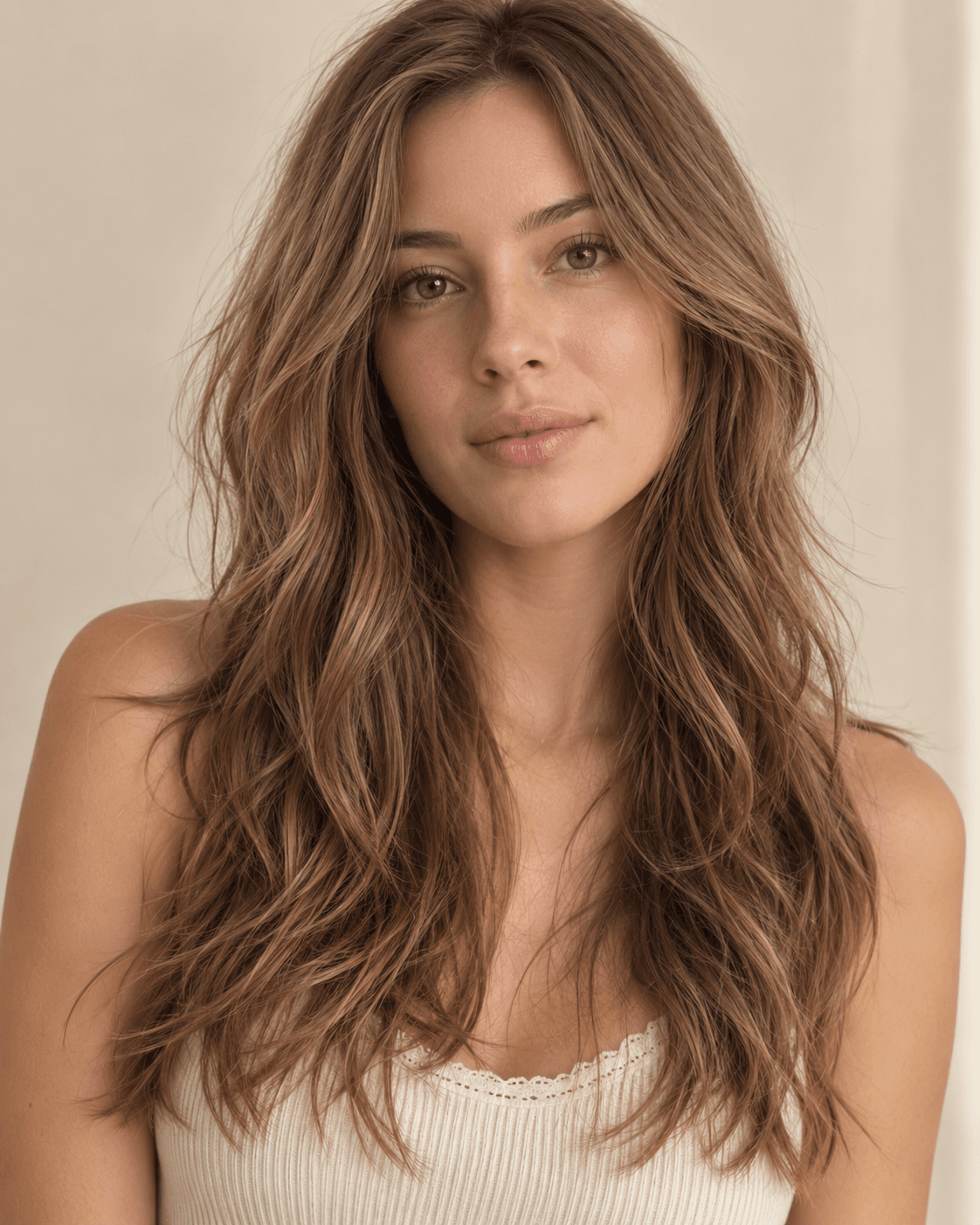
Feathered layering uses shorter, finer cuts throughout the mid-lengths and ends to create a wispy, textured finish reminiscent of bird feathers laid over one another. Unlike the blunt-ended look of a single V-layer, feathered ends are cut at varying, softer angles for a less structured silhouette. This style tends to work especially well on hair with natural wave or a loose curl pattern, since the texture enhances the feathered effect without extra styling.
9. Choppy Long Layers
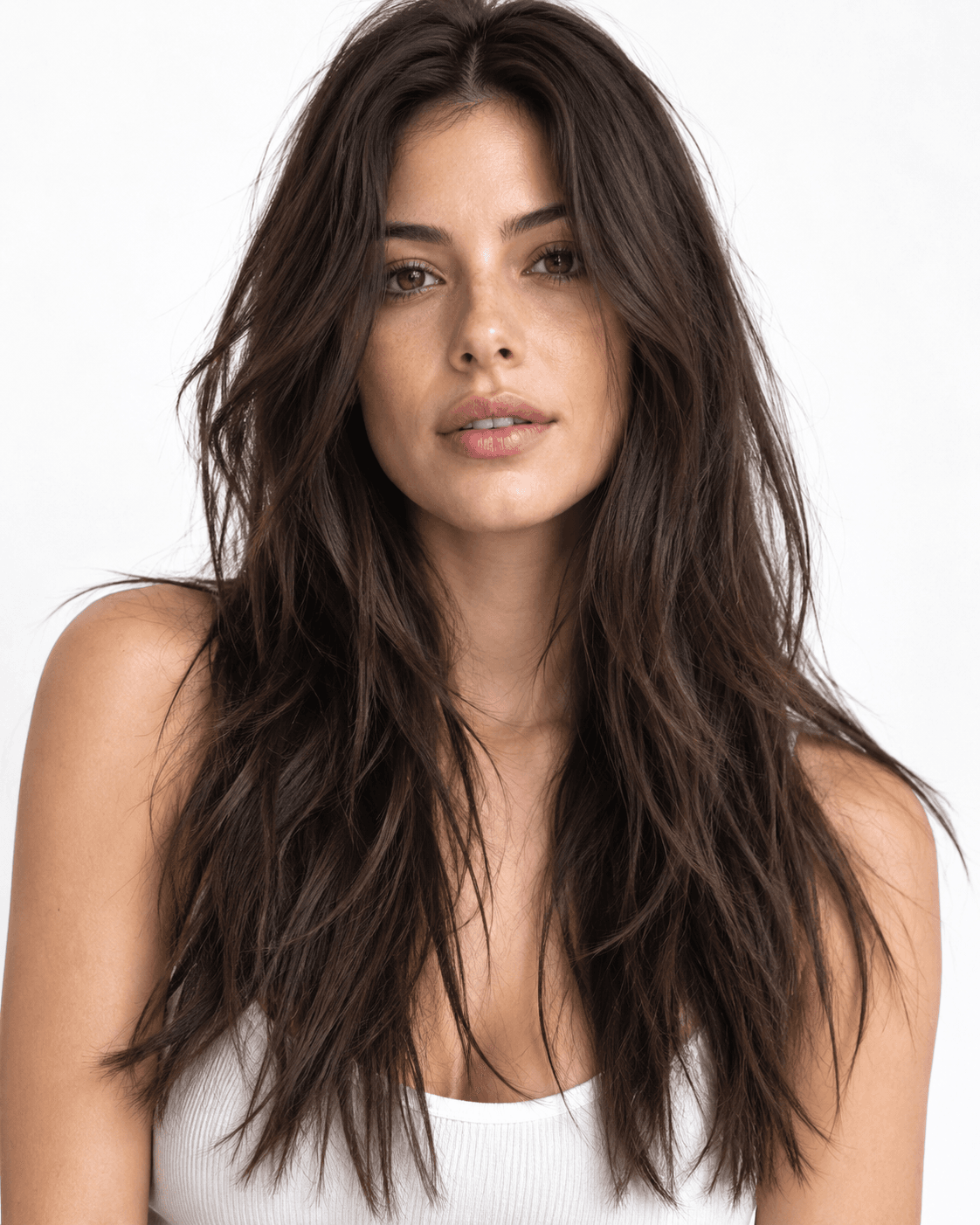
Choppy layers are cut with a razor or point-cutting technique rather than clean scissor lines, giving the ends a deliberately uneven, textured finish. The layering throughout is often more aggressive than in softer styles, removing significant bulk to create a lived-in, undone look. This is a strong choice for thick or heavy hair that feels weighed down at one length, since the choppy technique reduces density without shortening the overall length dramatically.
10. Long Layers with Heavy Crown Layering
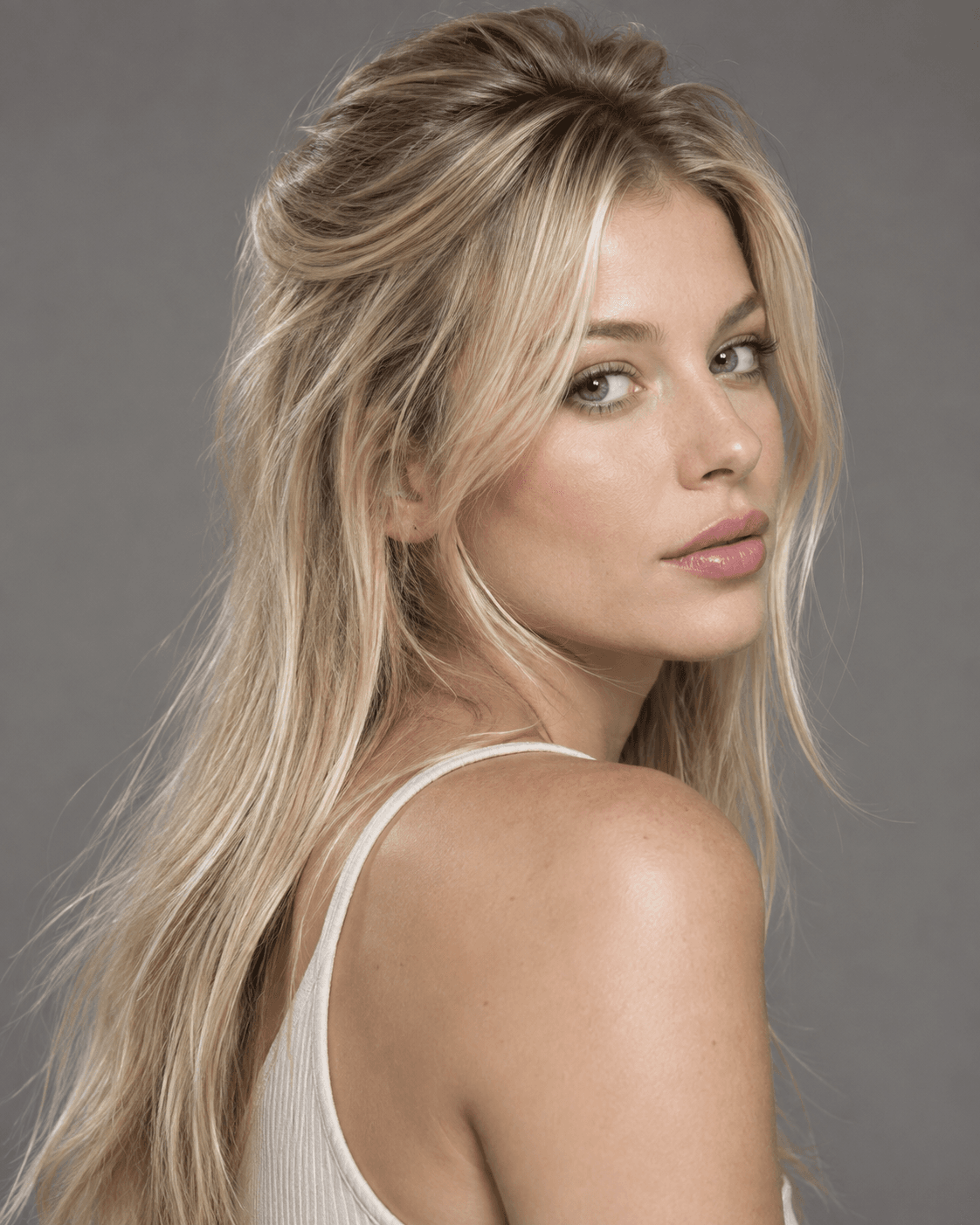
Rather than distributing layers evenly throughout, this cut concentrates the shortest layers specifically at the crown, creating significant lift and volume at the root that tapers into longer, less-layered length below. It’s particularly useful for fine or thin hair that lacks natural volume, since the crown layering does the visual work of “big hair” without requiring backcombing or heavy styling.
11. Shaggy Long Layers
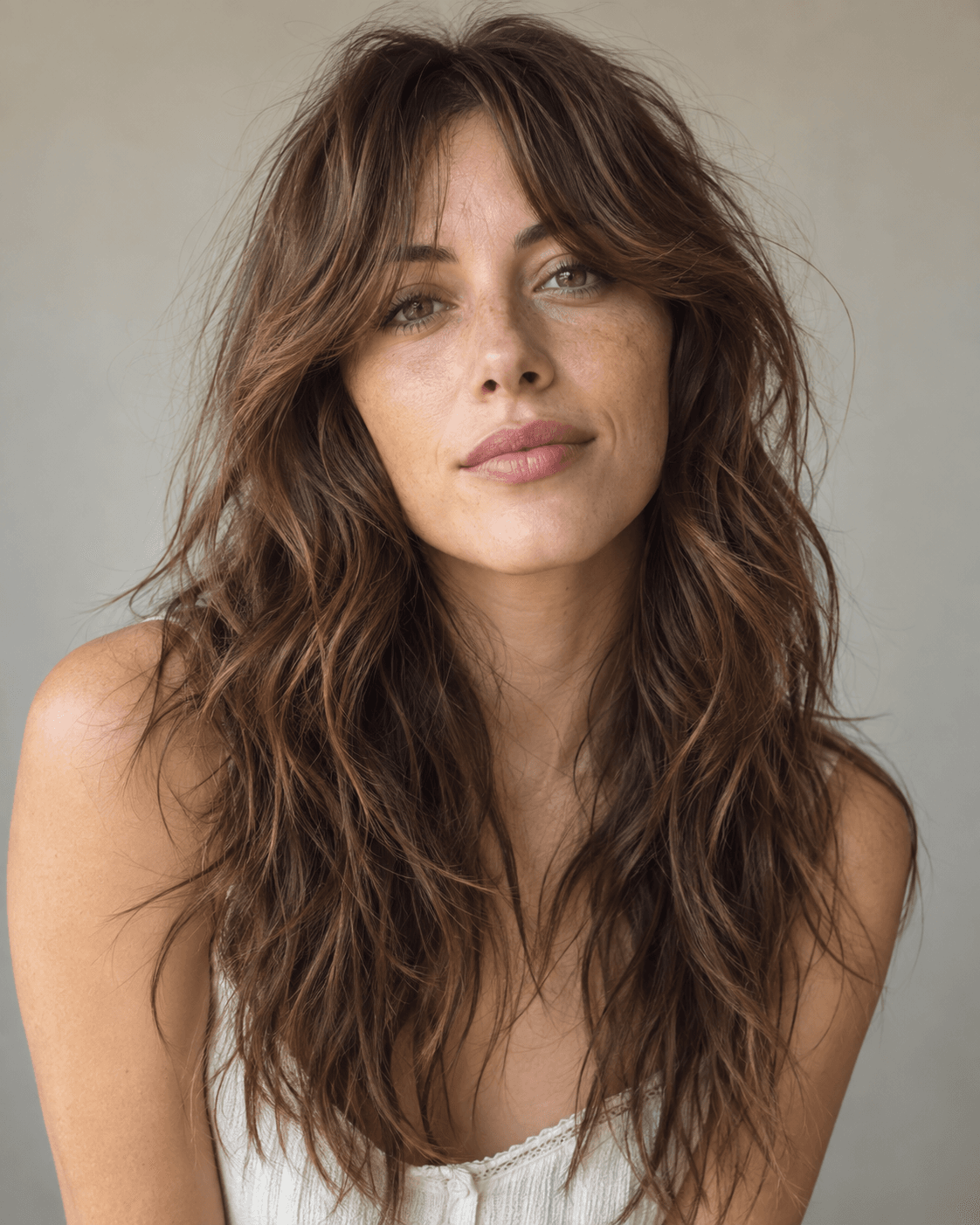
The shag reinterprets heavy layering with a slightly retro, undone edge — layers are cut throughout, often including shorter pieces around the crown and face, with intentionally textured, piece-y ends rather than smooth blending. It typically pairs with fringe or curtain bangs, though it can be worn without. The appeal is a low-effort styling routine: shags are usually worn air-dried or with minimal tousling rather than smooth blow-outs.
12. Long Layers with Heavily Textured Ends
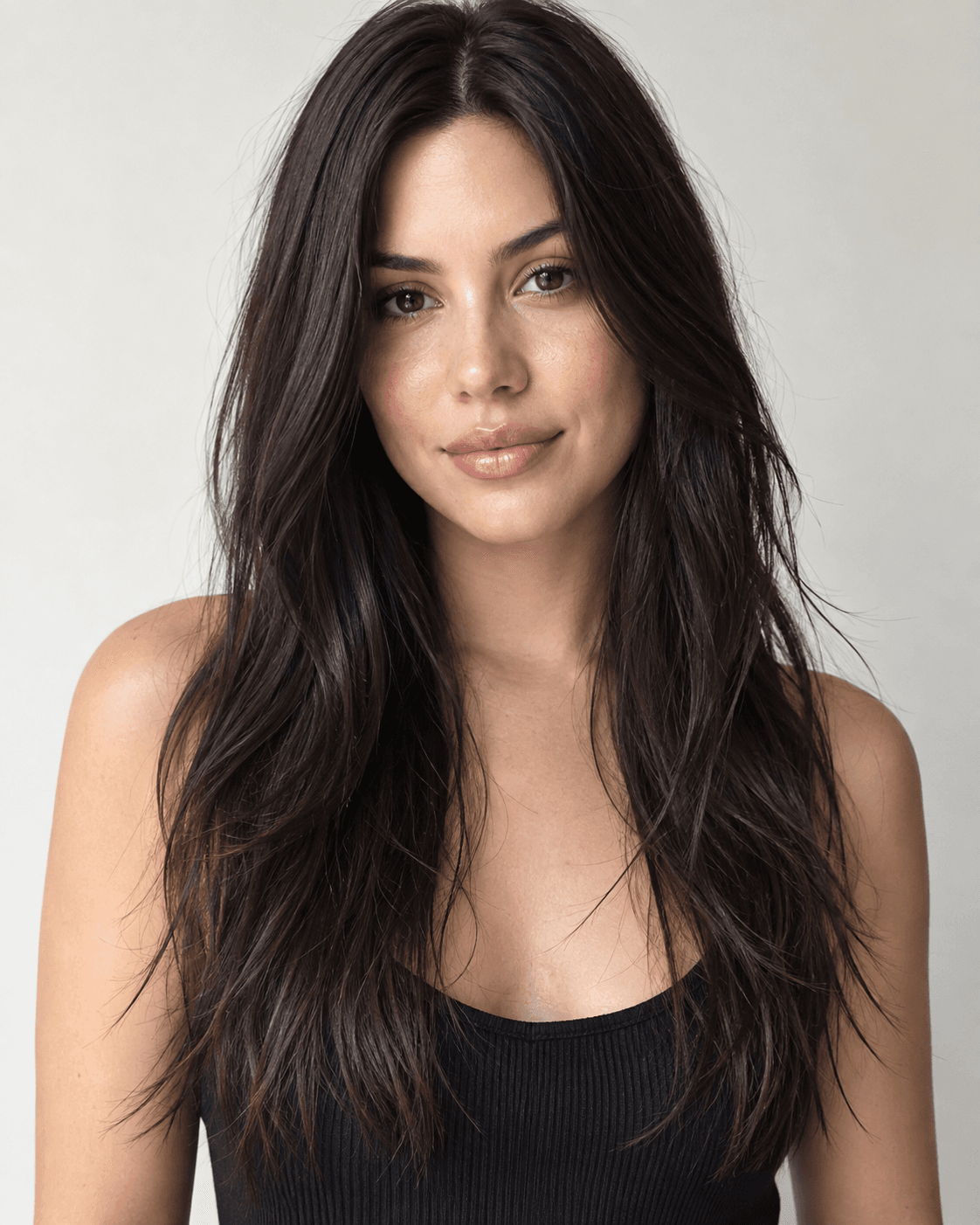
Here, the majority of the length stays fairly uniform, but the last several inches are heavily point-cut or thinned to create a wispy, almost undone finish at the ends specifically. This is a good option for people who want most of the “lots of layers” visual effect concentrated where it shows most — the ends — without layering disrupting the volume and thickness through the mid-lengths.
Textured, Effortless Long Layers
These styles are built around movement and low-maintenance styling rather than a precise shape, and tend to photograph best with natural texture, waves, or curls.
13. Beachy Layered Waves
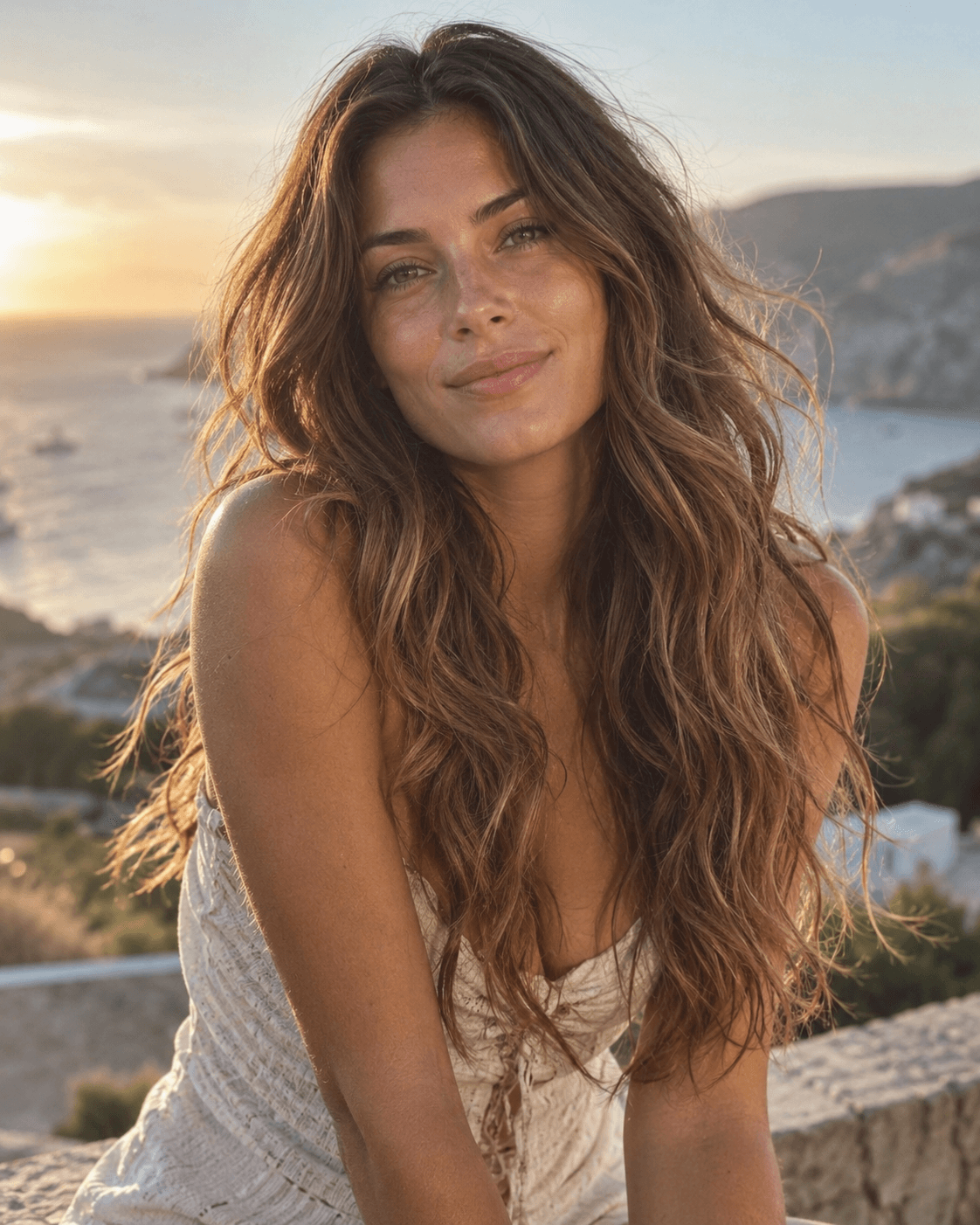
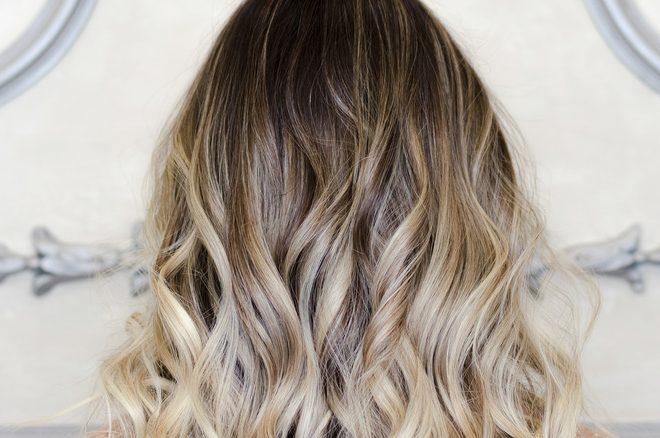
Layers here are cut to enhance a loose, tousled wave pattern, with the shortest pieces typically starting around the collarbone and working down. The layering removes weight so waves can move and separate rather than falling into one heavy sheet. This look leans on texture products — a salt spray or texturizing cream — more than precise cutting technique, and is a popular choice for people who want their layers to look intentionally undone rather than freshly blown out.
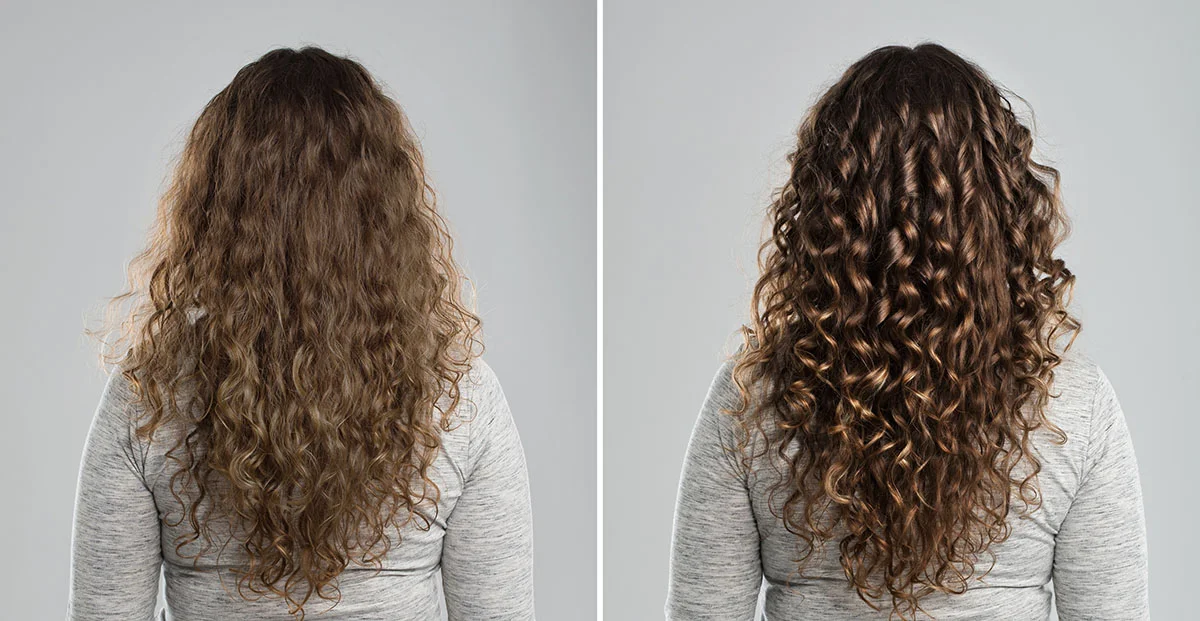
14. Long Layers on Natural Curls
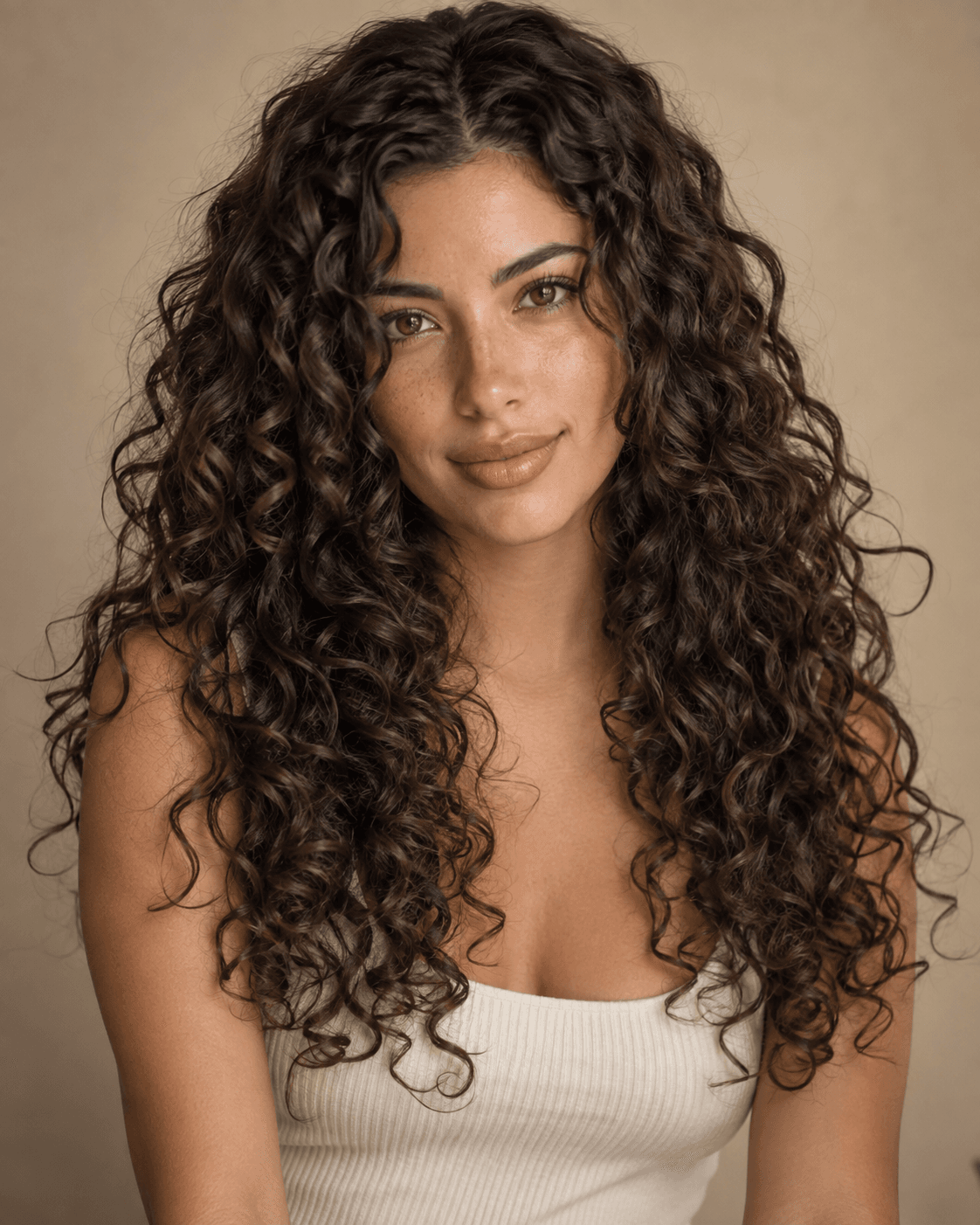
Layering curly hair requires a different approach than straight hair, since curls shrink upward as they dry and the layered shape needs to be assessed on dry, styled curls rather than cut wet and hoping the shape holds. Long layers on curly hair typically remove weight from the bottom to prevent the classic “triangle” shape that can happen when curly hair is left one length. The result is more defined curl clusters and better bounce throughout, rather than a heavy, weighed-down bottom.
15. Long Layers with Loose Waves and Face-Framing
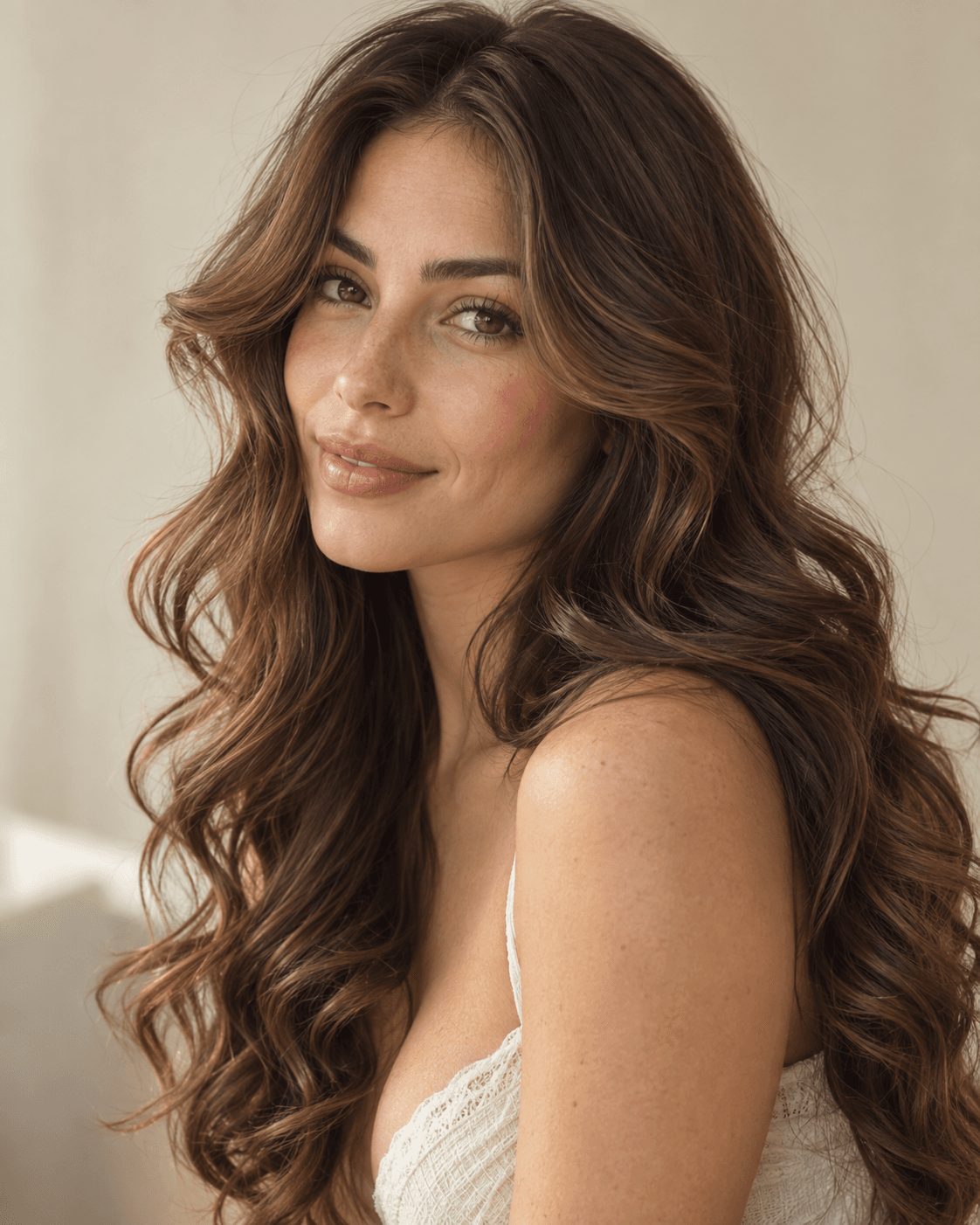
Combining loose, barrel-curled waves with face-framing layers specifically, this look is built for styling versatility — it photographs well both freshly curled and as the curl relaxes over a day or two. The face-framing layers are cut slightly shorter than the rest so they curl into place more easily and consistently frame the face regardless of how the rest of the hair is styled.
16. Piece-y, Undone Long Layers
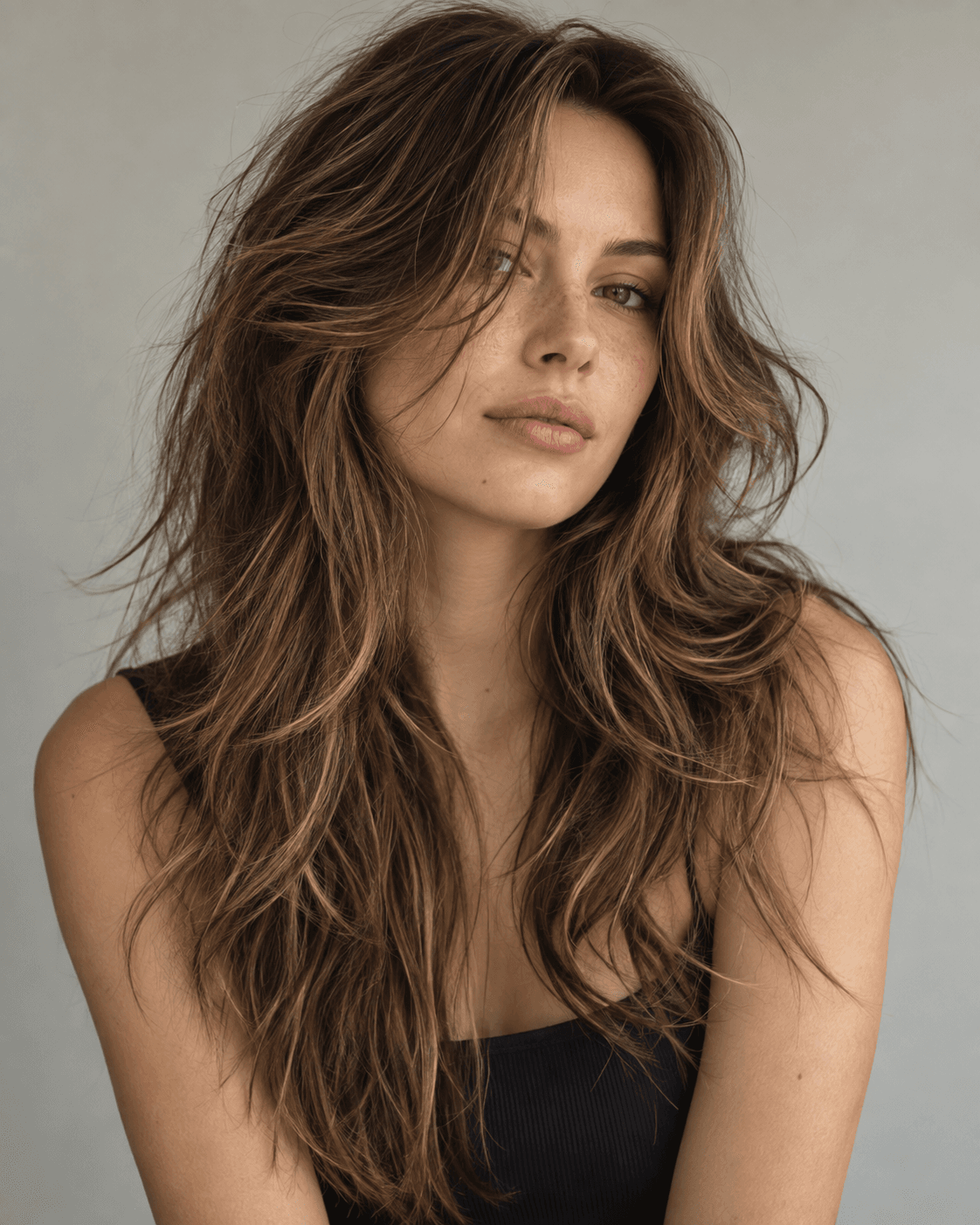
This style intentionally avoids a smooth, uniform blend between layers, instead leaving visible separation between sections for a piece-y, “just got out of bed but somehow looks good” finish. It’s cut with texturizing shears or a razor to create that separation permanently in the cut itself, rather than relying only on styling products to fake the effect.
17. Long Layers Styled with a Diffuser
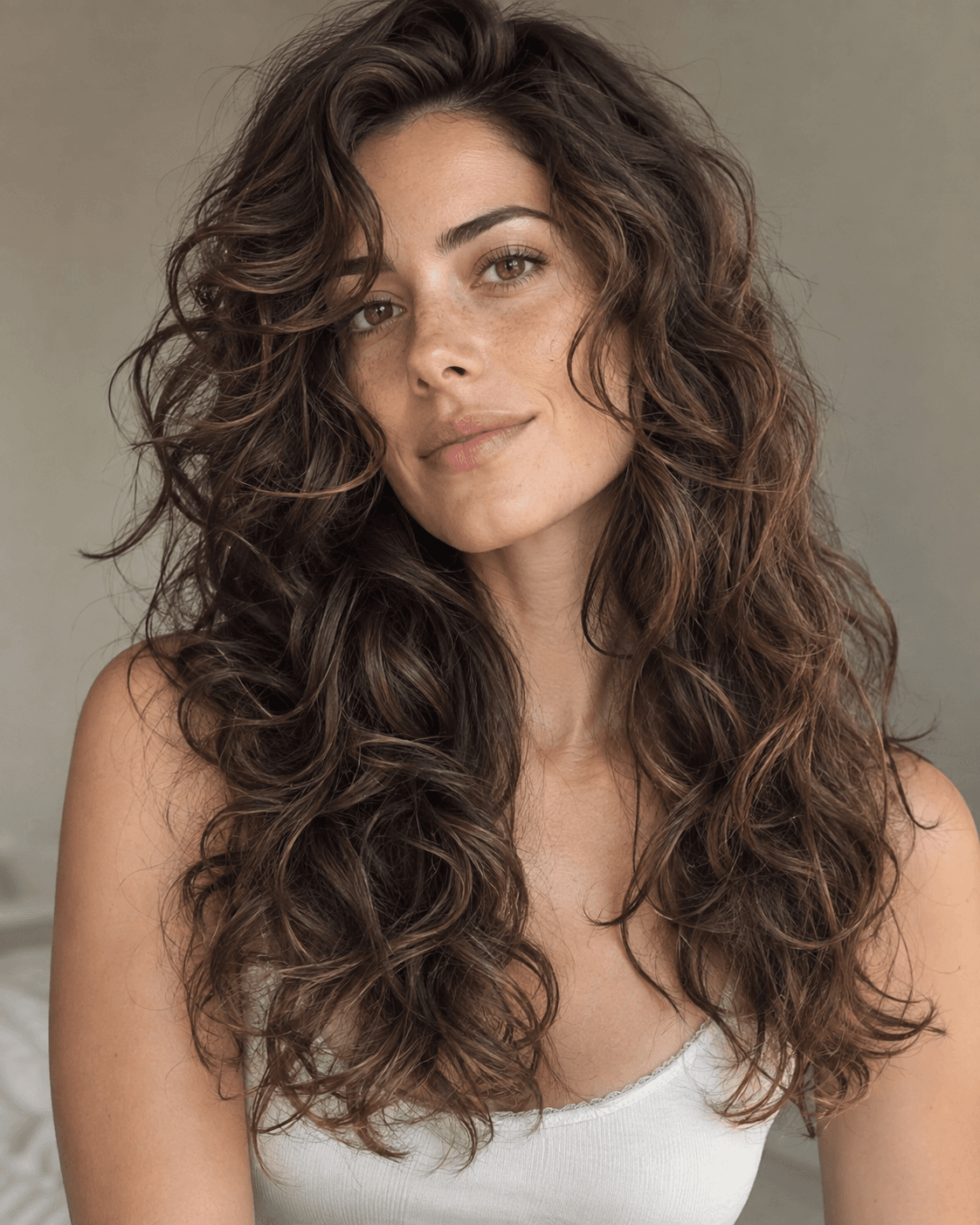
Not a distinct haircut so much as a styling approach, this entry covers how layered long hair — particularly with natural wave or curl — looks when air-dried or diffused rather than blown straight. The layering allows natural texture to show through in a way that a single-length cut often can’t, since the shorter internal pieces have room to curl and move independently from the longer outer layers.
Sleek Long Hair with Minimal Layering
For people who want the benefits of layering — movement, less bulk at the ends — without a visibly “layered” silhouette.
18. Long Layers with a Blunt Perimeter
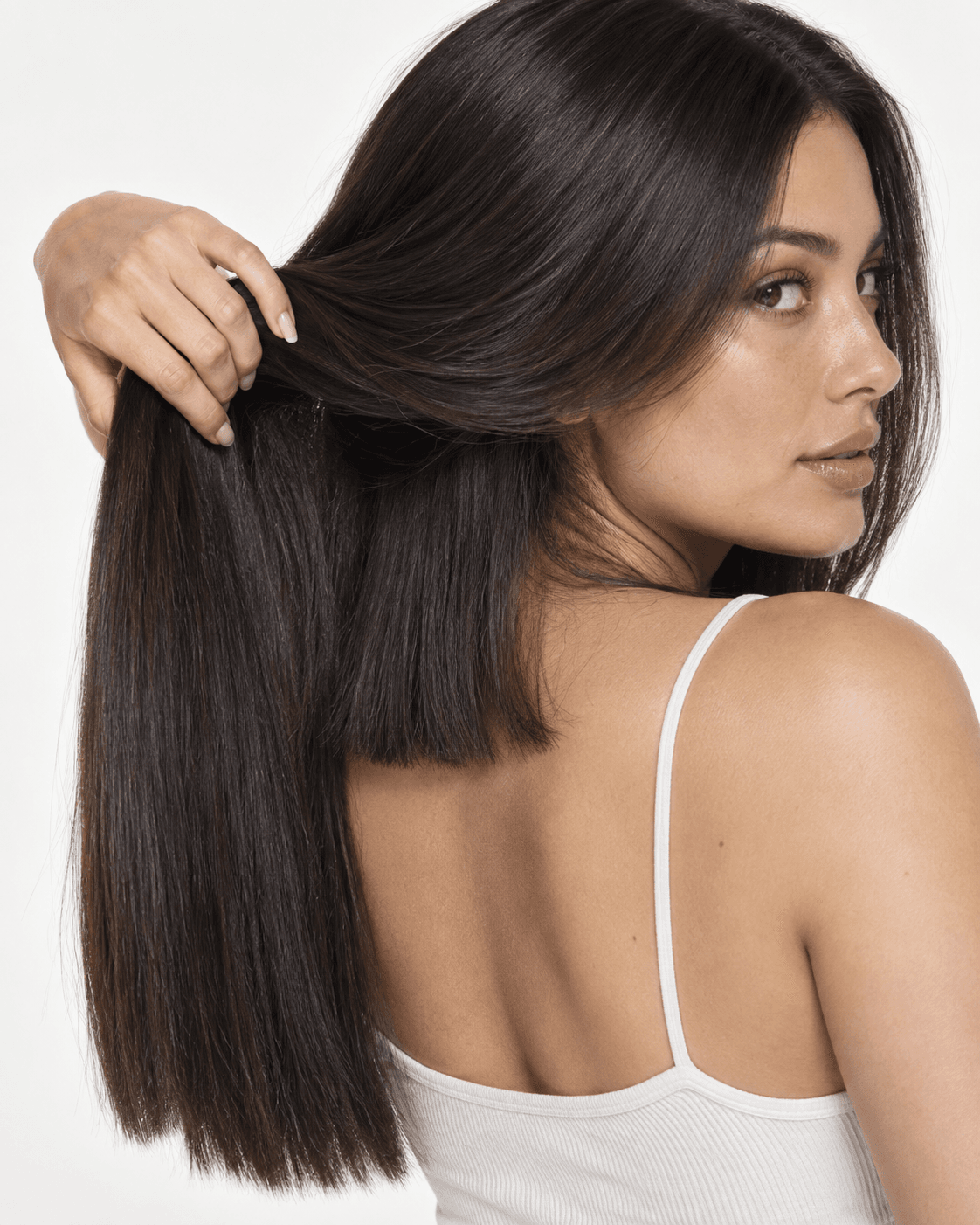
The outer edge of the hair is cut blunt, but internal layers are added underneath to reduce weight and bulk without changing the clean, straight-across line visible from the outside. This is essentially the “best of both worlds” cut for people who love blunt ends but find truly one-length hair too heavy or difficult to style with volume.
19. Barely-There Long Layers
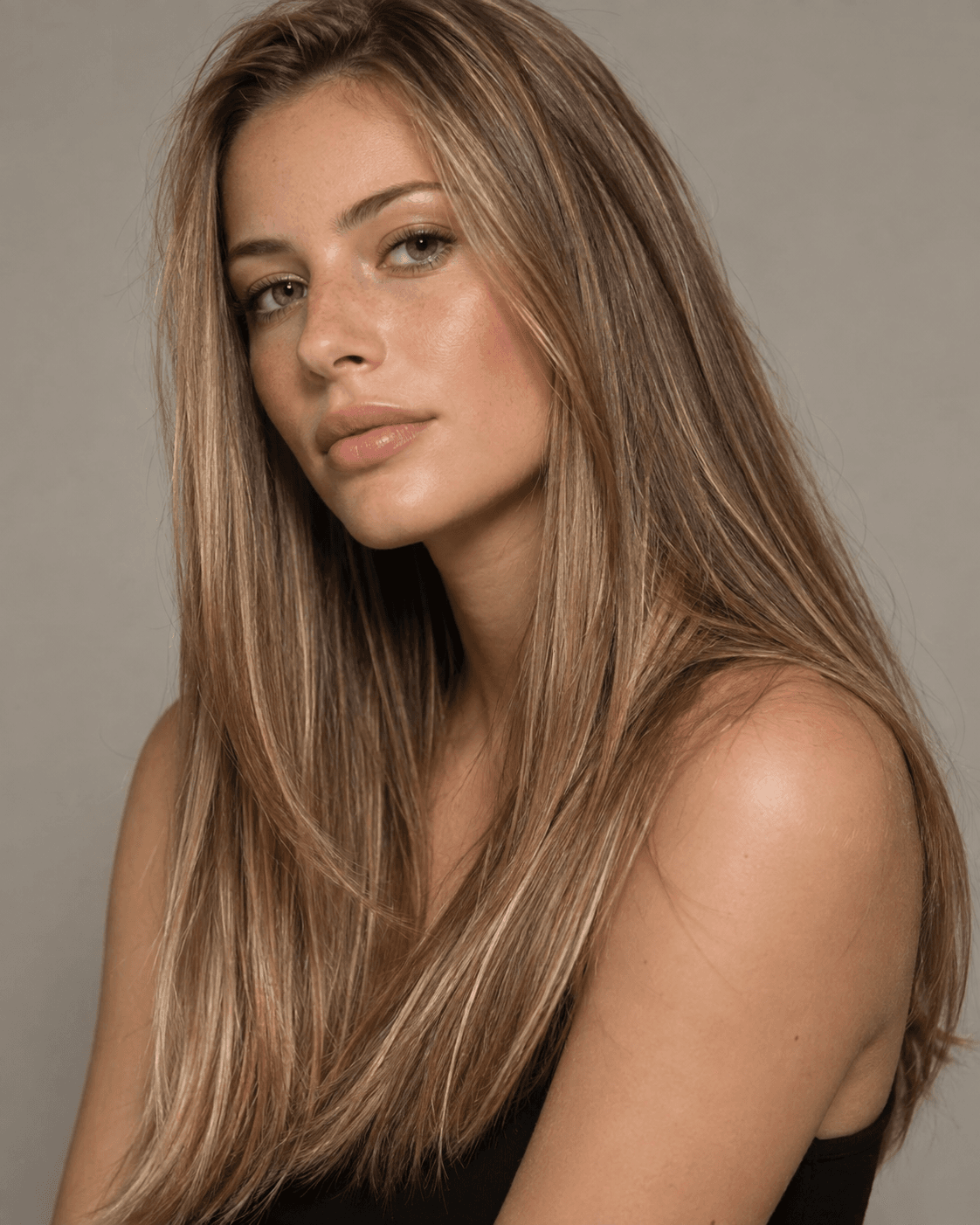
Layering is kept extremely subtle here — often just a few inches of variation between the shortest and longest layer — enough to soften the ends and add slight movement without any dramatic shape. This is the lowest-drama layering option on the list and tends to grow out the most gracefully, since there’s minimal contrast to maintain.
20. Long Layers for Thick, Straight Hair
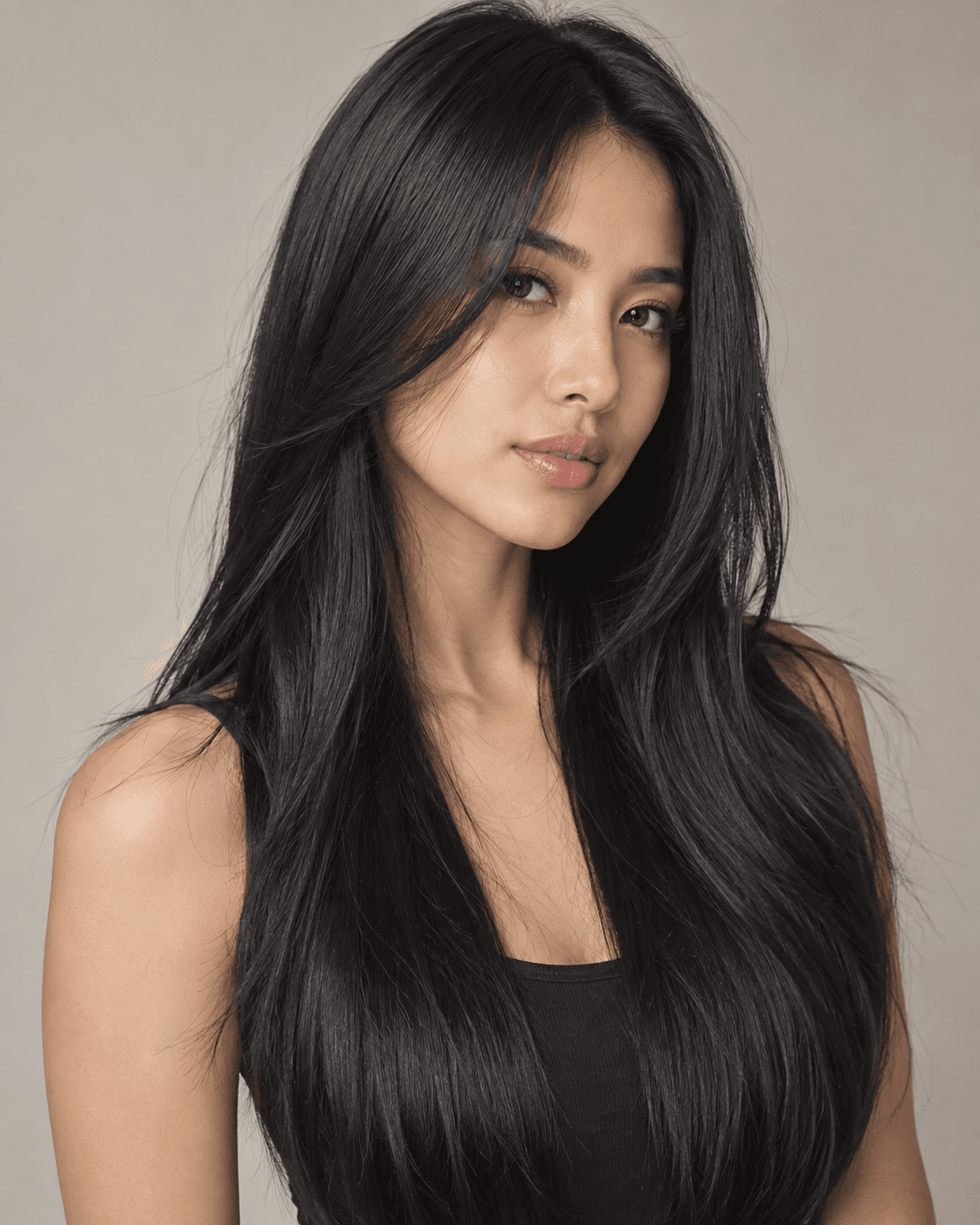
Layering thick straight hair is less about adding movement (which thick hair often already resists needing) and more about weight removal — reducing bulk so the hair doesn’t feel stiff or triangular. The layers here are typically cut with more length between sections than on fine hair, since thick hair holds shape differently and doesn’t need as much internal thinning to move.
21. Long, Sleek Layers with a Center Part
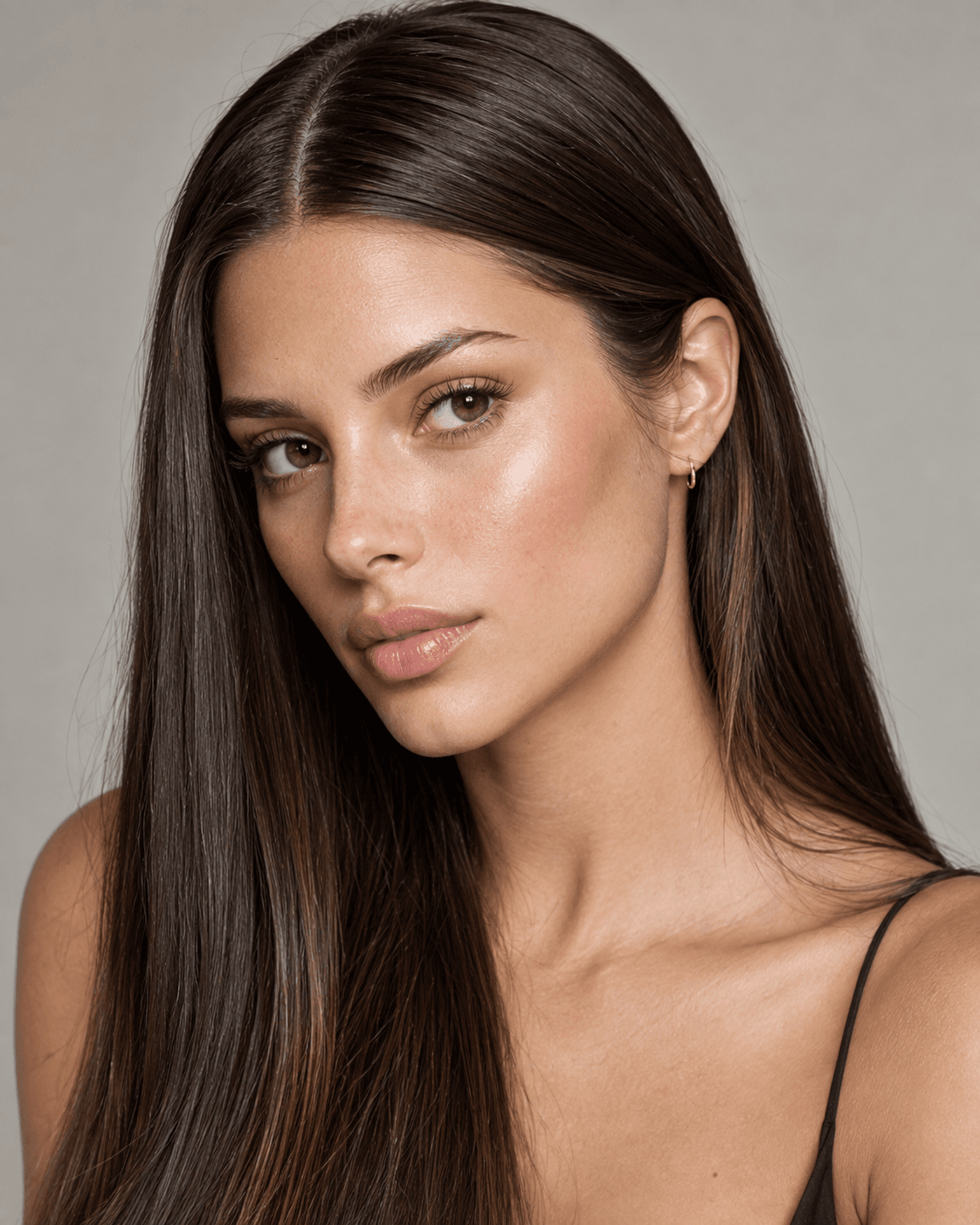
Paired with a precise center part, this style keeps layering minimal and symmetrical so the sleek, straight-down silhouette isn’t disrupted. The slight layering mainly shows up when the hair is tucked behind the ears or caught in movement, rather than being visible in a static, straight-down photo.
22. Long One-Length Hair with Subtle End Layers
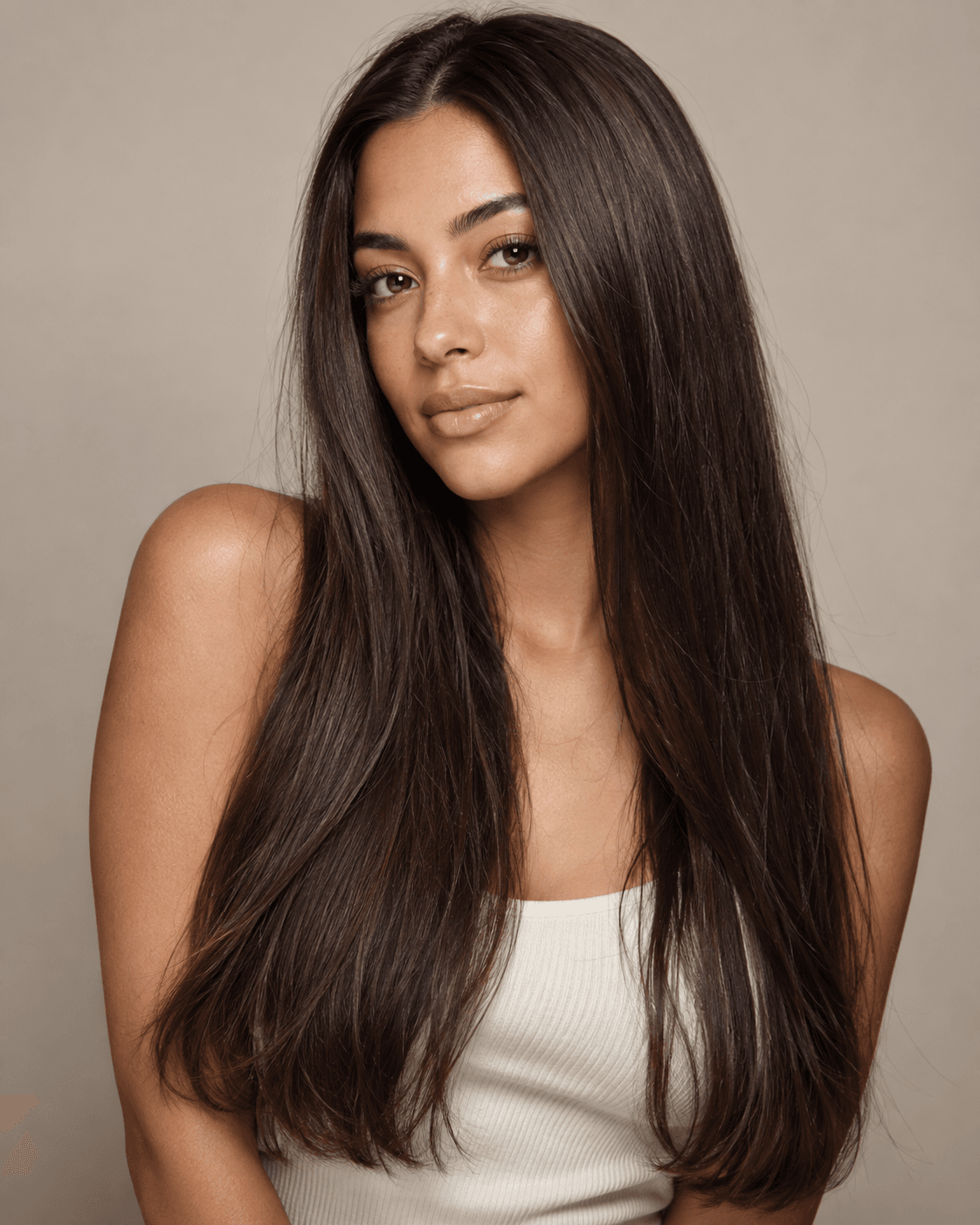
Nearly one-length, with layering only in the final few inches to prevent a harsh, overly blunt line at the very bottom. This is popular with people growing out a previous heavy-layer cut, since it’s a transitional shape between fully layered and fully blunt.
23. Long Layers with Money Piece Highlights
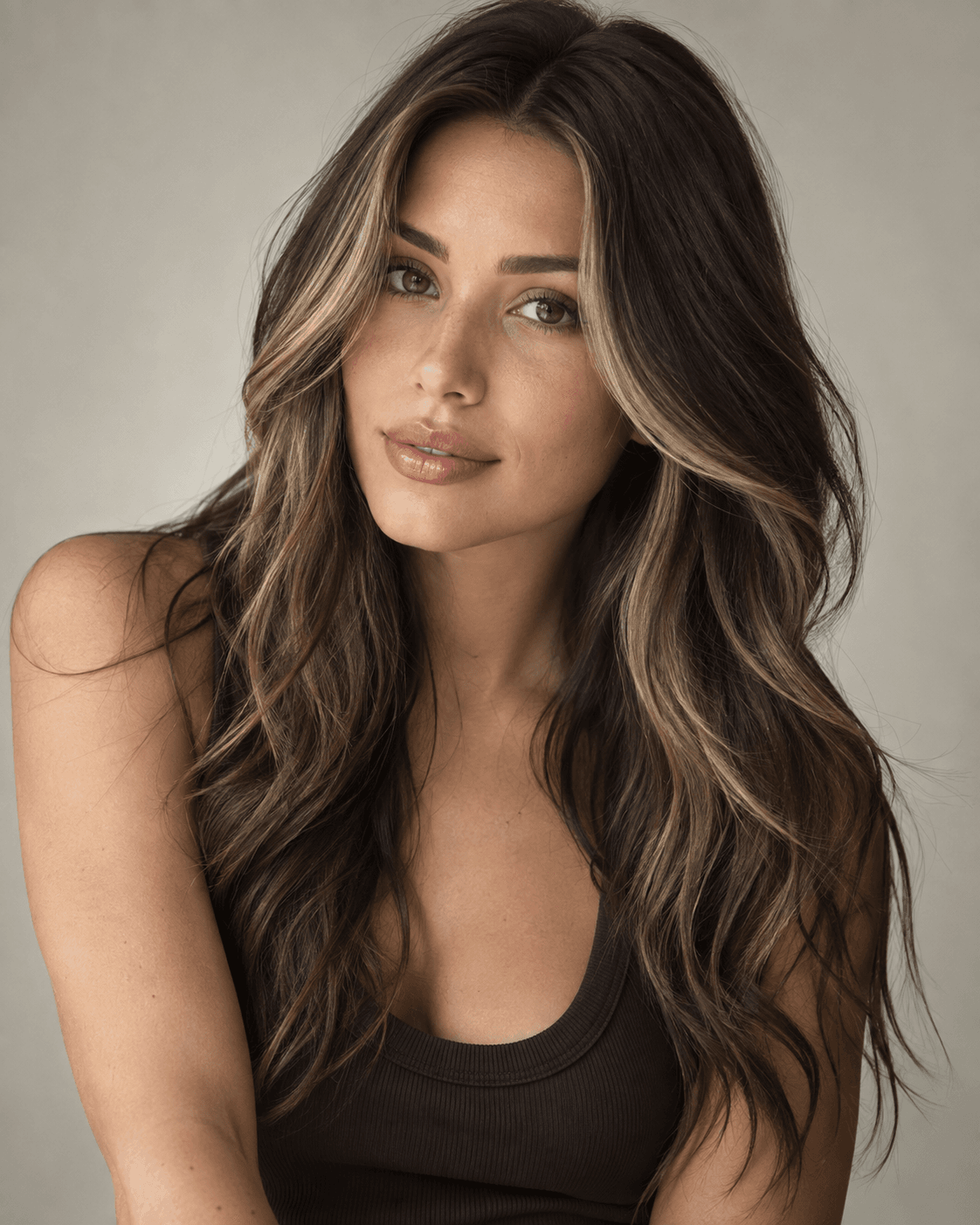
This entry pairs subtle layering with face-framing highlights (a “money piece”) rather than a cut-based technique, since the color placement does much of the visual “framing” work that heavier layering would otherwise provide. It’s a popular combination for people who want dimension and interest without committing to more aggressive cutting.
24. Long Layers with a Textured Fringe
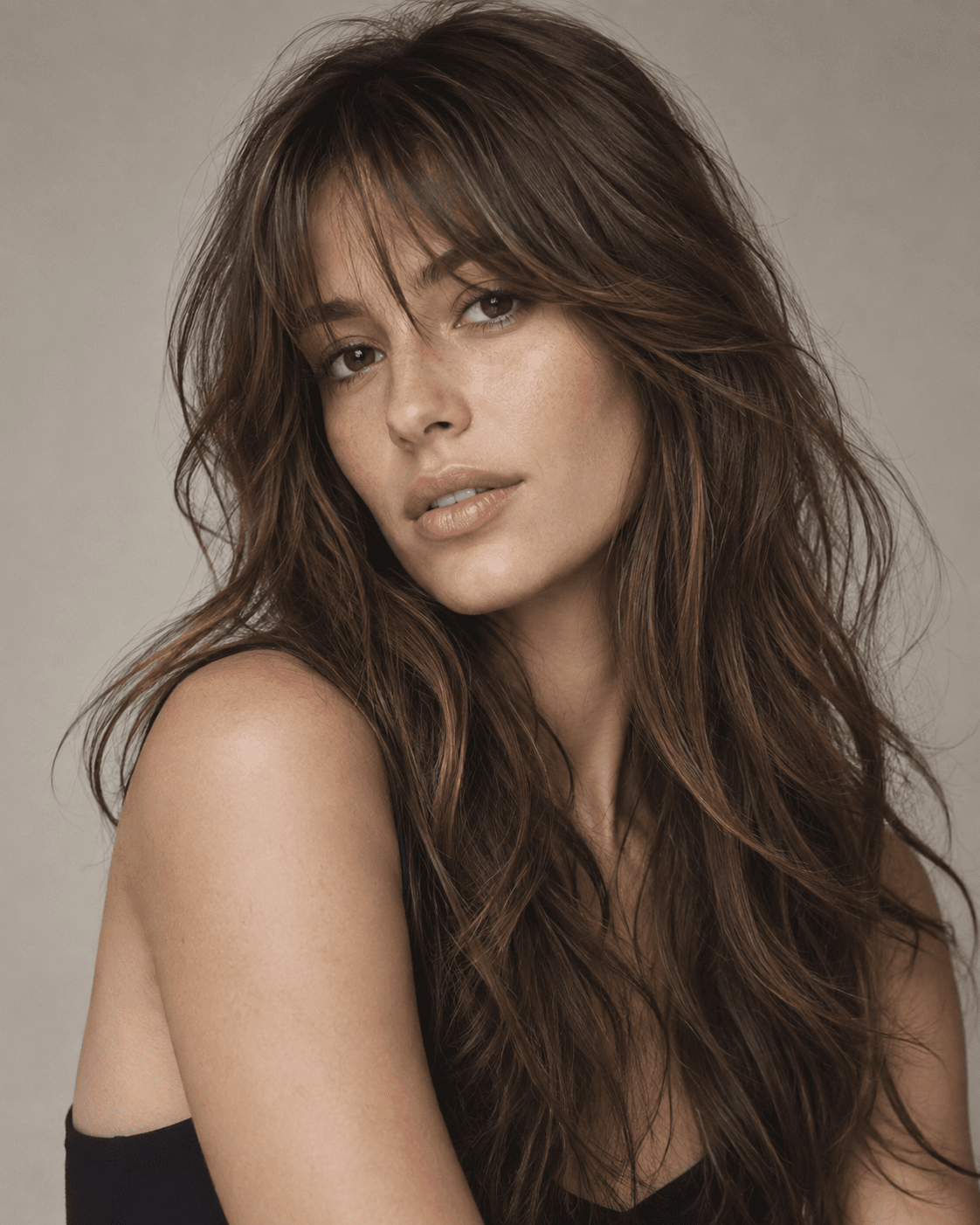
Full-length layers paired with a soft, textured fringe (rather than a blunt bang) that blends into the face-framing layers rather than standing apart as a separate section. The fringe is cut with the same point-cutting technique as the rest of the layers so the whole front section reads as one continuous, softly layered shape.
25. Long Layers Grown Out From a Shorter Cut
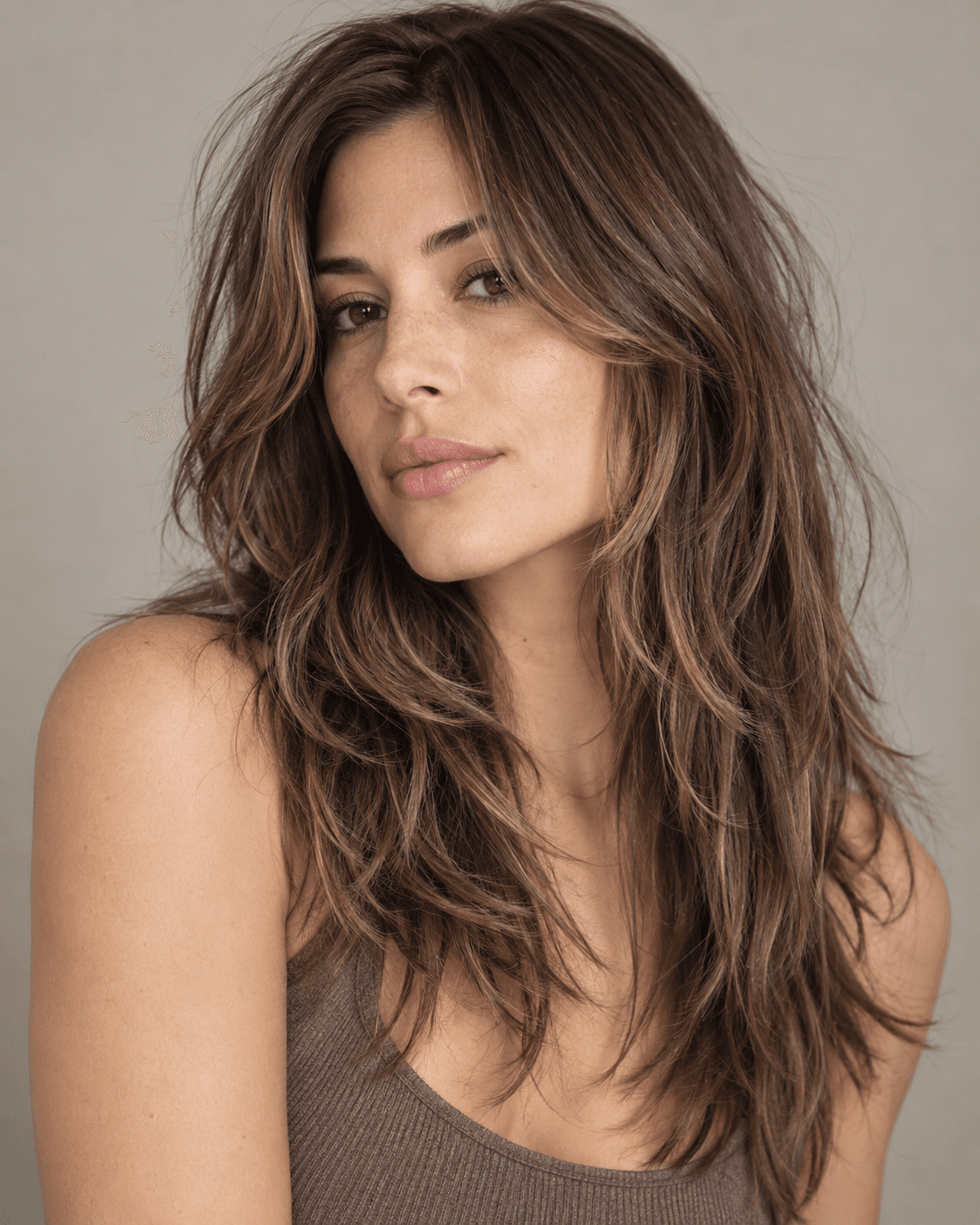
For anyone growing out a bob or lob into long hair, layering is used strategically during the grow-out phase to avoid the awkward, bottom-heavy stage where the ends are still short and blunt while the top grows longer. Layers added throughout the growing sections keep the silhouette proportional at every stage rather than only looking finished once full length is reached.
How to Choose the Right Category of Long Layers for You
The fastest way to narrow down which of these 25 styles fits you isn’t by scrolling for the prettiest photo — it’s by starting with your hair’s natural texture and thickness, since layers behave very differently depending on what they’re cut into.
If your hair is fine or thin, heavier layering concentrated at the crown (like #10) or a dramatic V-shape (#7) will generally read as more volume, since the shorter pieces have less weight pulling them flat. However, if your hair is thick or coarse, look toward internal-only layering (#4) or blunt-perimeter styles (#18), which remove bulk without sacrificing the fullness thick hair already has.
If your hair has natural wave or curl, prioritize the textured, effortless category — heavily blended layers can sometimes fight natural texture rather than support it, while looser, longer layers (#13–#17) tend to let curl patterns do more of the visual work.
If you’re unsure how much change you want, start conservative. Face-framing-only layers (#1) or barely-there layering (#19) can always be built up into something more dramatic at a future appointment, but heavy layering can’t be undone until it grows out.
What to Say to Your Stylist to Get the Right Result
Bring a specific reference photo rather than a general description — “long layers” alone can mean anything from entry #1 to entry #9 on this list. Stylists interpret the phrase differently depending on training and regional trends. Specify where you want the shortest layer to start (chin, cheekbone, or crown), roughly how many inches of difference you want between your shortest and longest layer. Whether you want the ends blended smoothly or left with visible texture. If you’re nervous about going too short in the face-framing area, ask your stylist to cut conservatively at first. Face-framing layers can always be brought shorter at a follow-up appointment, but not longer.